
Water loss without a visible leak is not a plumbing problem. It is a pinhole in your liner spreading wider with every heat cycle and chemical shift.
This guide covers how to replace an above ground pool liner from start to finish. You will learn how to measure accurately, choose the right liner type and gauge, drain the pool safely, remove the old liner, prepare the base, install the new liner, and fill it without wrinkles. Every step includes specific measurements, tool names, and timing so you can decide whether to tackle this job yourself or hire a professional.
| Photo | Best Above-Ground Pools | Price |
|---|---|---|
|
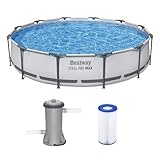
Bestway Steel Pro MAX 12' x 30" Above Ground Swimming Pool Set with Pump | Check Price On Amazon |
|
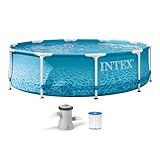
INTEX Beachside Metal Frame 10ft x 30in Round Pool Set w/Pump | Check Price On Amazon |

|
H2OGO! Kids Splash-in-Shade 8-Foot Round Steel Frame Above Ground Pool with Water Mister and Canopy Sunshade, Green Tropical Leaf Print | Check Price On Amazon |
By the Numbers
Above Ground Pool Liner Replacement — Key Figures
Sources: Pool & Hot Tub Alliance, manufacturer technical documentation, contractor pricing surveys
How Do You Know When an Above Ground Pool Liner Needs Replacement?
Replace the liner when you find multiple pinhole leaks, cracks that no longer hold a patch, fading that has reached the fabric backing, or a bead track that has torn away from the wall. A single small puncture is repairable. A liner with more than three patches in one season or cracking along the bead line has reached the end of its service life.
Vinyl liners degrade from UV exposure, chemical imbalance, and physical stress from expanding ice or sharp objects. According to the Pool & Hot Tub Alliance technical manual, a liner maintained with proper water chemistry at pH 7.4 to 7.6 and alkalinity 80 to 120 ppm lasts 8 to 12 years on average. Liners exposed to pH below 7.0 for extended periods can fail in 5 years or less.

- Intelligent Navigation with Full Coverage: Equipped with 11 high-precision sensors and enhanced dual-path algorithms. The optimized WavePath cleaning pattern ensures systematic coverage with minimal overlap, while adaptive navigation analyzes pool layout in real time to eliminate missed spots
- Dual Filtration for Crystal-Clear Water: Advanced dual-layer filtration system features a replaceable 3-micron ultra-fine filter paired with a 180-micron standard filter. Effectively captures fine dust, sand, leaves, and debris for visibly cleaner and healthier pool water
- Comprehensive Pool Cleaning: Engineered to clean the pool floor, walls, waterline, and shallow areas (above 12 inches). The Caterpillar Treads system enhances mobility and climbing ability, ensuring thorough coverage across all pool zones
- Reliable Performance with 2-Year Warranty: Trusted by over 500,000 pool owners worldwide, this robotic pool cleaner delivers consistent, high-performance results. Built for durability and backed by a 2-year warranty and responsive customer support for worry-free ownership
Check the bead track where the liner attaches to the pool wall. If the vinyl has torn away from the bead or has become brittle and cracks when pressed, the liner cannot hold water reliably. Look at the floor for wrinkles that have hardened into permanent ridges. These ridges trap dirt, abrade feet, and eventually split open.
This happens because vinyl plasticizers leach out over time when exposed to chlorine at concentrations above 4 ppm free chlorine combined with UV radiation from sunlight. This only occurs when stabilizer levels fall below 30 ppm cyanuric acid in outdoor pools, leaving chlorine unprotected from UV degradation. If stabilizer is maintained at 30 to 50 ppm, the chlorine degradation rate slows and the liner plasticizers remain intact longer. Fix low stabilizer by adding 1 pound of cyanuric acid per 10,000 gallons to raise CYA by 12 ppm.
What Type of Replacement Liner Should You Choose?
Choose an overlap liner for budget installations or DIY replacements on pools with top rails that hide the liner edge. Overlap liners fold over the pool wall and secure under the top coping with plastic coping strips. They cost $150 to $350 for common 24-foot round pools.
Choose a beaded liner for quick installation on pools with a bead track receiver already mounted at the top of the wall. The bead snaps into the track without removing the top rail. Beaded liners cost $250 to $500 for standard sizes and install faster than overlap liners because you do not need to remove and replace top rails and coping strips.
Choose a J-hook or V-bead liner for pools with damaged or missing bead tracks. These liners hook directly over the pool wall and require no bead receiver or coping strips. J-hook liners work on most above ground pool brands and cost $200 to $450. They offer the simplest installation on older pools where original hardware is compromised.
Product Comparison
Overlap vs Beaded vs J-Hook Liner — Side by Side
Detailed feature comparison to help you choose the right liner type for your pool.
| Feature | Overlap Liner | Beaded Liner | J-Hook Liner |
|---|---|---|---|
| Price range (24 ft round) | $150-$350 | $250-$500 | $200-$450 |
| Installation difficulty | Moderate — requires top rail removal | Easy — snaps into existing track | Easiest — hooks over wall |
| Hardware required | Coping strips, top rails reinstalled | Bead track receiver on wall | None — hooks over wall edge |
| Best for | Budget DIY with top rails intact | Quick swap on pools with bead track | Older pools with damaged bead track |
| Our verdict | Best value for DIY | Fastest replacement | Most universal fit |
Liner gauge matters as much as the attachment style. A 20-mil liner is the thinnest standard option and costs the least. A 25-mil liner adds puncture resistance for households with dogs or frequent pool use. A 27-mil or 30-mil liner resists tears from tree debris and roughhousing. The gauge number measures the vinyl thickness in thousandths of an inch: 20 mil equals 0.020 inches.
For most residential pools with kids and occasional debris, a 25-mil overlap pool liner in 25-mil gauge provides the best balance of cost and durability. For pools under trees or with dogs that swim, step up to a 30-mil heavy gauge pool liner for the extra puncture resistance.
Quick Reference
Pool Liner Terms Explained
Quick definitions for terms used in this guide
A vinyl liner that drapes over the pool wall and secures with plastic coping strips under the top rail. Most affordable type.
A liner with a small bead welded along the top edge that snaps into a track mounted on the pool wall. No top rail removal needed.
A liner with a J-shaped top edge that hooks directly over the pool wall. Requires no bead track or coping strips. Also called V-bead.
The thickness of vinyl measured in thousandths of an inch. 20 mil = 0.020 inches. Higher gauge = thicker, more puncture-resistant vinyl.
A sloped strip of foam or sand at the base of the pool wall where the floor meets the wall. Prevents liner stress and protects feet from the wall track.
A plastic strip that holds an overlap liner in place over the pool wall. Removed by pulling it free before lifting the old liner out.
A protective fabric layer placed under the liner on the pool floor. Prevents grass and roots from poking through the vinyl over time.
Thin foam sheets installed against the pool wall behind the liner. Smooths wall seams and adds thermal insulation and puncture protection.
A plastic channel mounted at the top of the pool wall that accepts the bead of a beaded liner. Must be intact and clean for proper installation.
A smooth, troweled floor material made from expanded vermiculite and cement. Used as a pool floor base that resists footprints and provides a smooth surface under the liner.
How to Measure Your Above Ground Pool for a New Liner
Measure your pool in three places before ordering a liner. Get the diameter wrong by even 1 inch and the liner will not fit. Most above ground pool liners are custom-ordered based on exact measurements and are not returnable.
First, measure the diameter of a round pool across the center from outside wall to outside wall at three points. Use a 100-foot fiberglass measuring tape, not a cloth tape that stretches. For an oval pool, measure the length and width at the longest and widest points.
Second, measure the wall height from the top rail down to the cove at the base. Do not include the top rail height. Standard above ground pool walls are 48, 52, or 54 inches tall. The liner must match this height exactly for overlap and J-hook styles. Beaded liners are typically made for a specific wall height plus the bead track offset.
Third, measure the depth at the center of the pool floor. Many above ground pools have a dished center that is 6 to 12 inches deeper than the wall height for better drainage and swimming depth. Tell the liner manufacturer both the wall height and the center depth so they can fabricate the liner with the correct floor dimensions.
A 24-foot round pool with 52-inch walls and an 8-inch center dish needs a liner ordered as “24-foot round, 52-inch wall, expandable to 60-inch center depth.” Ordering a flat-floor liner for a dished pool will cause the liner to stretch and fail at the cove within the first season.
How Much Does It Cost to Replace an Above Ground Pool Liner?
A DIY liner replacement costs $150 to $600 for the liner itself plus $50 to $150 for cove material, ground cloth, wall foam, duct tape, and a shop vac rental if you do not own one. The total DIY cost for a 24-foot round pool with a 25-mil overlap liner typically lands between $250 and $500.
Professional installation adds $400 to $900 in labor. Total professional replacement cost for a 24-foot round pool runs $650 to $1,500 depending on liner type, gauge, and local contractor rates. Most pool service companies complete the job in one day with a two-person crew.
Oxidation from sun and chlorine ages vinyl liners by breaking down the plasticizer compounds that keep the material flexible. This degradation occurs throughout the liner’s life but accelerates when free chlorine levels exceed 4 ppm persistently. The liner becomes brittle, cracks form at stress points, and water loss begins. If a liner is not replaced when cracking becomes visible, a full blowout can drain the pool overnight and flood the surrounding yard, eroding the soil under the pool structure.
Cost Reference
Liner Replacement Cost by Pool Size and Installation Method
All values pre-calculated. Find your pool size and choose DIY or pro installation.
| Pool size ↓ Install method → | DIY Overlap Liner | DIY Beaded Liner | Pro Install Overlap | Pro Install Premium |
|---|---|---|---|---|
| 15 ft round | $150-$250 materials only |
$200-$350 materials only |
$600-$900 with labor |
$800-$1,200 30-mil, includes cove |
| 24 ft round | $300-$500 ★ most common |
$350-$600 materials only |
$800-$1,300 with labor |
$1,000-$1,600 30-mil, includes cove |
| 27 ft round | $400-$600 materials only |
$450-$700 materials only |
$1,000-$1,500 with labor |
$1,300-$1,900 30-mil, includes cove |
| 12×24 ft oval | $400-$700 materials only |
$500-$800 materials only |
$1,100-$1,700 with labor |
$1,400-$2,100 30-mil, includes cove |
Material costs include liner, cove, ground cloth, and wall foam. Professional labor assumes standard installation with no wall or frame repair. Oval and custom shapes cost 30-50% more than round pools of similar wall length. ★ highlights the most common scenario for residential above ground pool owners.
For a customized cost breakdown based on your exact pool dimensions and chosen liner type, try our pool liner cost calculator.
Tools and Materials You Need Before Starting
Gather every tool and material before you drain the pool. A pool drained and left empty for more than 48 hours risks wall collapse from wind pressure or ground water pushing against the structure. Have everything on site and ready before the first gallon of water leaves the pool.
You need a submersible pump rated for at least 1,200 gallons per hour to drain a standard pool in under 8 hours. A 1/3 HP submersible utility pump moves roughly 1,800 GPH and drains a 15,000-gallon pool in about 8.3 hours. Rent or buy one before starting.
You need a 6-gallon or larger wet/dry shop vacuum for removing the last 2 inches of water and for vacuuming the liner into place during installation. A standard home vacuum cannot handle water. The shop vac also removes debris from the pool floor after draining.
Essential hand tools include a heavy-duty utility knife with extra blades for cutting the old liner into manageable sections, a cordless drill with Phillips and flathead bits for removing wall screws and top rails, a rubber mallet for seating coping strips, and a complete screwdriver set for disassembling the skimmer and return fittings.
Buying Guide
Before You Buy Your Replacement Liner — Checklist
Check off each point before ordering your new liner.
You will also need new skimmer and return gaskets. Never reuse old gaskets. Compressed gaskets will not seal against a new liner and will leak within days of refilling. A $15 gasket set prevents hundreds of dollars in water loss and liner damage.
For the base, purchase a pool ground cloth or liner pad cut slightly larger than your pool diameter. Add pool wall foam sheets to smooth the wall surface and protect the liner from metal seams. Replace the peel-and-stick foam pool cove around the entire base perimeter.
How to Replace an Above Ground Pool Liner: Step-by-Step
Replace your above ground pool liner over two to three days in warm weather with temperatures above 65 degrees Fahrenheit. Vinyl becomes stiff and unworkable below 60 degrees Fahrenheit. Do not attempt this job in cold weather. The liner will not stretch properly and wrinkles will not come out.
This process requires two people for safety and efficiency. A 24-foot liner weighs 50 to 70 pounds and must be handled without dragging it across rough ground. Plan for 4 to 8 hours of active work spread across the draining, removal, base preparation, installation, and filling phases. For guidance on maintaining your pool after the liner replacement, our complete pool care and maintenance guide covers chemical balancing and weekly routines to protect your new liner.
Step-by-Step Guide
How to Replace an Above Ground Pool Liner — Step by Step
11 steps · Estimated total time: 4-8 hours over 2-3 days · Two people recommended
Drain the pool completely
Place a submersible pump at the deepest point. Route the discharge hose at least 20 feet from the pool to prevent erosion under the pool structure. Draining takes 4 to 8 hours depending on pump capacity and pool volume.
Remove skimmer, return, and fittings
Unscrew the skimmer faceplate and return fitting from inside the pool. Remove all gaskets and set aside the screws. Cover the openings with duct tape from the outside to prevent debris entry during base work.
Remove top rails and coping strips
Label each top rail section with numbered tape and its position. Remove the coping strips holding the old overlap liner. For beaded liners, simply pull the bead out of the track. Store all hardware in labeled bags.
Remove the old liner
Cut the old liner into 4-foot wide sections with a utility knife. Fold each section and carry it out. Do not drag old liner across the sand or vermiculite base. Dragging gouges the floor and creates low spots that show through the new liner.
Inspect and repair the base
Check the sand or vermiculite floor for cracks, low spots, and erosion. Fill low spots with dry sand and trowel smooth. Replace any rusted wall sections or corroded bolts now. The wall bears the full water load once refilled.
Install wall foam, cove, and ground cloth
Run wall foam around the entire interior wall, securing with duct tape at the top. Place peel-and-stick cove around the base perimeter. Lay the ground cloth across the floor and trim to fit. Smooth out all wrinkles in the ground cloth.
Unfold and position the new liner
Carry the folded liner into the pool center. Unfold it outward toward the walls. Do not drag it across the base. Align the liner so the wall seams run vertically and the floor is centered. For beaded liners, snap the bead into the track starting at one point.
Secure the liner top edge
For overlap liners, fold the liner over the wall and hold it in place with coping strips every 2 feet. Do not fully seat the coping strips yet. For J-hook liners, hook the J-channel over the wall edge evenly around the pool. Reinstall top rails loosely.
Vacuum the liner into place
Insert the shop vac hose through the skimmer opening and seal around it with duct tape. Turn on the vacuum to pull the liner tight against the walls and floor. Work out wrinkles by hand while the vacuum runs. This step reveals whether the liner is correctly sized.
Cut in skimmer and return openings
With the vacuum still running, carefully cut an X in the liner at the skimmer and return openings using a utility knife. Install new gaskets on both sides of the liner. Attach the skimmer faceplate and return fitting. Tighten screws evenly in a star pattern.
Fill the pool and make final adjustments
Begin filling with a garden hose. Use our pool fill time calculator to estimate how long it will take. When water reaches 6 inches deep, stop and adjust the liner to remove any remaining wrinkles. Continue filling. When the water is 2 inches below the skimmer, stop the vacuum. Complete filling and balance chemicals immediately.
At the 6-inch water level, walk around the inside of the pool barefoot and push any wrinkles toward the wall with your feet. Work from the center outward. This is your only chance to remove wrinkles before water weight locks the liner in position. Once the water passes 12 inches of depth, the liner will not move.
After the pool is full but before swimming, balance the water chemistry. New vinyl liners release plasticizer residue that can consume free chlorine rapidly. Shock the pool with calcium hypochlorite pool shock at 1 pound per 10,000 gallons to reach 10 ppm free chlorine initially. Use our pool shock calculator to calculate the exact amount for your pool volume. Test and adjust pH to 7.4 to 7.6 using soda ash pH increaser or muriatic acid pH decreaser as needed; for precise dosage, try our pool pH calculator.
Results
What Changes When You Replace Your Pool Liner Correctly
Your pool transforms from a leaking liability into a reliable, attractive backyard centerpiece.
Before
- ✗Losing 1 to 3 inches of water per week from pinhole leaks
- ✗Faded, brittle vinyl with cracks along the bead line
- ✗Wrinkled floor that traps dirt and algae
- ✗Constant patching with temporary results
After
- ✓Zero water loss beyond normal evaporation of 1/4 inch per day
- ✓Smooth, vibrant liner surface that resists UV and chemical damage
- ✓Flat, wrinkle-free floor that stays clean with normal filtration
- ✓No patching needed for 8 to 12 years with proper water chemistry
A properly installed liner with balanced water chemistry gives you a decade of leak-free swimming.
Common Mistakes That Ruin a New Liner Installation
Dragging the old liner across the sand base is the most common mistake in liner replacement. The sand or vermiculite floor is soft and easily gouged. Every gouge becomes a visible divot under the new liner. Every divot collects dirt and becomes a wear point that shortens the new liner’s life.
Cut out the old liner in sections and carry each section out. Do not roll it, fold it, or slide it across the floor. One deep scratch in the sand from a dragged liner can require re-screeding the entire floor, adding 2 hours to the job.
Installing the liner in cold weather causes permanent wrinkles. Vinyl below 60 degrees Fahrenheit does not stretch uniformly. Wrinkles that form during cold installation will not pull out when the water warms up. Wait for a stretch of 3 days with temperatures above 65 degrees Fahrenheit before starting the job.
Reusing old gaskets at the skimmer and return fittings guarantees a slow leak behind the liner. Compressed gaskets cannot conform to a new liner surface. The leak may not show for weeks. By then, water has soaked the ground behind the wall, softened the soil, and started rusting the wall track. Spend $15 on new skimmer and return gaskets every time you replace a liner.
Forgetting to tape over the skimmer and return openings from the outside before filling invites a leak path. Water finds the gap between the liner and the wall at these openings if the seal is not perfect. A strip of heavy-duty waterproof duct tape over each opening on the outside of the wall provides a secondary barrier that protects the structure during the fill.
Can You Replace an Above Ground Pool Liner Without Draining the Pool?
No. The pool must be drained completely to replace the liner. Any water remaining behind the old liner will trap moisture against the wall, promote rust on steel components, and prevent the new liner from seating flat against the base. Draining completely is not optional.
Use a submersible pump rated for at least 1,200 GPH. Monitor the pool during draining to ensure the discharge water flows at least 20 feet from the pool structure. Water pooling near the base can erode the soil supporting the pool wall and cause structural shifting. If the ground becomes saturated, stop draining and wait 24 hours for the soil to dry before continuing.
How Long Does a Replacement Pool Liner Last?
A properly installed replacement liner with balanced water chemistry lasts 8 to 12 years. Liners maintained at pH 7.4 to 7.6, alkalinity 80 to 120 ppm, and free chlorine 2 to 4 ppm consistently achieve the upper end of this range. Liners exposed to pH below 7.0 or chlorine above 5 ppm regularly fail in 5 to 7 years.
The vinyl plasticizer compounds that keep the liner flexible degrade faster under UV exposure and high chlorine. Cyanuric acid at 30 to 50 ppm protects free chlorine from UV degradation and prevents the chlorine from becoming overly aggressive toward the vinyl. Test cyanuric acid monthly during swim season using a Taylor K-2006 liquid drop test kit for accurate readings.
Manufacturers warranty liners for 15 to 25 years on a prorated basis, but the practical service life is the 8 to 12 year window. The warranty covers manufacturing defects like seam separation, not chemical damage or UV degradation. Prorated warranties pay a decreasing percentage of the replacement cost each year and rarely cover more than 50% after year 10.
What Is the Difference Between Overlap, Beaded, and J-Hook Liners?
An overlap liner drapes over the pool wall and secures with plastic coping strips under the top rail. It requires removing and reinstalling the top rails and coping strips during installation. A beaded liner snaps into a bead track receiver mounted at the top of the pool wall. It installs without removing the top rail. A J-hook liner hooks directly over the wall edge and uses no coping strips or bead track.
Overlap liners are the least expensive and most universally available. Beaded liners install fastest on pools with intact bead tracks but cannot be used if the bead track is damaged or missing. J-hook liners solve the problem of pools with compromised bead tracks or missing hardware. They work on almost any above ground pool wall configuration. For most DIY replacements on older pools where original hardware condition is unknown, a J-hook liner provides the simplest installation path.
Why Does My New Liner Have Wrinkles After Installation?
Wrinkles after installation come from three causes: cold weather installation, incorrect liner sizing, or failure to vacuum-seat the liner before filling. Vinyl installed below 65 degrees Fahrenheit does not stretch evenly and leaves permanent wrinkles. A liner ordered 1 to 2 inches too large for the pool diameter cannot seat flat against the wall.
If wrinkles appear during filling, stop the water immediately when it reaches 6 inches deep. Walk the wrinkles toward the wall with bare feet. If wrinkles persist, the liner may be oversized or the base may have high and low spots telegraphing through. Drain the pool, correct the base, and reinstall. Water weight will not fix wrinkles after the water depth exceeds 12 inches.
Can I Install a Pool Liner Myself or Should I Hire a Professional?
You can install a pool liner yourself if you have two people, warm weather, and the correct measurements. DIY installation saves $400 to $900 in labor costs. The job requires patience during the measuring, base preparation, and vacuum-seating steps but does not demand specialized skills beyond basic tool use and attention to detail.
Hire a professional if your pool has structural issues like a rusted wall, corroded track, or severely uneven base. A professional brings experience with these complications and carries liability insurance if the wall fails during the job. Also hire a professional if you have an oval pool. Oval pools require precise liner alignment with the buttress supports and are significantly more difficult to install correctly than round pools.
What Temperature Is Best for Installing a Vinyl Pool Liner?
Install a vinyl pool liner when the air temperature is between 65 and 85 degrees Fahrenheit. Below 65 degrees, the vinyl is stiff and will not stretch uniformly into place. Above 85 degrees, the vinyl becomes overly soft and can stretch too much during installation, leaving thin spots that fail early.
Direct sunlight on a warm day helps the liner become pliable. If installing on a cool morning, wait until mid-day when the sun has warmed the liner material. Do not install in full shade or on overcast days below 70 degrees. The ideal installation window is a sunny day with temperatures around 75 degrees Fahrenheit and low wind. Wind catches the liner during unfolding and can pull it out of position or tear it against the wall.
Do I Need to Replace the Pool Cove and Floor When Replacing the Liner?
Replace the cove material every time you replace the liner. Peel-and-stick foam cove loses adhesion over time and the old cove will have compressed permanently under the previous liner’s water weight. A compressed cove does not provide the correct sloped transition from wall to floor.
The floor base of sand or vermiculite may not need full replacement if it is smooth, level, and free of gouges. Inspect the base after removing the old liner. Fill any low spots with dry sand and trowel smooth. If the vermiculite base has cracked or eroded, patch it with a vermiculite-cement mix at a 5-to-1 ratio, troweled flat and allowed to cure for 24 hours before placing the ground cloth.
What Happens If I Use the Wrong Gauge Liner for My Pool?
A liner gauge that is too thin for your pool conditions will puncture more easily, develop pinholes faster, and fail years before a properly spec’d liner. A 20-mil liner in a pool with a dog that swims or under trees dropping twigs will develop leaks within 3 to 5 years instead of lasting 8 to 12 years.
A liner that is too thick for the bead track will not seat properly. Some older bead tracks accept only 20-mil or 25-mil beads. A 30-mil bead may be too thick to snap into a worn track. Check your bead track width before ordering and confirm with the liner manufacturer that the bead thickness matches the track. Most current bead tracks accept 20 through 30 mil without issue, but older pools from the 1990s may have narrower tracks.
Can I Patch a Pool Liner Instead of Replacing It?
Patch a liner when the damage is a single clean puncture less than 2 inches long and the surrounding vinyl is still flexible. A vinyl pool liner patch kit with adhesive and matching vinyl patches seals small holes reliably for multiple seasons when applied according to the manufacturer’s instructions.
Replace the liner instead of patching when multiple patches already exist, when cracks appear along the bead line, when the vinyl has become brittle and cracks when folded, or when you are losing more than 1 inch of water per day with the pump off. The bucket test helps distinguish evaporation from a leak. Place a bucket of water on the pool step and mark both the bucket water level and pool water level. If the pool drops more than the bucket in 24 hours, you have a leak. To understand how much water loss is normal from evaporation, use our pool water evaporation calculator. Multiple pinholes spread across the floor mean the vinyl has reached end of life.
Is It Safe to Use Bleach to Clean a New Pool Liner?
Never use undiluted household bleach or industrial cleaners on a new vinyl pool liner. Undiluted bleach concentrations of 6 to 8.25% sodium hypochlorite will degrade vinyl plasticizers on contact, leaving the liner brittle and faded in the treated areas. Use only pool-specific vinyl-safe pool liner cleaners formulated for the material.
For routine cleaning, a soft brush and mild dish soap diluted 1 ounce per gallon of water removes scum lines without damaging the vinyl. Rinse thoroughly after cleaning. For stubborn stains, use a vinyl-safe stain remover containing ascorbic acid for metal stains or enzyme-based cleaners for organic stains. Always rinse the treated area within 5 minutes and never let any cleaner dry on the liner surface.
How Do I Maintain My New Liner to Maximize Its Lifespan?
Maintain water chemistry within the target ranges every day of the swim season. Free chlorine: 2 to 4 ppm. pH: 7.4 to 7.6. Total alkalinity: 80 to 120 ppm. Cyanuric acid: 30 to 50 ppm for outdoor pools. Calcium hardness: 150 to 250 ppm for vinyl pools. Test the water at least twice per week with a liquid drop test kit for accurate readings rather than test strips which have a margin of error of up to 0.5 pH units.
Brush the liner weekly with a nylon pool brush to prevent algae attachment. Keep the water level at the middle of the skimmer opening. Low water exposes liner above the waterline to UV without the cooling benefit of water contact. High water prevents the skimmer from clearing surface debris effectively. Our guide to properly vacuuming an above ground pool walks through the correct technique to avoid liner damage while cleaning.
Winterize correctly at the end of each season. Drain the pool below the skimmer and return. Blow out and plug the lines. Add winter algaecide and a winter chemical kit at the manufacturer’s recommended dose. Cover the pool with a heavy-duty solid winter cover with a cover pump to remove standing water. Standing water on a cover freezes and thaws in cycles that stress the cover anchors and can pull the cover into the pool, damaging the liner edge.
When selecting equipment for your pool, the pump plays a central role in keeping water moving through the filter. If your current pump is undersized or failing, our guide on choosing the best above ground pool pump for your setup covers flow rate matching, energy efficiency, and compatibility with common filter types. A properly sized pump running 8 to 10 hours daily keeps your new liner clean and reduces chemical demand.
Proper pump installation is just as critical as the equipment itself. The step-by-step guide to above ground pool pump installation explains plumbing connections, electrical requirements, and priming procedures that protect both the pump and the new liner from damage during startup.
A new liner is a significant investment in your pool. If you are considering whether the overall pool structure is worth the expense, our comparison of inground versus above ground pool ownership breaks down the long-term costs, maintenance requirements, and lifestyle factors that help you decide whether to keep upgrading your existing above ground pool or make a change.
For readers replacing a liner on an older pool, the same attention to the base and wall condition applies to any major pool renovation. The principles of surface preparation, material compatibility, and curing time covered in our complete pool resurfacing and renovation guide apply across all pool types and help you evaluate whether the underlying structure is sound enough to justify a new liner.
If you are replacing the liner as part of setting up a new pool or refreshing a seasonal installation, our guide to the best above ground pools on the market covers frame quality, wall gauge, liner quality, and warranty terms across top brands so you know how your current pool compares to current models.
Replace your above ground pool liner when the old one has more than three patches, visible cracks, or loses more than 1 inch of water per day. Measure accurately in three places. Choose the liner style that matches your pool hardware. Gather every tool before draining. Install on a warm day with two people. Work the wrinkles out at the 6-inch water mark. Balance the water chemistry immediately after filling. A correctly installed liner with consistent water care gives you a decade of leak-free swimming.
| Photo | Best Above-Ground Pools | Price |
|---|---|---|
|
|
Bestway Steel Pro MAX 12' x 30" Above Ground Swimming Pool Set with Pump | Check Price On Amazon |
|
|
INTEX Beachside Metal Frame 10ft x 30in Round Pool Set w/Pump | Check Price On Amazon |
|
|
H2OGO! Kids Splash-in-Shade 8-Foot Round Steel Frame Above Ground Pool with Water Mister and Canopy Sunshade, Green Tropical Leaf Print | Check Price On Amazon |