
Most pool owners assume heating an above ground pool costs too much to bother. A solar cover alone adds 10 to 15 degrees Fahrenheit to your water temperature for under $50.
This guide covers every cheap heating method available: solar covers, solar rings, DIY solar panels, heat pumps, natural gas heaters, and solar mats. Each option is compared by upfront cost, operating cost per season, temperature rise you can expect, and which pool sizes each method works for. You will find the exact combination that extends your swim season by 30 to 60 days without a $300 monthly utility bill.
| Photo | Best Above-Ground Pools | Price |
|---|---|---|
|
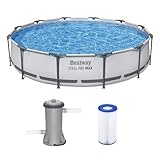
Bestway Steel Pro MAX 12' x 30" Above Ground Swimming Pool Set with Pump | Check Price On Amazon |
|
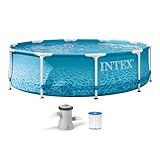
INTEX 28207EH Beachside Metal Frame Above Ground Swimming Pool Set: 10ft x 30in – Includes 330 GPH Cartridge Filter Pump – Puncture-Resistant Material – Rust Resistant – 1185 Gallon Capacity | Check Price On Amazon |

|
H2OGO! Kids Splash-in-Shade 8-Foot Round Steel Frame Above Ground Pool with Water Mister and Canopy Sunshade, Green Tropical Leaf Print | Check Price On Amazon |
By the Numbers
Above Ground Pool Heating Costs Compared
Sources: Energy.gov, manufacturer specifications, and current retail pricing.
What Is the Cheapest Way to Heat an Above Ground Pool?
A solar cover paired with a DIY solar panel array is the cheapest way to heat an above ground pool. The combined upfront cost is $150 to $400 and the operating cost is $0 per month. This setup adds 10 to 20 degrees Fahrenheit to your water temperature during sunny months.
Solar covers prevent 70 percent of overnight heat loss through evaporation according to the U.S. Department of Energy. DIY solar panels actively add heat during the day. Together they deliver 85 to 90 percent of the heating a $3,000 heat pump provides at one tenth the cost.

- Intelligent Navigation with Full Coverage: Equipped with 11 high-precision sensors and enhanced dual-path algorithms. The optimized WavePath cleaning pattern ensures systematic coverage with minimal overlap, while adaptive navigation analyzes pool layout in real time to eliminate missed spots
- Dual Filtration for Crystal-Clear Water: Advanced dual-layer filtration system features a replaceable 3-micron ultra-fine filter paired with a 180-micron standard filter. Effectively captures fine dust, sand, leaves, and debris for visibly cleaner and healthier pool water
- Comprehensive Pool Cleaning: Engineered to clean the pool floor, walls, waterline, and shallow areas (above 12 inches). The Caterpillar Treads system enhances mobility and climbing ability, ensuring thorough coverage across all pool zones
- Reliable Performance with 2-Year Warranty: Trusted by over 500,000 pool owners worldwide, this robotic pool cleaner delivers consistent, high-performance results. Built for durability and backed by a 2-year warranty and responsive customer support for worry-free ownership
Price Comparison
Heating Method Costs Ranked Cheapest to Most Expensive
Total first-year cost includes equipment purchase plus one season of operation. Prices verified at time of publication.
$30-$80 total
$150-$400 total
$120-$250 total
$300-$900 total
$1,500-$3,500 first year
$1,200-$2,800 first year
Heat pump and gas heater totals include $500-$1,200 estimated professional installation. DIY solar and cover options assume self-installation.
How Does a Solar Cover Heat a Pool for Under $50?
A solar cover heats pool water through two mechanisms. The cover traps solar radiation that passes through the transparent bubble layer and converts it to heat in the water below. The cover also stops evaporative cooling which accounts for 70 percent of total heat loss from an uncovered pool according to Department of Energy research.
This happens because water molecules escaping as vapor carry 8,000 BTUs of heat per gallon evaporated. A 15,000-gallon pool loses roughly 1 to 2 inches of water per week to evaporation in summer. That equals 60 to 120 gallons of water per week. Stopping that loss with a cover keeps the heat in the pool.
A standard 12-mil blue bubble cover costs $30 to $50 for a 24-foot round above ground pool. The cover delivers a 10 to 15 degree Fahrenheit temperature increase over an uncovered pool in full sun conditions. If your pool sits at 68 degrees Fahrenheit in late spring a cover alone brings it to 78 to 83 degrees Fahrenheit within two to three sunny days.
Cut the cover to fit your pool shape with scissors. Place it bubble-side down on the water surface. Remove it only when swimming. The cover lasts one to three seasons before the UV-stabilized plastic breaks down. At $30 per cover replaced every two years the cost per season is $15 for a 10 to 15 degree temperature gain.
A solar pool cover sized for a 24-foot round above ground pool is the single highest-ROI heating purchase you can make. For most above ground pool owners a solar cover is the only heating method needed to extend the swim season from late May through early September.
Can Solar Rings Replace a Full Solar Cover?
Solar rings are 60-inch diameter floating discs made of two layers of UV-resistant vinyl with an air pocket between them. They work identically to solar covers by trapping solar radiation and blocking evaporation. A set of five to eight rings covers roughly 60 to 80 percent of a round above ground pool surface.
Solar rings cost $25 to $35 each. A set for a 24-foot round pool runs $150 to $250. They provide about 70 to 80 percent of the heating performance of a full solar cover because they leave some water surface exposed. The temperature gain is 8 to 12 degrees Fahrenheit versus 10 to 15 for a full cover.
The advantage of rings over a full cover is convenience. Rings are easy to toss in and pull out. No cutting required. No reel needed. They store in a small pile when not in use. For pool owners who find dragging a full cover on and off frustrating solar rings are a practical compromise on cost and performance.
Use the table below to decide between a full solar cover and solar rings based on your pool size and how often you swim.
Product Comparison
Solar Cover vs Solar Rings: Side by Side
Detailed comparison for a 24-foot round above ground pool.
| Feature | Solar Cover | Solar Rings (Set of 6) |
|---|---|---|
| Upfront cost | $30-$50 | $150-$210 |
| Temperature gain | 10-15°F | 8-12°F |
| Surface coverage | 95-100% | 65-80% |
| Lifespan | 1-3 seasons | 3-5 seasons |
| Best for | Maximum heat on a minimum budget | Convenience and easy daily use |
Performance data based on full-sun conditions, 70-80°F daytime air temperature, 24-foot round pool.
How to Build a DIY Solar Pool Heater for Under $200
A DIY solar pool heater uses black irrigation tubing or repurposed solar panels mounted on a sunny roof or ground rack. Pool water circulates through the darkened tubing via your existing pool pump. The sun heats the water as it passes through. The water returns to the pool 5 to 10 degrees Fahrenheit warmer than it entered.
This happens because black polyethylene tubing absorbs roughly 90 percent of incoming solar radiation. When your pump pushes water through 200 to 400 feet of black tubing laid in full sun the water absorbs that heat through conduction. This only works when the pump is running and the sun is hitting the tubing directly with no shade.
The materials cost $100 to $200. You need 200 to 400 feet of half-inch black polyethylene irrigation tubing ($40-$80), a wooden frame or existing roof space, hose adapters to connect to your pool return line ($15-$30), and basic plumbing fittings. The system produces 10,000 to 20,000 BTUs per hour in direct summer sun.
One 4-by-8-foot panel of black tubing provides enough heat for roughly 100 square feet of pool surface area. For a 24-foot round pool of 15,000 gallons you want two to three panels totaling 300 to 500 feet of tubing. This provides a 5 to 10 degree Fahrenheit temperature gain over a full sunny day.
Step-by-Step Guide
How to Build a DIY Solar Pool Heater Step by Step
6 steps · Estimated time: 4-6 hours · Skill level: Basic DIY
Build or identify a south-facing mounting surface
A 4-by-8-foot plywood sheet painted black and angled at 30 to 45 degrees toward the sun works best. Roof mounting is ideal if accessible.
Coil black irrigation tubing in a serpentine pattern
Use half-inch black polyethylene tubing. Coil it tightly across the board with no kinks. Secure with UV-resistant zip ties or pipe clamps every 12 inches.
Connect the inlet to your pump’s return line
Install a three-way diverter valve on the pool return line after the filter. One leg goes to the pool. The other leg feeds the solar panel. This lets you control how much water flows through the heater.
Connect the outlet back to the pool return
The heated water exits the top of the panel and flows back to the pool through a dedicated return line. Use hose adapters and standard pool hose for these connections.
Add a check valve to prevent nighttime reverse flow
At night the panel cools and can reverse-siphon heat out of the pool. A $10 spring check valve on the outlet line stops this. Install it with the arrow pointing toward the pool.
Test flow and check for leaks
Turn on the pump with the diverter valve partially open to the solar panel. Check all connections. Feel the return water temperature. Adjust the diverter for a 3 to 5 degree Fahrenheit rise at the return.
If your pump does not produce enough pressure to push water through 400 feet of tubing the panel fails to heat. The fix is to use a dedicated small submersible pump rated for 300 to 500 GPH or to reduce tubing length. Measure the return water temperature difference. If it is less than 3 degrees Fahrenheit your flow is too fast or the tubing is too short.
Are Commercial Solar Mats Worth the Extra Cost?
Commercial solar mats like the SunHeater or Game SolarPro use molded polypropylene panels with multiple small flow channels. They are more efficient than DIY tubing because the flat profile captures more sun per square foot and the multiple channels reduce flow resistance. A two-panel commercial system costs $200 to $400 and delivers 20,000 to 30,000 BTUs per hour.
The advantage over DIY is higher heat output per square foot and a clean installation with manufacturer warranty support. A 4-by-20-foot commercial mat system provides enough heat for a 24-foot round pool. DIY tubing of the same area costs 60 percent less but delivers roughly 30 percent less heat because round tubing has less surface area contacting the sun than flat mat channels.
For pool owners who want a permanent solar installation that looks professional and performs at a higher level, commercial solar pool heating mats are the sweet spot between a $30 cover and a $2,000 heat pump. The system pays for itself in one to two seasons compared to running a natural gas heater.
Can a Heat Pump Heat an Above Ground Pool Cheaply?
A heat pump is the cheapest active heating method for above ground pools in terms of operating cost per BTU. It uses a compressor and refrigerant cycle to extract heat from the ambient air and transfer it to pool water. This process moves 4 to 6 units of heat into the pool for every 1 unit of electricity consumed. A natural gas heater delivers 0.80 to 0.85 BTUs per BTU burned.
This efficiency advantage only applies when the air temperature stays above 50 degrees Fahrenheit. Below 50 degrees the evaporator coil ices up and efficiency drops below 2.0 COP. For most of the United States this limits heat pump use to the main swim season from May through September. A heat pump costs $30 to $50 per month to operate for a 15,000-gallon above ground pool during summer.
The upfront cost is $1,500 to $2,500 for a properly sized 50,000 to 70,000 BTU heat pump plus $500 to $1,000 for the 240-volt electrical circuit installation. Total first-year cost is $2,000 to $3,500. The payback versus a natural gas heater is two to three seasons if you heat the pool daily during a four-month swim season.
Heat pumps cannot raise water temperature quickly. Expect a 1 to 2 degree Fahrenheit rise per hour on a 15,000-gallon pool. Gas heaters produce 5 to 8 degrees per hour. The heat pump works best when run continuously to maintain temperature rather than heating a cold pool on demand.
When Does a Natural Gas Heater Make Sense for an Above Ground Pool?
A natural gas heater is the most expensive operating option but the only one that heats on demand regardless of weather. It burns natural gas or propane to heat a copper or cupronickel heat exchanger. Pool water flows through the exchanger and gains 5 to 8 degrees Fahrenheit per pass. A 250,000 BTU gas heater raises a 15,000-gallon pool from 65 to 80 degrees Fahrenheit in six to eight hours.
Gas heaters work in any weather and any season. This only makes financial sense if you swim sporadically and need fast heat rather than daily maintenance. A gas heater costs $150 to $600 per month to operate depending on gas prices and pool size. At the national average of $1.20 per therm a 250,000 BTU heater costs about $3.00 per hour to run.
The upfront cost is $1,000 to $2,000 for a heater rated for above ground pool use plus $500 to $1,000 for gas line installation. Total first-year cost is $1,500 to $3,000. Gas heaters last 5 to 10 years with proper water chemistry maintenance. Low pH below 7.0 corrodes the copper heat exchanger and causes premature failure within two to three seasons.
A natural gas pool heater sized for above ground pools is the right choice only when you need guaranteed heat on a specific schedule and are willing to pay a premium for it. For a Saturday morning swim in April a gas heater is the only method that delivers warm water guaranteed.
Value Analysis
When Each Heating Method Wins and When It Does Not
Performance and cost comparison across key decision factors for a 15,000-gallon above ground pool
Solar cover wins big
Solar and DIY solar tie
Gas heater wins big
Gas heater only
Heat pump wins
Solar cover plus DIY solar wins
Editorial assessment based on manufacturer specifications, Energy.gov data, and typical utility rates. Not a sponsored ranking.
How to Size a Heater for Your Specific Above Ground Pool
Heater sizing depends on pool surface area not volume use this pool surface area calculator to find yours. Heat loss occurs through the water surface. A 24-foot round above ground pool has 452 square feet of surface area. A 15-by-30-foot oval pool has 450 square feet. Both need roughly the same heater capacity despite different gallon counts.
For solar covers and rings size is straightforward. Buy a cover that matches your pool shape and add 12 inches of overhang all around. Trim to fit. For solar panels you need one 4-by-8-foot panel per 100 to 150 square feet of pool surface. A 452-square-foot pool needs three to four panels.
For heat pumps the rule is 4 to 5 BTUs per gallon to maintain temperature in summer conditions. A 15,000-gallon pool needs a 60,000 to 75,000 BTU heat pump. For gas heaters size at 10 to 15 BTUs per gallon for reasonable heat-up times. The same pool needs a 150,000 to 250,000 BTU gas heater.
Undersizing a heat pump means it runs continuously and never reaches the set temperature on cool nights. Oversizing a gas heater wastes money on equipment you do not need and short-cycles the burner which reduces efficiency. Match the heater to your surface area first then check the gallon rating as a secondary confirmation. For a precise BTU calculation based on your specific pool and climate, try this pool heater BTU calculator.
What Is the Real Cost to Run Each Heater for a Full Season?
The table below shows the estimated total cost to heat a 15,000-gallon above ground pool from May through September in a moderate U.S. climate zone. It assumes the pool is covered when not in use and the target temperature is 80 degrees Fahrenheit.
Use the table below to compare total seasonal cost across all heating methods side by side.
Cost Reference
Seasonal Operating Cost by Heating Method
All values calculated for a 15,000-gallon above ground pool heated 120 days per year to 80°F target. Electricity at $0.14/kWh, natural gas at $1.20/therm.
| Method | Equipment Cost | Install Cost | Seasonal Operating | First Year Total |
|---|---|---|---|---|
| Solar cover only | $40 | $0 | $0 | $40 |
| Solar cover plus DIY panels | $240 | $0 | $0 | $240 |
| Commercial solar mats | $500 | $100 | $0-$15 | $600-$615 |
| Heat pump (70K BTU) | $2,000 | $800 | $180-$240 | $2,980-$3,040 |
| Gas heater (250K BTU) | $1,500 | $800 | $600-$2,400 | $2,900-$4,700 |
Gas cost range reflects moderate use maintaining 80°F from May-September vs heavy use heating from cold. All methods assume use of a solar cover when pool is not in use.
How Does Pool Size and Climate Change the Best Cheap Option?
Pool size and local climate determine which cheap heating method actually works. A solar cover alone is sufficient in Arizona or Texas for a 12-foot pool but inadequate in Minnesota for a 24-foot pool. The colder the climate and larger the pool the more active solar collection you need.
For pools under 5,000 gallons a solar cover plus one solar ring set provides enough heat in most U.S. climates. For 5,000 to 10,000 gallons the cover-plus-DIY-solar combination works in sunny regions. Above 10,000 gallons in northern climates with short summers a commercial solar mat system or heat pump becomes the minimum viable heating method.
In climate zones with fewer than 120 sunny days per year solar heating alone cannot maintain 80 degree Fahrenheit water through the full swim season. A heat pump becomes the cheapest active heating method in these regions. In climate zones with summer electric rates above $0.20 per kWh the heat pump operating advantage narrows and a gas heater used sparingly for weekend-only heating can cost less per season.
Can You Use a Pool Heat Pump and Solar Panels Together?
Combining a heat pump with solar panels is the lowest operating cost setup for any above ground pool larger than 10,000 gallons. Solar panels provide free heat during sunny hours. The heat pump maintains temperature overnight and on cloudy days. This hybrid approach reduces heat pump run time by 50 to 70 percent compared to a heat pump alone.
The heat pump only activates when the solar system cannot keep up. A differential thermostat controller costs $150 to $300 and automatically switches between solar and heat pump based on panel temperature versus pool temperature. The controller pays for itself in one season of reduced heat pump electricity use.
This hybrid approach requires a pool pump capable of pushing water through solar panels on a roof plus through a heat pump. For above ground pools the stock pump often lacks enough head pressure. You can use a swimming pool pump sizing calculator to determine if your pump can handle the additional flow resistance of a solar array.
For pools that already have a 50,000 to 70,000 BTU pool heat pump adding two or three DIY solar panels is the cheapest way to cut operating costs by half or more. The panels handle base heating load and the heat pump fills in gaps. This combination delivers 80 degree Fahrenheit water from April through October in most of the continental United States for under $50 per month in total energy cost.
Results
What Changes When You Combine Solar and a Heat Pump
For a 15,000-gallon pool heated to 80°F from May through September
Heat Pump Alone
- ✗$180-$240 seasonal operating cost
- ✗Runs 6-10 hours per day
- ✗Wears compressor faster
Heat Pump Plus Solar
- ✓$50-$90 seasonal operating cost
- ✓Runs 2-4 hours per day
- ✓Extends heat pump lifespan
A $300 solar panel system cuts heat pump operating cost by 60 to 70 percent with payback under one season.
Common Mistakes That Make Pool Heating More Expensive
Pool owners waste hundreds of dollars per season on heating mistakes that are cheap to fix. The most expensive mistake is running a heater without a solar cover. An uncovered pool loses 70 percent of its heat overnight through evaporation. A gas heater running 12 hours to warm a pool that then loses most of that heat before morning costs $15 to $30 per night in wasted energy.
Oversizing a gas heater for an above ground pool is a common installation error. A 400,000 BTU heater on a 12,000-gallon pool cycles on and off every few minutes. This short cycling reduces efficiency by 15 to 20 percent and accelerates heat exchanger wear. Match the heater BTU rating to your pool surface area using the 10 to 15 BTUs per gallon guideline.
Running a pool pump at the wrong speed for a solar heating system wastes electricity. If water moves through solar panels too fast it does not pick up enough heat. If it moves too slowly the panels overheat and lose efficiency. The ideal flow rate is 0.1 to 0.2 GPM per square foot of panel area. A 4-by-8-foot panel needs 3 to 6 GPM of flow.
What Is the Best Overall Cheap Heating Strategy for Most People?
The best cheap heating strategy combines a solar cover, two to three DIY solar panels, and a small heat pump for backup. This setup costs $400 to $800 total and delivers 80 degree Fahrenheit water from late April through early October in most U.S. climate zones. The monthly operating cost is $0 for the solar components plus $15 to $30 for heat pump electricity during cloudy weeks.
Start with the solar cover. It is $40 and provides 80 percent of the heating benefit of systems costing 50 times more. Add DIY solar panels if your pool is larger than 5,000 gallons or you live in a northern climate. Add a heat pump only if you want guaranteed temperature regardless of weather. Most above ground pool owners find the cover-plus-DIY-solar combination extends their swim season by six to eight weeks per year at a total cost under $300.
For the cheapest approach that still delivers warm water on demand buy the cover first and use it for one season. Measure your actual water temperatures throughout the summer. If the cover alone keeps the pool at 78 degrees Fahrenheit or above you do not need anything else. If temperatures stay below that threshold add DIY panels the following season. Incremental upgrades based on real data prevent spending money on heating equipment you do not need.
Buying Guide
Before You Buy Any Pool Heater Checklist
Check off each point before spending money on heating equipment.
How Long Does It Take to Heat an Above Ground Pool with Cheap Methods?
A solar cover on a 15,000-gallon pool in full sun raises temperature 2 to 3 degrees Fahrenheit per day for the first three to four days then stabilizes. The pool reaches equilibrium 10 to 15 degrees Fahrenheit above its unheated baseline within three to five sunny days. Cloud cover cuts this gain by 50 percent or more.
DIY solar panels providing 20,000 BTUs per hour raise the same pool 1 to 2 degrees Fahrenheit per day when running 6 to 8 hours in full sun. A heat pump raises it 1 to 2 degrees per hour. A gas heater raises it 5 to 8 degrees per hour.
Solar heating is slow and steady. The pool gains heat over days not hours. This works well for daily use because the pool stays warm once heated. It works poorly for spontaneous swimming because a cold pool takes three to five days to warm. If you need to swim warm in 24 hours after deciding to swim a gas heater is the only option.
Does a Saltwater Above Ground Pool Change Heating Requirements?
Saltwater pools have the same heating requirements as chlorine pools. A salt chlorine generator does not change pool temperature or heat loss rates. The salt concentration of 2,700 to 3,400 ppm is low enough that it does not materially affect water’s specific heat capacity or thermal conductivity.
The only heating consideration for saltwater pools is the heat exchanger material in gas heaters and heat pumps. Saltwater accelerates corrosion of copper heat exchangers. Choose a heater with a cupronickel or titanium heat exchanger if your pool uses a salt chlorine generator. Standard copper exchangers fail two to three years faster in saltwater conditions.
For solar covers and DIY solar panels saltwater has no effect on performance or lifespan. The polyethylene and polypropylene materials used in solar heating equipment are chemically inert to salt at pool concentrations.
Why Does My Pool Lose Heat Overnight Even with a Heater Running?
Pool heat loss is dominated by evaporative cooling which removes 8,000 BTUs per gallon of water evaporated. A 15,000-gallon pool loses 60 to 120 gallons per week to evaporation in summer. That equals 480,000 to 960,000 BTUs of heat loss per week. A 250,000 BTU gas heater produces 250,000 BTUs per hour. Running it for two hours adds 500,000 BTUs. Overnight evaporation can remove all of that gain before morning.
The fix is a solar cover deployed every night without exception. A cover reduces overnight heat loss by 70 to 80 percent. The pool retains the heat added during the day and the heater works as a top-off rather than fighting a continuous loss. Running a heater without a cover is like heating a house with the windows open.
If your pool loses more than 5 degrees Fahrenheit overnight with a cover in place the cover is not making good contact with the water surface. Air gaps between the cover and water allow evaporation to continue. Trim the cover to fit snugly. Replace a cover that has lost its bubble structure. Bubbles collapse after one to three seasons of UV exposure and the cover loses its insulating air layer.
How Much Does It Cost to Run a Pool Heater Per Day?
A daily cost breakdown helps you compare heating methods by what matters most: the hit to your monthly utility bill during swim season.
Use the table below to see what each heating method costs per day of operation.
Cost Reference
Daily Operating Cost by Heating Method
Assumes 15,000-gallon pool, 8-hour run time, electricity at $0.14/kWh, gas at $1.20/therm.
| Method | Daily Cost | Weekly Cost | Monthly Cost | Temp Rise per Day |
|---|---|---|---|---|
| Solar cover only | $0 | $0 | $0 | 2-3°F |
| DIY solar panels | $0-$0.50 | $0-$3.50 | $0-$15 | 1-2°F |
| Heat pump (70K BTU) | $1.50-$2.00 | $10.50-$14 | $45-$60 | 12-16°F |
| Gas heater (250K BTU) | $15-$30 | $105-$210 | $450-$900 | 40-64°F |
Temperature rise per day shown for 8 continuous hours of operation. Solar assumes full-sun conditions. Heat pump and gas heater assume continuous daily operation.
For a personalized cost estimate based on your exact pool size and local energy prices, use this swimming pool heating cost calculator.
Should You Run a Pool Heater at Night?
Running a heat pump or gas heater at night is less efficient and more expensive than running it during the day. Nighttime air temperatures are 10 to 20 degrees Fahrenheit lower. A heat pump’s coefficient of performance drops from 5.0 at 80 degree Fahrenheit air to 3.5 at 60 degree Fahrenheit air. The same electricity input produces 30 percent less heat.
Gas heaters are unaffected by air temperature but night heating fights greater heat loss without solar gain offsetting it. The pool loses heat faster at night because the air is cooler and relative humidity is often higher which reduces the evaporative cooling rate slightly but does not compensate for the larger air-to-water temperature gradient driving conductive heat loss.
The efficient strategy is to run the heater during the warmest part of the day when the heat pump is most efficient or when solar panels are contributing free heat. Use a timer to start the heater at 10 a.m. and stop at 6 p.m. Deploy the solar cover by 7 p.m. to lock in the day’s heat gain.
Can You Heat an Above Ground Pool with a Wood Stove or Fire Pit?
Heating pool water with a wood fire requires a heat exchanger submerged in the fire and connected to the pool circulation system. This is not a cheap or simple DIY project. The materials cost $300 to $600 for copper coil, high-temperature pump, and plumbing. The fire must be tended continuously. Heat output is difficult to control.
Wood-fired pool heating is practical only for very small pools under 2,000 gallons or for hot tub applications. A standard fire pit produces 20,000 to 30,000 BTUs per hour of radiant heat. Only 5 to 10 percent of that transfers to pool water via a copper coil heat exchanger. The net heat gain is 1,000 to 3,000 BTUs per hour. That raises a 15,000-gallon pool 0.02 degrees Fahrenheit per hour.
Wood heat is not a viable cheap heating method for any above ground pool larger than a stock tank. Stick with solar methods for free heat and a heat pump for the cheapest active heat.
What Temperature Should an Above Ground Pool Be for Comfortable Swimming?
Comfortable swimming temperature for most people ranges from 78 to 82 degrees Fahrenheit. Competitive swimmers prefer 77 to 78 degrees Fahrenheit. Children and seniors typically prefer 82 to 86 degrees Fahrenheit. Water below 70 degrees Fahrenheit feels cold and causes muscle tightness within 10 to 15 minutes of immersion.
Heating above 84 degrees Fahrenheit increases heating costs 15 to 20 percent for each additional 2 degrees because heat loss to the air accelerates as the water-to-air temperature difference widens. A pool at 84 degrees Fahrenheit with 70 degree Fahrenheit nighttime air loses roughly 30 percent more heat overnight than a pool at 80 degrees Fahrenheit.
Set your target temperature to 80 degrees Fahrenheit for the best balance of comfort and heating cost. Use a solar cover to maintain that temperature overnight. Expect a 15,000-gallon pool to settle at 78 to 82 degrees Fahrenheit with a solar cover plus one or two supplemental heating methods during peak summer months in most U.S. climates.
Are Floating Solar Blankets Different from Solar Covers?
Floating solar blankets are the same product as solar covers. The terms are used interchangeably in the pool industry. Both refer to a sheet of UV-stabilized polyethylene with air-filled bubbles that floats on the pool surface. The bubbles act as insulation and the transparent material allows solar radiation to pass through and heat the water below.
The only distinction is thickness measured in mils. A 12-mil cover is standard for above ground pools and costs $30 to $60. A 16-mil cover is heavier and lasts one extra season on average. The heavier cover is harder to remove and store. For above ground pools the 12-mil thickness is the better choice because it is easier
| Photo | Best Above-Ground Pools | Price |
|---|---|---|
|
|
Bestway Steel Pro MAX 12' x 30" Above Ground Swimming Pool Set with Pump | Check Price On Amazon |
|
|
INTEX 28207EH Beachside Metal Frame Above Ground Swimming Pool Set: 10ft x 30in – Includes 330 GPH Cartridge Filter Pump – Puncture-Resistant Material – Rust Resistant – 1185 Gallon Capacity | Check Price On Amazon |
|
|
H2OGO! Kids Splash-in-Shade 8-Foot Round Steel Frame Above Ground Pool with Water Mister and Canopy Sunshade, Green Tropical Leaf Print | Check Price On Amazon |