Saltwater pools do not maintain themselves differently because of salt alone. The salt is just the raw material. What changes everything is the saltwater chlorine generator (SWCG) that converts dissolved sodium chloride into free chlorine through electrolysis, running continuously at levels your pool chemistry demands.
That shift from manually dosing chlorine to electrochemically producing it on-site changes your weekly tasks, your chemical balance targets, your equipment inspection schedule, and even which problems you are most likely to face.
| Photo | Best Above-Ground Pools | Price |
|---|---|---|
|
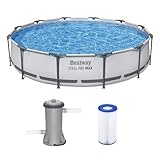
Bestway Steel Pro MAX 12' x 30" Above Ground Swimming Pool Set with Pump | Check Price On Amazon |
|
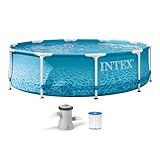
INTEX Beachside Metal Frame 10ft x 30in Round Pool Set w/Pump | Check Price On Amazon |

|
H2OGO! Kids Splash-in-Shade 8-Foot Round Steel Frame Above Ground Pool with Water Mister and Canopy Sunshade, Green Tropical Leaf Print | Check Price On Amazon |
This guide covers every maintenance difference that matters, with the specific measurements, thresholds, and frequencies that apply to saltwater pools and not to traditional chlorine pools.
BY THE NUMBERS
Saltwater Pool Maintenance – What the Research Shows
Sources: Pool and Hot Tub Alliance (PHTA), CDC Healthy Swimming Program, NSF/ANSI 50
How Does a Saltwater Pool Actually Work?
A saltwater pool is still a chlorine pool. The difference is that chlorine is generated on-site by a saltwater chlorine generator (SWCG), also called a salt cell or salt chlorinator, instead of being added manually as tablets, granules, or liquid.

- Intelligent Navigation with Full Coverage: Equipped with 11 high-precision sensors and enhanced dual-path algorithms. The optimized WavePath cleaning pattern ensures systematic coverage with minimal overlap, while adaptive navigation analyzes pool layout in real time to eliminate missed spots
- Dual Filtration for Crystal-Clear Water: Advanced dual-layer filtration system features a replaceable 3-micron ultra-fine filter paired with a 180-micron standard filter. Effectively captures fine dust, sand, leaves, and debris for visibly cleaner and healthier pool water
- Comprehensive Pool Cleaning: Engineered to clean the pool floor, walls, waterline, and shallow areas (above 12 inches). The Caterpillar Treads system enhances mobility and climbing ability, ensuring thorough coverage across all pool zones
- Reliable Performance with 2-Year Warranty: Trusted by over 500,000 pool owners worldwide, this robotic pool cleaner delivers consistent, high-performance results. Built for durability and backed by a 2-year warranty and responsive customer support for worry-free ownership
The SWCG consists of two components: a control box and a salt cell. The salt cell is a chamber containing titanium plates coated with ruthenium or iridium, installed directly in the return plumbing line after the filter and heater.
As pool water (with dissolved salt at 2,700-3,400 ppm) passes across the electrified titanium plates, electrolysis splits sodium chloride (NaCl) molecules into sodium hypochlorite and hypochlorous acid, which are the same active sanitizing compounds found in liquid chlorine. The cell produces free chlorine continuously at a rate determined by the output percentage you set on the control box and the hours your pump runs each day.
Once the chlorine has sanitized the water, it reverts back to sodium chloride and the cycle repeats. This closed-loop process means your salt level stays relatively stable over time, only dropping from splash-out, backwashing, or heavy rainfall dilution.
Understanding this electrochemical process explains nearly every maintenance difference covered in the sections below. The SWCG does the dosing work, but your job shifts to managing the conditions that allow the cell to do that work correctly.
What Are the Key Saltwater Pool Maintenance Differences?
Saltwater pool maintenance differs from traditional chlorine pool care in six primary areas: salt level monitoring, salt cell inspection and cleaning, pH management (which drifts higher in saltwater pools), cyanuric acid targets, calcium hardness management, and equipment compatibility checks.
Everything else, including brushing, vacuuming, filter maintenance, shock treatment, and water testing frequency, follows the same fundamental schedule as a traditional chlorine pool.
The table below shows the most important maintenance differences side by side.
| Maintenance Area | Saltwater Pool | Traditional Chlorine Pool |
|---|---|---|
| Chlorine source | Generated by SWCG continuously | Added manually as tablets, granules, or liquid |
| Free chlorine target | 2-4 ppm | 2-4 ppm |
| pH drift direction | Consistently rises (alkaline drift) | Varies; tablets lower pH over time |
| pH target range | 7.2-7.6 (monitor 2x weekly) | 7.2-7.8 (monitor weekly) |
| Cyanuric acid (stabilizer) | 70-80 ppm | 30-50 ppm |
| Salt level monitoring | Monthly or after heavy rain/splash-out | Not applicable |
| Cell inspection | Every 3 months (inspect and clean if needed) | Not applicable |
| Calcium hardness target | 200-400 ppm (strict upper limit) | 200-400 ppm (same range) |
| Shock treatment frequency | Monthly or after heavy bather load | Weekly or bi-weekly |
| Equipment compatibility | Salt-rated equipment required for some components | Standard equipment throughout |
What Salt Level Does a Saltwater Pool Need?
Most saltwater chlorine generators require a salt level of 2,700-3,400 ppm (parts per million) to operate efficiently. The specific target varies by manufacturer: Pentair recommends 3,200 ppm for its IntelliChlor cells, Hayward targets 2,700-3,400 ppm for its AquaRite systems, and Jandy specifies 3,000-3,500 ppm for its AquaPure systems.
At 3,200 ppm, pool water contains roughly one-tenth the salinity of ocean water (approximately 35,000 ppm), which means most swimmers cannot taste or feel the difference from fresh water.
Low salt causes the cell to work harder and produce less chlorine, triggering a low-salt alarm on the control box. High salt, above 4,000 ppm on most systems, triggers a high-salt shutdown to protect the cell from accelerated corrosion of its titanium plates.
Salt level drops from three sources: splash-out and evaporation carry-over (water that leaves the pool takes dissolved salt with it), backwashing (which expels pool water), and heavy rainfall that dilutes the water volume. Salt does not evaporate with water, so if you see the level drop after a dry week with no rainfall and no backwash, you have a leak that deserves investigation.
Test salt level monthly using a digital salt meter or salt test strips designed for saltwater pools. Many SWCG control boxes display a salt reading, but factory-calibrated standalone meters tend to be more accurate, especially on older units where sensor drift is common.
How to add salt: Use only food-grade or pool-grade sodium chloride (NaCl) at 99% purity or higher. Never use rock salt, table salt with iodine, or water-softener salt with anti-caking agents, as impurities can stain surfaces and damage the cell. Broadcast the salt evenly across the pool, brush it to dissolve, and allow the pump to run for 24 hours before retesting. One 40-pound bag of pool salt raises a 10,000-gallon pool by approximately 480 ppm. For precise dosing based on your exact pool volume, use our pool salt calculator.
Why Does pH Rise Faster in a Saltwater Pool?
Saltwater pools experience consistent alkaline drift because the electrolysis process that produces chlorine also generates hydroxide ions (OH-) as a byproduct, which raises pH. Traditional chlorine pools using trichlor tablets have the opposite problem because trichlor has a pH of approximately 2.8-3.0, which actively pulls pool pH downward over time.
In a saltwater pool with no counteracting acidic chlorine source, pH can rise from 7.4 to above 7.8 within a week during peak swimming season. A pH above 7.8 reduces chlorine effectiveness significantly: at pH 7.0, approximately 73% of your free chlorine exists as hypochlorous acid (the sanitizing form), while at pH 7.8 that drops to approximately 33%, according to the CDC Healthy Swimming guidelines.
This means a saltwater pool running at pH 7.8 with 3 ppm free chlorine has roughly the same sanitizing power as a pool at pH 7.2 with 1.4 ppm free chlorine. The consequences of high pH include ineffective sanitization, cloudy water, and calcium scaling on the salt cell plates.
Test pH at least twice per week in summer using a liquid drop test kit. Test strips are acceptable for quick checks but are accurate only to within 0.2-0.5 pH units, which is insufficient for the tighter management saltwater pools require.
To lower pH, use muriatic acid (hydrochloric acid) or dry acid (sodium bisulfate). Muriatic acid is faster-acting and less expensive but requires careful handling with proper eye protection and gloves. Add acid to a bucket of water (never water to acid) and distribute it near a return jet with the pump running. For a 20,000-gallon pool at pH 7.8, approximately 1 quart (32 oz) of 31.45% muriatic acid lowers pH by roughly 0.2-0.3 units. For a custom calculation tailored to your pool’s volume and current pH, use a swimming pool pH calculator.
Total alkalinity (TA) works as the buffer that controls how easily pH moves. A TA of 80-120 ppm prevents wild pH swings in both directions, but saltwater pool operators often benefit from keeping TA toward the lower end of that range (80-100 ppm) to slow the rate of alkaline drift without sacrificing buffering capacity entirely.
What Cyanuric Acid Level Does a Saltwater Pool Need?
Saltwater pools require a cyanuric acid (CYA) level of 70-80 ppm, compared to the 30-50 ppm typically recommended for traditional chlorine pools. The higher target is needed because the SWCG produces chlorine continuously without any built-in stabilization, and UV radiation from sunlight can destroy unprotected free chlorine at a rate that deplets 50-90% of it within 4-6 hours of direct sun exposure.
Cyanuric acid (also called stabilizer or conditioner) works by forming a temporary bond with free chlorine molecules, shielding them from UV degradation without preventing them from sanitizing. At 70-80 ppm CYA, chlorine half-life in direct sunlight extends from roughly 35 minutes (unprotected) to several hours.
However, CYA above 100 ppm creates a condition called chlorine lock, where so much chlorine is bound to CYA molecules that the free chlorine cannot effectively sanitize the water even when test results show adequate levels. This is why the CDC and PHTA set a maximum CYA recommendation of 100 ppm for residential pools.
CYA accumulates in the water because it does not break down or evaporate. If your CYA creeps above 90 ppm, the only way to lower it is to drain a portion of the pool (typically 25-33% of the volume) and refill with fresh water. A pool dilution calculator can help you determine the exact amount to drain. Test CYA monthly using a cyanuric acid test kit designed specifically for this measurement, as standard 5-in-1 test strips are not accurate enough.
To raise CYA, add granular cyanuric acid (pool stabilizer/conditioner) by dissolving it in a bucket of warm water first, then adding it near a return jet. CYA dissolves slowly, so allow 24-48 hours before retesting. For a 10,000-gallon pool, approximately 1 pound of granular CYA raises the level by 10 ppm.
How Do You Inspect and Clean a Salt Cell?
Salt cell inspection and cleaning is the single maintenance task unique to saltwater pools with no equivalent in traditional chlorine pool care. The salt cell (technically called the electrolytic cell) should be visually inspected every 3 months and cleaned whenever calcium scale buildup is visible on the titanium plates.
The inspection and cleaning process takes approximately 30-45 minutes and requires no special skills. Cleaning too frequently damages the protective coating on the titanium plates, so only clean when you actually see scale, not on a fixed calendar schedule.
Here is a step-by-step guide to the correct inspection and cleaning procedure.
STEP-BY-STEP GUIDE
How to Inspect and Clean a Saltwater Pool Salt Cell
7 steps · Estimated time: 30-45 minutes · Frequency: every 3 months or when scale is visible
Turn off the pump and SWCG control box
Switch off the pump at the breaker and turn the SWCG control box to the “off” position before touching any plumbing. Never remove the cell while the pump is running or power is applied to the cell.
Disconnect the cell from the plumbing union fittings
Unscrew the union fittings on each end of the cell by hand. Have a bucket ready to catch the water that drains from the cell housing as you remove it.
Hold the cell up to light and inspect the titanium plates
Look through the cell from one end with a light source at the other end. White or gray calcium deposits on the plates look like rough, chalky buildup. If the plates are clean and shiny, reinstall the cell without cleaning.
Mix a dilute acid cleaning solution (4:1 water to acid)
In a dedicated plastic container, mix 1 part muriatic acid to 4 parts water (always add acid to water, not water to acid). Wear chemical-resistant gloves and eye protection. A 1-gallon batch is typically enough for one cleaning.
Soak the cell in the acid solution for 5-15 minutes
Plug one end of the cell with a rubber cap or the cell’s own end cap, fill it with the acid solution, then plug the other end. Do not soak for longer than 15 minutes; prolonged acid contact degrades the ruthenium or iridium coating on the titanium plates, which permanently reduces cell efficiency and shortens its lifespan.
Rinse the cell thoroughly with a garden hose
Drain the acid solution into a bucket (neutralize it with baking soda before disposal), then rinse the cell interior thoroughly with fresh water from a garden hose. Inspect the plates again to confirm scale has been removed. Repeat the soak if heavy deposits remain.
Reinstall the cell and restart the system
Check the union o-rings for cracks or flattening before reinstalling; replace them if needed. Tighten the unions hand-tight plus one quarter turn. Restart the pump, then restore power to the SWCG control box and confirm the cell indicator light shows normal operation.
If you find yourself cleaning the salt cell more than twice per season, the root cause is almost always high calcium hardness in the water. Maintaining calcium hardness at 200-400 ppm and keeping pH below 7.6 dramatically reduces scale formation on the cell plates.
Some SWCG systems (including the Pentair IntelliChlor and Hayward AquaRite) include a self-cleaning function that periodically reverses the polarity of the electrical current to dislodge light scale buildup. Even with self-cleaning cells, manual inspection every 3 months is still recommended to catch scale the reversal cycle cannot handle.
What Are the Correct Water Chemistry Targets for a Saltwater Pool?
Saltwater pool water chemistry follows the same basic framework as any chlorine pool, with three significant differences in target values: a higher cyanuric acid range (70-80 ppm), a lower pH tolerance window (7.2-7.6 due to alkaline drift), and a strict calcium hardness ceiling driven by the salt cell’s vulnerability to scale.
The table below shows the complete chemistry target ranges for a saltwater pool, compared to the traditional chlorine pool equivalents for reference.
| Parameter | Saltwater Pool Target | Traditional Chlorine Pool | Why It Differs |
|---|---|---|---|
| Free Chlorine | 2-4 ppm | 2-4 ppm | Same target; generation method differs |
| pH | 7.2-7.6 | 7.2-7.8 | Saltwater pools trend alkaline; tighter upper limit protects cell |
| Total Alkalinity | 80-120 ppm (lower end preferred) | 80-120 ppm | Lower TA slows alkaline drift in saltwater pools |
| Cyanuric Acid (CYA) | 70-80 ppm | 30-50 ppm | SWCG produces unstabilized chlorine; higher CYA protects it from UV |
| Calcium Hardness | 200-400 ppm (strict upper limit) | 200-400 ppm | High calcium accelerates scale on cell plates |
| Salt Level | 2,700-3,400 ppm (per manufacturer) | Not applicable | Required for electrolytic chlorine production |
| Combined Chlorine (Chloramines) | Below 0.5 ppm | Below 0.5 ppm | Same target; shock when combined chlorine exceeds this |
| TDS (Total Dissolved Solids) | Below 6,000 ppm above fill water TDS | Below 1,500-2,000 ppm above fill | Salt itself raises baseline TDS by 3,000+ ppm; standard TDS targets do not apply |
Understanding the Langelier Saturation Index for Saltwater Pools
The Langelier Saturation Index (LSI) is a calculated score that tells you whether your pool water will tend to scale (deposit calcium) or corrode (dissolve pool surfaces and equipment). For saltwater pools, managing the LSI between -0.3 and +0.3 is more important than in traditional chlorine pools because the salt cell is extremely sensitive to scaling, and corrosive water attacks the cell’s protective coatings.
The LSI takes into account pH, total alkalinity, calcium hardness, water temperature, and TDS. A positive LSI (above 0) means the water is scale-forming; a negative LSI (below 0) means it is corrosive. You can calculate your pool’s LSI using a pool LSI calculator or test kit with manual charts.
The practical implication: if your calcium hardness is at the high end of the range (350-400 ppm) and your pH drifts above 7.6, your LSI will push into scaling territory and you will see calcium deposits on the cell plates, tile, and coping faster than normal.
How Often Should You Test the Water in a Saltwater Pool?
Test free chlorine, pH, and total alkalinity at least twice per week during swimming season in a saltwater pool. The testing frequency is higher than many pool owners expect because pH drifts upward continuously and an unchecked saltwater pool can reach pH 8.0 within 10-14 days during peak summer, severely reducing chlorine effectiveness.
The full monthly testing schedule for a saltwater pool looks like this:
- Twice weekly: Free chlorine (target 2-4 ppm), pH (target 7.2-7.6)
- Weekly: Total alkalinity (target 80-120 ppm), combined chlorine (target below 0.5 ppm)
- Monthly: Salt level, cyanuric acid (CYA), calcium hardness, TDS
- Every 3 months: Salt cell visual inspection
- After heavy rain: Salt level, pH, free chlorine (rain is acidic and dilutes both salt and alkalinity)
- After heavy bather load: Free chlorine, combined chlorine
Use a Taylor K-2006 complete test kit or equivalent FAS-DPD liquid drop test kit for free and combined chlorine, and a standard phenol red comparator for pH. Test strips are acceptable for quick daily checks between your twice-weekly liquid tests, but they are not accurate enough to guide chemical addition decisions.
Professional water analysis at a pool store is useful once per month during peak season to catch parameters your home test kit may miss, including phosphates, metals, and a full TDS reading. Bring a fresh water sample from elbow depth in the deep end (not from near a return jet) for the most accurate result.
Do Saltwater Pools Still Need Shock Treatment?
Yes. Saltwater pools still need shock treatment (also called superchlorination), but less frequently than traditional chlorine pools. The SWCG handles routine sanitization, so shock is needed primarily to break down combined chlorine (chloramines), treat algae breakouts, and oxidize accumulated organic waste after heavy pool parties or extended periods of high bather load.
Shock a saltwater pool when any of the following conditions occur: combined chlorine rises above 0.5 ppm, visible algae appears, the pool has been idle for more than two weeks, or you notice a strong chlorine smell (which is actually the smell of chloramines, not free chlorine). For routine maintenance without any of those triggers, once per month is sufficient for most saltwater pools.
Use calcium hypochlorite shock (cal-hypo at 65-75% available chlorine) or non-chlorine shock (potassium monopersulfate) for routine monthly oxidation. Avoid using dichlor (sodium dichloroisocyanurate) as your primary shock in a saltwater pool because it contains CYA, which raises your stabilizer level with every dose and can push CYA above 100 ppm faster than you expect.
For a 20,000-gallon pool, a standard shock dose is 2 pounds of cal-hypo, which raises free chlorine by approximately 10-14 ppm. To get the precise shock dose for your pool size and current chemistry, try the pool shock calculator. Add shock in the evening with the pump running, allow free chlorine to drop back to 4 ppm or below before allowing swimmers to re-enter, and always add shock directly to the pool water (never through the skimmer, which directs concentrated chemicals through the filter and pump). You can learn more about the specific differences between these treatments in this detailed explanation of how pool shock works differently from standard chlorine addition.
What Equipment Compatibility Issues Do Saltwater Pools Create?
Saltwater at 3,000-3,400 ppm is mildly corrosive to certain metals and materials, particularly zinc, galvanized steel, copper, and some natural stone surfaces. The corrosion risk at pool-level salinity is relatively low for properly selected equipment, but several specific components require attention when converting to or maintaining a saltwater pool.
The following equipment categories need specific consideration for saltwater compatibility.
Heaters: Gas pool heaters and electric heat pumps require a sacrificial zinc anode installed in the plumbing near the heater when used with a saltwater system. Hayward, Pentair, and Jandy all sell salt-specific anode kits for their heater lines. Without the anode, electrolytic corrosion from stray electrical currents can pit the heat exchanger, particularly in copper heat exchangers. Check and replace the zinc anode annually.
Handrails and ladders: Standard chrome-plated steel handrails corrode in saltwater pools within 1-3 seasons. Replace with 316 stainless steel, resin, or fiberglass handrails rated for saltwater exposure. 304 stainless steel, which is the grade used in most budget pool handrails, is not sufficient for continuous saltwater contact.
Light fixtures: Most modern pool lights use sealed LED assemblies that tolerate saltwater without issue. Older incandescent fixtures with metal housings may corrode at the gasket and junction points. Check the fixture manufacturer’s documentation for saltwater compatibility before assuming existing lights are rated for it.
Pool surface: Plaster, pebble, and quartz finishes tolerate saltwater well. Vinyl liners also perform well in saltwater, though some early-generation liners not formulated for salt exposure show accelerated degradation at the waterline and around step inserts. Confirm with the liner manufacturer that the material is salt-rated before converting an above-ground vinyl pool to saltwater.
Natural stone coping and decking: Some porous natural stones (limestone, sandstone, certain types of travertine) can absorb salt and experience accelerated spalling and surface degradation. Seal natural stone coping annually with a penetrating stone sealer rated for pool chemical exposure.
Automation and control systems: If you have an existing pool automation system, verify the control board accepts a compatible SWCG before purchasing. Pentair IntelliTouch and Hayward OmniLogic both integrate directly with their manufacturer’s salt cells. Third-party SWCG units can sometimes be integrated with other-brand automation systems, but the integration is less seamless and some diagnostic features may be unavailable.
What Is the Correct Weekly Maintenance Schedule for a Saltwater Pool?
The weekly maintenance schedule for a saltwater pool covers the same physical tasks as any pool but adds two additional checks: SWCG operational status and salt-level monitoring after any significant water loss event. The physical cleaning tasks (brushing, vacuuming, skimmer cleaning) are identical to those in a traditional chlorine pool.
The schedule below applies to a typical residential pool of 15,000-20,000 gallons during active swimming season.
| Frequency | Task | Target / Threshold |
|---|---|---|
| Daily | Check SWCG status light / control box indicator | No fault codes; cell producing chlorine |
| Daily | Empty skimmer and pump baskets | No debris blockage; clear baskets |
| 2x weekly | Test free chlorine and pH | FC: 2-4 ppm; pH: 7.2-7.6 |
| 2x weekly | Adjust pH if outside 7.2-7.6 | Add muriatic acid if pH above 7.6 |
| Weekly | Test total alkalinity and combined chlorine | TA: 80-120 ppm; CC: below 0.5 ppm |
| Weekly | Brush pool walls, steps, and floor | Nylon bristle brush for all surfaces |
| Weekly | Vacuum pool or run robotic cleaner | Remove all settled debris from floor |
| Weekly | Check filter pressure gauge | Clean or backwash at 25% above clean baseline PSI |
| Monthly | Test salt level, CYA, calcium hardness | Salt: 2,700-3,400 ppm; CYA: 70-80 ppm; CH: 200-400 ppm |
| Monthly | Shock treatment (unless triggered earlier) | 2 lbs cal-hypo per 20,000 gallons |
| Every 3 months | Inspect salt cell visually | Clean if calcium scale is visible on titanium plates |
| Annually | Replace zinc anode (heater), lubricate o-rings, inspect cell wiring | Before pool opening each season |
A comprehensive pool maintenance schedule covering every daily, weekly, and monthly task is available as a printable checklist for reference alongside this guide.
How Do You Set the SWCG Output Percentage Correctly?
The SWCG output percentage setting determines what fraction of its maximum chlorine production capacity the cell operates at during each pump cycle. Setting it correctly is how you maintain 2-4 ppm free chlorine without over- or under-chlorinating the pool, and it requires adjustment as seasons, temperatures, and bather loads change.
Start by calculating your pool’s chlorine demand. Run the SWCG at 50% output with your pump running 8 hours per day. After 48 hours, test free chlorine. If it is below 2 ppm, increase the output by 10% and retest in 24 hours. If it is above 4 ppm, decrease by 10% and retest. Adjust in small increments until free chlorine stabilizes at 3 ppm, which is the ideal midpoint of the target range.
Three conditions require recalibrating the output percentage.
- Water temperature above 85 degrees F: Higher water temperatures increase chlorine consumption by accelerating chemical reactions and bacterial growth. Increase output by 10-15% when sustained water temperatures exceed 85°F.
- Heavy bather load: Each swimmer introduces organic waste (sweat, body oils, sunscreen) that consumes free chlorine. After a pool party with 10+ swimmers, increase output by 10-20% for 24-48 hours.
- Extended rainy periods: Rain dilutes salt, alkalinity, and cyanuric acid. Lower CYA means faster chlorine degradation from UV, requiring higher output to compensate until chemistry is rebalanced.
Do not rely entirely on the SWCG’s built-in ORP (oxidation-reduction potential) sensor to control output automatically without periodic manual verification. ORP sensors measure the sanitizing power of the water, not the specific free chlorine concentration, and CYA levels above 50 ppm cause ORP readings to underestimate actual sanitizing effectiveness. Always verify with a direct free chlorine test at least twice per week, regardless of what the control box display shows.
What Are the Most Common Saltwater Pool Problems and How Do You Fix Them?
Saltwater pools develop a predictable set of problems that are distinct from or more common than those in traditional chlorine pools. Most problems trace back to one of three root causes: pH management failures, salt cell scale buildup, or salt level drift outside the SWCG’s operating range.
Low Free Chlorine Despite the SWCG Running
Low free chlorine with a functioning SWCG is the most common saltwater pool problem, and it has four possible root causes in order of likelihood: CYA above 90 ppm (chlorine lock), salt level below the minimum operating threshold, cell scale blocking the titanium plates, or a failing cell near the end of its lifespan.
Diagnose in this sequence: Test CYA first. If above 90 ppm, dilute by draining 25-33% of the pool. If CYA is in range, test salt level. If salt is low, add pool salt and allow 24 hours to dissolve before retesting. If salt is in range, inspect the cell for scale and clean if needed. If the cell is clean and operational, increase the output percentage to its maximum (100%) and test free chlorine after 48 hours. If free chlorine still does not reach 2 ppm at maximum output, the cell has reached end of life and requires replacement.
Persistent High pH Requiring Frequent Acid Additions
If you need to add muriatic acid more than twice per week to keep pH below 7.6, the root cause is almost always high total alkalinity above 120 ppm combined with the SWCG’s natural alkaline byproduct. Reducing total alkalinity to 80-90 ppm will slow the rate of pH drift significantly without compromising pH buffering capacity.
To lower total alkalinity, add muriatic acid in larger single doses (with the pump off or running on low) and allow it to distribute slowly, which preferentially reduces alkalinity more than pH. After adding the acid, run the pump normally and aerate the water by directing return jets toward the surface, which drives off carbon dioxide and nudges pH back up slightly without affecting alkalinity. Repeat over several days rather than trying to drop TA in one session.
Calcium Scale on the Cell and Tile Waterline
Calcium scale on the cell plates and a white crusty line at the waterline both indicate the same root cause: calcium hardness above 400 ppm combined with pH trending above 7.6. The combination creates a positive Langelier Saturation Index, which means the water is actively depositing calcium on every surface it contacts.
To address this, lower pH to 7.2-7.4, test calcium hardness, and if it is above 400 ppm, dilute by draining 20-30% of the pool and refilling with fresh water. Clean the cell and tile with a dilute acid solution as described in the cell cleaning section. Going forward, maintain pH strictly below 7.6 and keep calcium hardness at 200-350 ppm rather than allowing it to approach the 400 ppm ceiling.
Green Algae in a Saltwater Pool
Green algae in a saltwater pool means free chlorine fell too low for too long, typically due to one of the root causes discussed above (low salt, high CYA, scaling cell, or equipment failure). The SWCG does not make a saltwater pool algae-proof; it only maintains chlorine continuously when operating correctly and when pool chemistry is within range.
Treat algae in a saltwater pool by manually shocking the pool with 2-3 pounds of cal-hypo per 10,000 gallons, brushing all surfaces thoroughly with a stiff-bristle pool brush, and running the filter continuously until the water clears. Do not increase SWCG output alone to treat an algae bloom; the cell cannot produce chlorine at the super-shock levels needed to kill established algae colonies quickly enough to prevent spread.
SWCG Displaying a Low Salt Warning Despite Correct Salt Level
A low-salt warning on the control box when your independent salt meter shows the level is correct indicates one of three issues: sensor drift in the control board, calcium scale on the flow sensor, or high TDS from mineral buildup masking the electrical conductivity reading. Clean the flow sensor cell with a soft cloth, verify the salt level with a calibrated standalone meter, and if the discrepancy persists, consult the SWCG manufacturer’s calibration procedure for the specific model.
Saltwater Pool Myths vs. Facts
Several persistent misconceptions about saltwater pools lead owners to either skip important maintenance tasks or apply incorrect treatments. The widget below addresses the most common ones directly.
MYTH VS FACT
Saltwater Pool Maintenance – Common Myths Debunked
Separating fact from fiction on the most common saltwater pool misconceptions
✗ Myth
A saltwater pool is completely self-maintaining and does not need regular chemical testing.
✓ Fact
Saltwater pools still require testing of free chlorine, pH, alkalinity, salt level, CYA, and calcium hardness on a regular schedule. The SWCG automates chlorine production but does not adjust pH, alkalinity, or stabilizer. pH drifts upward continuously in saltwater pools and can exceed 8.0 within two weeks without correction.
✗ Myth
Saltwater pools do not use chlorine, so they are safer and more natural.
✓ Fact
Saltwater pools are chlorine pools. The SWCG produces sodium hypochlorite and hypochlorous acid, which are chemically identical to the active compounds in liquid chlorine. The free chlorine target range (2-4 ppm) is the same as a traditional chlorine pool. The difference is in how chlorine is delivered, not whether it is present.
✗ Myth
Salt corrodes everything in and around the pool, including concrete decking and metal equipment.
✓ Fact
Pool-level salinity (2,700-3,400 ppm) is approximately one-tenth of ocean salinity (35,000 ppm). At these concentrations, most pool equipment and properly sealed concrete are not at significant risk. Specific metals (zinc-plated steel, some grades of stainless steel) and porous unsealed stone do require attention or replacement, but correctly specified equipment handles saltwater without accelerated corrosion.
✗ Myth
You never need to shock a saltwater pool because the SWCG constantly produces chlorine.
✓ Fact
Shock treatment is still necessary to break down combined chlorine (chloramines) and oxidize accumulated organic waste. The SWCG produces chlorine at maintenance levels; it cannot produce the superchlorination levels needed to address chloramine buildup or algae treatment without shock. Monthly shock treatment with calcium hypochlorite is standard practice for saltwater pool maintenance.
✗ Myth
The same cyanuric acid level used in a traditional chlorine pool works fine in a saltwater pool.
✓ Fact
Saltwater pools require 70-80 ppm CYA, compared to the 30-50 ppm used in traditional chlorine pools. The SWCG produces unstabilized chlorine (sodium hypochlorite has no built-in CYA), so more stabilizer is needed to protect the generated chlorine from UV degradation. Operating a saltwater pool at 30-50 ppm CYA results in excessive chlorine loss during daylight hours and forces the cell to work at higher output than necessary.
How Does Seasonal Maintenance Differ for a Saltwater Pool?
Saltwater pool seasonal maintenance follows the same general framework as any pool, with three specific differences at opening and closing: salt level verification, cell inspection, and SWCG power-down protocol before winterizing.
Opening a Saltwater Pool in Spring
When opening a saltwater pool after winter, balance the water chemistry fully before turning on the SWCG. Running the cell in water that is out of chemistry balance, especially at low temperatures, stresses the titanium plates and can trigger false fault codes. Water temperature must be above 50°F (10°C) for most SWCG models to begin producing chlorine; below this threshold, the electrolysis process is insufficient and many units simply will not operate.
Complete the spring opening in this sequence: remove and clean the cover, reconnect the cell, test and balance pH (7.2-7.6), total alkalinity (80-120 ppm), and calcium hardness (200-400 ppm) before starting the SWCG. Then test the salt level and add salt if needed, waiting 24 hours for it to fully dissolve. Start the SWCG at 50% output and test free chlorine after 48 hours before adjusting the output percentage. The full step-by-step process for opening and closing a saltwater pool each season walks through every task in sequence.
Closing a Saltwater Pool for Winter
The most important winterizing step specific to saltwater pools is removing the salt cell from the plumbing and storing it indoors. Water that freezes inside the cell housing can crack the housing and destroy the titanium plates permanently. This is a $300-800 replacement you avoid entirely by taking 10 minutes to remove and store the cell before the first freeze.
Before closing, run the SWCG at 100% output for 24-48 hours to superchlorinate the water. Then turn off and remove the cell, plug the plumbing unions with the provided winterizing plugs, and follow your standard pool winterizing procedure. Do not add chlorine tablets or floaters to replace the SWCG during winter closure in climates where the pool is fully closed; the water chemistry will hold through proper winterizing chemicals until spring opening. A complete pool opening checklist covering every task you need to complete in spring is useful to bookmark before the season ends.
What Does It Cost to Maintain a Saltwater Pool Annually?
Annual chemical costs for a saltwater pool run approximately $300-600 per year for a 20,000-gallon residential pool, compared to $600-1,200 per year for a traditionally chlorinated pool of the same size. The savings come from replacing the bulk of your chlorine purchases (the most expensive ongoing chemical cost) with electricity to run the SWCG.
The table below breaks down the specific annual costs for both systems on a 20,000-gallon pool in a warm-climate market (eight-month swim season), using current typical retail pricing.
COST REFERENCE
Annual Pool Chemical and Equipment Cost Comparison – 20,000-Gallon Pool
All values pre-calculated for an 8-month swim season. Find your scenario to estimate annual costs.
| Cost Category | Saltwater Pool (Annual) | Traditional Chlorine Pool (Annual) |
|---|---|---|
| Chlorine (tablets, liquid, or granular) | $0-50 (shock only) | $350-600 |
| Pool salt (top-off as needed) | $30-80 | $0 |
| pH decreaser (muriatic acid or dry acid) | $80-150 | $30-60 |
| Cyanuric acid (stabilizer) | $20-40 (less frequent top-off) | $20-40 |
| Alkalinity increaser, calcium hardness, clarifiers | $50-120 | $50-120 |
| SWCG electricity cost | $50-100 | $0 |
| Salt cell replacement (amortized over 4-year lifespan) | $100-175/year | $0 |
| Total Annual Chemical and Cell Cost | $330-715 | $450-820 |
Annual costs calculated for a 20,000-gallon pool in a warm climate with an 8-month swim season. Salt cell replacement amortized at $400-700 per cell over a 4-year average lifespan. Electricity cost at $0.12/kWh for a 1,400-watt SWCG running 8 hours per day. Individual costs vary significantly by local chemical prices, climate, and bather load.
The upfront cost of converting to saltwater (typically $800-2,000 installed for the SWCG system) adds a payback period of 2-5 years before the annual savings offset the initial investment. For owners planning to stay in a home for more than 5 years, the economics generally favor saltwater. For a detailed cost breakdown comparing both systems over a 10-year horizon, the honest comparison between saltwater and chlorine pools covers the full financial picture alongside maintenance and comfort differences.
Frequently Asked Questions About Saltwater Pool Maintenance
How do I know if my salt cell is failing?
Quick Answer: A failing salt cell shows one or more of these signs: free chlorine consistently low (below 1 ppm) despite maximum output setting, the control box displays a “check cell” or “cell failure” fault code, the cell plates appear pitted, warped, or partially dissolved on inspection, or the cell is producing visible gas bubbles from only a portion of the plate stack.
Salt cells fail gradually rather than all at once. The first sign is usually that the output percentage required to maintain 2-4 ppm free chlorine keeps climbing until the cell is running at 100% and still cannot hold the target level. A cell at end of life will generate a “low production” warning on the control box and eventually a complete failure code. Have the cell tested by a pool professional if you suspect failure: most SWCG installers and pool stores can test cell output with a direct current meter to confirm whether the cell is generating at its rated capacity.
Typical salt cell lifespan is 3-5 years (approximately 10,000 operating hours) under normal conditions. Cells fail earlier when calcium hardness is consistently above 400 ppm, when CYA is routinely below 50 ppm (forcing the cell to run at maximum output to compensate for UV chlorine loss), or when the cell is cleaned with acid more frequently than necessary (degrading the electrode coating).
Can I use any pool salt in a saltwater pool?
Quick Answer: Use only food-grade or pool-grade sodium chloride (NaCl) at 99% purity or higher. Avoid iodized table salt (iodine can stain pool surfaces), rock salt with clay or mineral impurities, or water-softener salt with anti-caking additives that leave residue on cell plates.
Most pool salt sold at pool supply stores and large home improvement retailers meets the 99% NaCl purity requirement. Bags are typically labeled as “pool salt” or “solar salt,” though solar salt specifically is the evaporated salt form and is suitable. The 40-pound bag format is standard and most convenient for adding measured quantities to precisely control salt levels. One 40-pound bag raises a 10,000-gallon pool by approximately 480 ppm, so a 20,000-gallon pool starting at 2,500 ppm and targeting 3,200 ppm needs approximately three 40-pound bags (240 pounds total, raising the level by 1,440 ppm at 60 ppm per 10 lbs per 10,000 gallons).
Why does my saltwater pool smell like chlorine?
Quick Answer: A chlorine smell in a saltwater pool almost always indicates elevated combined chlorine (chloramines), not excess free chlorine. Chloramines form when free chlorine reacts with nitrogen compounds from swimmer sweat, urine, and body oils. The correct fix is shock treatment to break down the chloramines, not reducing the SWCG output.
The specific compound responsible for the “pool smell” is trichloramine (nitrogen trichloride), which forms in water with inadequate free chlorine relative to the nitrogen load introduced by bathers. The same compound causes red eyes and skin irritation, which are symptoms of too little chlorine (allowing chloramine buildup), not too much. Test combined chlorine: if it exceeds 0.5 ppm, shock the pool with 2-3 lbs of cal-hypo per 10,000 gallons. You can learn the precise difference between these chlorine forms in the guide on what free chlorine, combined chlorine, and total chlorine actually mean.
How long does it take for salt to dissolve after adding it to the pool?
Quick Answer: Pool-grade salt fully dissolves in 24-48 hours with the pump running at normal speed. Do not test salt level or adjust SWCG settings until at least 24 hours have passed after adding salt. The SWCG control box may display a low-salt reading during this period, which resolves once the salt is fully circulated.
Speed up dissolution by brushing the salt along the pool floor as you add it. Pour salt near the return jets (not in the skimmer, which can clog the pump basket with undissolved salt granules), and avoid adding more than 100 pounds at a single time to prevent temporary cloudiness. If your pump runs on a variable speed schedule, increase it to the highest speed for the 24 hours after a salt addition to maximize circulation and dissolution rate.
Do I still need to use algaecide in a saltwater pool?
Quick Answer: Preventive algaecide is not necessary in a well-maintained saltwater pool with consistent 2-4 ppm free chlorine, correct CYA, and a functioning SWCG. However, a polyquat algaecide at the start of the season and after any algae treatment is a useful insurance measure for pools in high-sunlight regions or with heavy tree canopy introducing organic debris.
Algaecide treats symptoms; proper chemistry prevents the root cause. A saltwater pool that develops recurring algae despite the SWCG running has a chemistry problem (most commonly CYA above 90 ppm causing chlorine lock, or pH above 7.8 reducing chlorine effectiveness) rather than an algaecide deficiency. Troubleshoot and fix the chemistry first. Use copper-based algaecides with caution in saltwater pools: copper at elevated levels (above 0.2 ppm) can stain pool surfaces, particularly vinyl liners and plaster finishes, in ways that are difficult to remove.
Can I convert an existing chlorine pool to saltwater myself?
Quick Answer: Yes. Converting a traditional chlorine pool to saltwater is a DIY-manageable project for anyone comfortable with basic plumbing and electrical work. The SWCG system installs into the existing return plumbing line after the filter and heater, and the control box mounts near the equipment pad. The process typically takes 4-8 hours for someone with basic skills.
The main decisions before purchasing are matching the SWCG to your pool volume (cells are rated by maximum pool size in gallons, typically 20,000-40,000 gallons for residential units) and verifying electrical compatibility at your equipment panel (most residential SWCGs require a dedicated 120V or 240V circuit). The full process of converting an existing pool to a saltwater chlorine system is covered step by step in a dedicated guide.
What happens to the salt cell in winter?
Quick Answer: Remove the salt cell from the plumbing before the first freeze and store it indoors at temperatures above 32°F (0°C). Water expanding as it freezes inside the cell housing cracks the housing and destroys the titanium plates, which cannot be repaired. Storage at room temperature over winter is safe; the cell does not degrade during dry storage.
Before removing the cell, inspect it and clean off any calcium scale. Cleaning the cell at closing rather than at opening avoids starting the new season with a scaled cell that may already be reducing chlorine output. Rinse the cell with fresh water after cleaning, allow it to dry, and store it in its original box or wrapped in a cloth to prevent physical damage to the plate stack.
Is the salt level in a saltwater pool harmful to plants if backwash water runs into the garden?
Quick Answer: Pool-level saltwater at 3,000-3,400 ppm is mildly saline and can damage salt-sensitive plants if directed onto garden beds repeatedly over a season. A single backwash event is unlikely to cause visible damage to most plants, but regular backwash discharge (weekly backwashing of a sand filter) concentrated in one area can gradually reduce soil fertility for salt-sensitive species.
Redirect backwash discharge to a storm drain, a gravel pit, or a grass area that is not a planted garden bed. If your local municipality restricts pool water discharge to storm drains, check with your local water authority for compliant disposal options. Grass typically tolerates occasional saltwater backwash exposure at pool salinity levels without visible damage.
Saltwater Pool vs. Chlorine Pool: Maintenance Summary
Saltwater pools require more targeted attention to pH management, salt level monitoring, and salt cell maintenance than traditional chlorine pools. They require less hands-on chemical dosing for routine sanitization once the SWCG is correctly set.
The overall maintenance burden is comparable between the two systems, but the type of tasks shifts. Weekly pH correction with muriatic acid replaces weekly chlorine tablet additions. Quarterly cell inspection replaces nothing in a chlorine pool and is the one genuinely new task saltwater ownership introduces. Annual salt top-off (typically 1-3 bags per season for splash-out and dilution) is a small additional cost.
If you are evaluating whether to make the switch, understanding how these two systems compare across chemistry, cost, equipment, and comfort on every dimension will help you make a confident decision. The complete side-by-side comparison of saltwater pools and chlorine pools covers all of those dimensions without a bias toward either system.
For owners who have already converted and want to make sure they are not missing anything in their routine, the core principle is this: test the water twice per week (not just weekly), manage pH aggressively at the lower end of the 7.2-7.6 range, keep calcium hardness below 400 ppm, and inspect the cell every three months. Do those four things consistently and a saltwater pool is genuinely lower-maintenance than its reputation suggests.
| Photo | Best Above-Ground Pools | Price |
|---|---|---|
|
|
Bestway Steel Pro MAX 12' x 30" Above Ground Swimming Pool Set with Pump | Check Price On Amazon |
|
|
INTEX Beachside Metal Frame 10ft x 30in Round Pool Set w/Pump | Check Price On Amazon |
|
|
H2OGO! Kids Splash-in-Shade 8-Foot Round Steel Frame Above Ground Pool with Water Mister and Canopy Sunshade, Green Tropical Leaf Print | Check Price On Amazon |