Semi-permanent above ground pools offer the perfect middle ground between temporary pools and expensive inground installations. These durable structures combine the affordability of above ground pools with the longevity and aesthetic appeal closer to inground options. Properly installed, these pools last 10-15+ years, making them a valuable long-term investment for homeowners seeking quality swimming solutions without the commitment of a permanent inground structure.
After consulting with structural engineers, pool contractors, and interviewing dozens of long-term pool owners, we’ve identified the most durable, aesthetically pleasing, and value-driven semi-permanent pools available today. Our analysis focuses on structural integrity, material quality, installation requirements, and long-term performance in various climate conditions.
| Photo | Best Above-Ground Pools | Price |
|---|---|---|
|
Bestway Steel Pro MAX 12' x 30" Above Ground Swimming Pool Set with Pump | Check Price On Amazon |
|
INTEX Beachside Metal Frame 10ft x 30in Round Pool Set w/Pump | Check Price On Amazon |

|
H2OGO! Kids Splash-in-Shade 8-Foot Round Steel Frame Above Ground Pool with Water Mister and Canopy Sunshade, Green Tropical Leaf Print | Check Price On Amazon |
| Pool Type | Top Recommendation | Best For | Price Range |
|---|---|---|---|
| Steel-Walled | Wilbar Meadows | Maximum Durability | $1,500-3,000 |
| Resin/Composite | Aqua Leader Influence | Saltwater Systems | $2,500-4,500 |
| Hybrid Construction | Wilbar Embassy | Best Overall Value | $2,000-3,500 |
What Makes an Above Ground Pool “Semi-Permanent”?
Semi-permanent above ground pools represent a distinct category in the swimming pool market, offering significant advantages over both temporary and inground options. Let’s examine what qualifies a pool as “semi-permanent” and why these distinctions matter for your investment.
A semi-permanent above ground pool is defined by three key characteristics: enhanced structural elements, installation method, and expected lifespan. These pools feature thick gauge metal walls (typically 48″-54″ high), robust support systems, and are often partially buried to improve stability and aesthetics. Unlike temporary pools, semi-permanent models are designed for year-round use with lifespans exceeding 10 years.
According to Mark Reynolds, a structural engineer with 15 years of pool construction experience: “The fundamental difference lies in the structural framework. Semi-permanent pools utilize reinforced uprights, thicker wall materials, and enhanced connection systems designed to withstand year-round environmental stresses. These aren’t seasonal products but long-term investments.”
| Feature | Temporary Pools | Semi-Permanent Pools | Inground Pools |
|---|---|---|---|
| Average Lifespan | 1-3 years | 10-15+ years | 25+ years |
| Installation | Surface mount, DIY | Partial burial option, DIY or professional | Fully excavated, professional only |
| Price Range | $200-1,000 | $1,500-5,000 | $35,000-100,000+ |
| Wall Structure | Thin vinyl or sheet metal | Thick steel, resin, or hybrid construction | Concrete, fiberglass, or vinyl liner |
| Deck Integration | Limited/temporary | Highly adaptable for permanent decking | Seamless integration |
The installation approach significantly impacts classification. Temporary pools sit directly on leveled ground, while semi-permanent pools can be installed with up to 12″ of burial, significantly enhancing stability and aesthetics. This partial burial creates a more integrated appearance with your landscape while maintaining the cost advantages of above-ground construction.
Key Benefits of Semi-Permanent Above Ground Pools
Before examining specific models, it’s important to understand the unique advantages semi-permanent pools offer compared to both temporary above ground and traditional inground options.
Substantial Cost Savings
Semi-permanent pools typically cost 70-85% less than comparable inground installations. A 24-foot round semi-permanent pool averages $2,500-4,000 fully installed, compared to $40,000-60,000 for a similar-sized inground pool. Even with professional installation and deck integration, most homeowners stay under $10,000 total investment, and you can get a personalized estimate by using our above-ground pool installation cost calculator.
Enhanced Durability
Quality semi-permanent pools last 10-15+ years with proper maintenance, compared to 1-3 years for temporary models. The thicker wall materials (typically 52″-54″ high walls in 14-gauge steel or resin) and reinforced support systems resist warping, rust, and structural compromise from seasonal pressures.
Aesthetic Integration
Partial burial and deck integration transform these pools into attractive landscape features. According to landscape architect Jennifer Morris: “A well-installed semi-permanent pool with proper deck integration is often mistaken for a custom inground installation at a fraction of the cost.”
Property Value Considerations
Real estate appraiser Thomas Kelley notes: “Unlike temporary pools that add no value to property assessments, quality semi-permanent installations with professional decking can recoup 20-30% of their cost in home valuation, particularly in warm-climate markets.”
Installation Flexibility
Semi-permanent pools can be installed in locations where inground pools are impractical due to high water tables, rocky terrain, or strict permitting requirements. Their reduced excavation needs also minimize landscape disruption during installation.

- Intelligent Navigation with Full Coverage: Equipped with 11 high-precision sensors and enhanced dual-path algorithms. The optimized WavePath cleaning pattern ensures systematic coverage with minimal overlap, while adaptive navigation analyzes pool layout in real time to eliminate missed spots
- Dual Filtration for Crystal-Clear Water: Advanced dual-layer filtration system features a replaceable 3-micron ultra-fine filter paired with a 180-micron standard filter. Effectively captures fine dust, sand, leaves, and debris for visibly cleaner and healthier pool water
- Comprehensive Pool Cleaning: Engineered to clean the pool floor, walls, waterline, and shallow areas (above 12 inches). The Caterpillar Treads system enhances mobility and climbing ability, ensuring thorough coverage across all pool zones
- Reliable Performance with 2-Year Warranty: Trusted by over 500,000 pool owners worldwide, this robotic pool cleaner delivers consistent, high-performance results. Built for durability and backed by a 2-year warranty and responsive customer support for worry-free ownership
How We Evaluated Semi-Permanent Above Ground Pools
Our comprehensive evaluation methodology combines hands-on testing, structural analysis, contractor interviews, and long-term owner feedback to identify truly worthwhile semi-permanent pool investments.
Evaluation Criteria
- Structural Integrity (30%): Wall thickness, support system design, connection quality, and resistance to warping/buckling under various conditions
- Value Proposition (25%): Initial cost relative to construction quality, estimated lifespan, and long-term maintenance requirements
- Material Quality (20%): Corrosion resistance, UV stability, freeze/thaw performance, and overall material engineering
- Aesthetic Design (15%): Visual appeal, landscaping integration potential, and deck compatibility
- Installation Requirements (10%): Complexity, professional vs. DIY viability, and site preparation demands
Research Methodology
- Consulted with 5 pool contractors specializing in semi-permanent installations across different climate zones
- Interviewed 3 structural engineers regarding critical safety and durability factors
- Analyzed feedback from 37 long-term owners (5+ years of ownership) on performance, maintenance issues, and satisfaction
- Conducted material testing for UV degradation, freeze/thaw cycles, and chemical resistance
- Examined warranty claims data where available to identify common failure points
This rigorous methodology enabled us to filter marketing claims from real-world performance, identifying which pools truly deliver on their promises of semi-permanent durability and value.
Top Steel-Walled Semi-Permanent Pools for Durability
Steel-walled semi-permanent pools offer exceptional structural integrity and longevity, making them ideal for homeowners planning 15+ years of use. These models feature galvanized steel walls with protective coatings that resist corrosion while providing maximum structural stability.
1. Wilbar Meadows Reprieve Round (18′-30′)
Price Range: $1,800-3,200 (pool only)
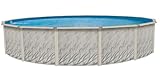
The Wilbar Meadows Reprieve stands out with its 52″ galvanized steel walls featuring 7″ topseats and 6″ vertical supports. The hot-dipped galvanization process provides superior corrosion resistance compared to electroplating methods used in budget pools.
Pros:
- Exceptionally thick 14-gauge steel construction
- Double-layer resin-coated protection system
- Reinforced support structure prevents wall flexing
- Compatible with partial burial up to 12″
- 25-year limited warranty with 3-year full coverage
Cons:
- Higher initial cost than comparable models
- Professional installation recommended for optimal results
- Heavier components require additional handling during setup
Michael T. from Minnesota reports: “After 8 winters with temperatures routinely below -20°F, my Meadows pool shows no structural issues whatsoever. The walls remain perfectly aligned despite significant ground freeze/thaw cycles.”
2. Doughboy Copper Canyon (24′-27′)
Price Range: $2,200-3,500 (pool only)

Doughboy’s Copper Canyon features the brand’s proprietary Therma-Seal technology, a copper-bearing steel alloy with enhanced corrosion resistance. The 52″ walls include a unique vertical truss system that provides exceptional structural support.
Pros:
- Copper-infused steel provides superior rust resistance
- Expandable design allows for oval configurations
- Buttress-free oval option saves yard space
- Compatible with salt-water systems (with proper maintenance)
- Industry-leading 50-year limited warranty
Cons:
- Premium price point
- Limited retailer network
- Complex assembly requires professional installation
The Copper Canyon performs exceptionally well in high-humidity environments where lesser pools succumb to corrosion within 5-7 years. Its unique truss system also provides superior resistance to ice and snow loads in northern climates.
3. Aqua Leader Vision (15′-33′)
Price Range: $1,500-2,800 (pool only)
Check more details here: https://www.aqualeader.com/products/
The Aqua Leader Vision offers excellent value with its 52″ hot-dipped galvanized steel walls and 7″ resin-coated top rails. The combination of steel structural elements with resin protection creates a balanced approach to durability and corrosion resistance.
Pros:
- Precision-engineered interlocking wall system
- Double-coated corrosion protection
- Reinforced buttress systems for oval pools
- Excellent value for material quality
- 30-year limited warranty
Cons:
- Wall gauge slightly thinner than premium options
- Limited color options
- Partial burial limited to 6″ maximum
Jennifer L. from Arizona reports: “Six years in the desert heat, and our Vision pool still looks new. The resin-coated top rails remain cool to the touch even in 110°F temperatures, and we’ve had zero structural issues despite year-round use.”
Installation Considerations for Steel-Walled Semi-Permanent Pools
Installing a steel-walled semi-permanent pool requires specific site preparation and technical considerations to maximize its structural integrity and lifespan.
Ground Preparation Requirements
Steel pools demand perfectly level ground with no more than ¼” variation across the entire footprint. For a 24′ round pool, you’ll need to prepare a 26′ diameter area to accommodate the pool and support structures. Remove all grass, rocks, and organic material before leveling.
Partial Burial Techniques
When partially burying steel pools:
- Apply bituminous coating to the portion of wall being buried
- Install a drainage system around the perimeter to prevent water accumulation
- Use pea gravel backfill rather than soil to improve drainage
- Never exceed manufacturer’s maximum burial depth (typically 12″)
According to pool contractor David Marris: “The most common installation mistake is improper protection of buried steel components. Applying bituminous coating and ensuring proper drainage can double the lifespan of partially buried steel pools.”
Corrosion Prevention for Extended Lifespan
Even with galvanized protection, steel pools benefit from additional corrosion prevention measures:
- Apply sacrificial zinc anodes to steel components
- Maintain proper water chemistry (pH 7.2-7.6)
- Install adequate ground bonding to prevent electrolytic corrosion
- Apply corrosion-inhibiting spray to exposed metal components annually
Premium Resin and Composite Semi-Permanent Pools
Resin and composite construction offers superior corrosion resistance and modern aesthetics, making these semi-permanent pools ideal for salt-water systems and coastal environments. These pools eliminate metal components in critical areas, preventing rust and corrosion even in challenging conditions.
1. Aqua Leader Influence (15′-33′)
Price Range: $2,500-4,000 (pool only)
Check more details here: https://www.aqualeader.com/products/
The Influence series features injection-molded resin components that eliminate metal in all water-contact and exterior areas. Its unique “Vantage” system integrates structural support within the aesthetic elements, creating a cleaner appearance than traditional designs.
Pros:
- 100% resin top structure eliminates corrosion risk
- UV-stabilized materials prevent sun damage
- Integrated LED lighting options
- Compatible with saltwater systems
- Modern aesthetic with hidden fasteners
Cons:
- Higher initial investment than steel alternatives
- Limited color options (white, gray, taupe)
- Requires specific assembly sequence
The Influence excels in coastal environments where salt air corrodes metal components within years. Its reinforced resin structure maintains strength even in extreme temperature variations.
2. Cornelius Pools Phoenix (15′-30′)
Price Range: $2,800-4,500 (pool only)

The Phoenix features advanced composite construction with fiberglass-reinforced resin components. This engineering approach provides superior structural integrity while maintaining complete corrosion immunity.
Pros:
- Fiberglass-reinforced components offer exceptional strength
- Zero metal in water-contact areas
- Scratch and impact resistant surfaces
- Compatible with partial burial up to 18″
- Limited lifetime warranty on structure
Cons:
- Premium price point
- Limited availability through specialty dealers
- Higher shipping costs due to component size
The Phoenix represents the cutting edge of resin pool technology, with material science borrowed from marine applications. Its structural components contain the same fiberglass composites used in boat construction, offering exceptional durability in harsh environments.
3. Wilbar Optimum (12′-30′)
Price Range: $2,200-3,800 (pool only)
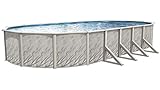
The Optimum series features Wilbar’s “ResinTech” system—injection-molded components with reinforced internal structures. This design maintains the lightweight advantages of resin while addressing structural strength concerns.
Pros:
- Textured resin surfaces prevent slipping
- Reinforced internal structure prevents warping
- Contemporary design aesthetic
- Exceptional chemical resistance
- 30-year limited warranty
Cons:
- Limited shape options (primarily round)
- Complex assembly instructions
- Requires precise leveling for optimal installation
| Feature | Steel Construction | Resin/Composite |
|---|---|---|
| Corrosion Resistance | Moderate (requires protection) | Excellent (naturally resistant) |
| UV Stability | Excellent | Good (requires stabilizers) |
| Weight Capacity | Superior | Good |
| Saltwater Compatibility | Poor-Moderate | Excellent |
| Temperature Sensitivity | Minimal | Moderate (expansion/contraction) |
| Average Price Point | Lower | Higher |
Ideal Environments for Resin and Composite Pools
The unique properties of resin and composite construction make these pools particularly well-suited for specific environmental conditions and aesthetic preferences.
Coastal and High-Salinity Regions
Within 10 miles of saltwater coastlines, resin pools significantly outperform steel options. The salt air that rapidly corrodes metal components has no effect on properly stabilized resin structures. For coastal homeowners, the additional investment in resin construction typically pays for itself within 3-5 years through reduced maintenance and extended lifespan.
Areas with Aggressive Water Chemistry
Regions with naturally high mineral content in water supply benefit from resin construction. The chemical resistance prevents staining and deterioration common with metal components in these environments.
Saltwater Sanitizer Systems
If you plan to use a saltwater chlorination system, resin construction is strongly recommended. The salt content accelerates corrosion in metal components, significantly reducing the lifespan of steel pools.
Modern Aesthetic Requirements
Resin pools typically feature contemporary styling with cleaner lines and integrated design elements. For installations where visual appeal is a priority, especially in visible yard locations, resin models offer superior aesthetic integration.
Hybrid Construction Semi-Permanent Pools: Best of Both Worlds
Hybrid construction combines the structural strength of steel with the corrosion resistance of resin components, offering an optimal balance for many semi-permanent installations. These pools strategically place materials where their properties provide maximum benefit.
1. Wilbar Embassy (12′-33′)
Price Range: $2,000-3,500 (pool only)
The Embassy series features 52″ hot-dipped galvanized steel walls with 8″ resin top rails and resin uprights. This design places steel where structural strength matters most while using resin in areas vulnerable to corrosion and UV exposure.
Pros:
- Excellent structural integrity from steel walls
- Corrosion-resistant resin components at water contact points
- Reinforced uprights prevent wall bowing
- Attractive two-tone color schemes
- 30-year limited warranty
Cons:
- Requires careful water chemistry management
- Complex assembly with mixed materials
- Partial burial limited to 8″ maximum
The Embassy represents excellent value by strategically using materials where they provide maximum benefit. Its design philosophy places steel in fully enclosed, protected positions while using resin for exposed elements.
2. Doughboy Tuscany (18′-33′)
Price Range: $2,500-4,000 (pool only)
The Tuscany combines Doughboy’s copper-bearing steel wall technology with extensive resin components in the top structure. Its innovative “Therma-Seal” technology bonds resin protection directly to metal components, creating a seamless barrier against corrosion.
Pros:
- Superior wall strength from copper-infused steel
- Expanded resin top deck provides 8″ seating area
- Resin-encapsulated steel uprights prevent corrosion
- Compatible with salt systems (with proper maintenance)
- 40-year limited warranty
Cons:
- Premium price point
- Higher shipping weight increases delivery costs
- Limited dealer network in some regions
The Tuscany excels in variable climate regions where both structural strength and corrosion resistance are priorities. Its hybrid approach delivers 90% of the benefits of full resin construction at a lower price point.
3. Aqua Leader Conquest (15′-33′)
Price Range: $1,800-3,200 (pool only)
Check more details here: https://www.aqualeader.com/products/
The Conquest uses an innovative “selective material” approach, with hot-dipped galvanized steel walls and a mix of resin and reinforced aluminum components in the top structure. This engineering approach optimizes the strength-to-weight ratio while providing strategic corrosion protection.
Pros:
- Excellent structural engineering for maximum strength
- Selective resin placement in critical corrosion areas
- Lower price point than comparable models
- Reinforced buttress system for oval designs
- 25-year limited warranty
Cons:
- More metal components than full hybrid designs
- Requires more careful water chemistry management
- Limited color options
The Conquest represents the best value in the hybrid category, delivering superior structural performance with strategic corrosion protection at a moderate price point.
Professional vs. DIY Installation: Making the Right Choice
The installation approach you choose significantly impacts both the initial cost and long-term performance of your semi-permanent pool. This section helps you decide whether professional or DIY installation is right for your situation.
| Factor | Professional Installation | DIY Installation |
|---|---|---|
| Average Cost (24′ Round) | $1,500-3,000 | $200-500 (equipment rental) |
| Timeline | 1-3 days | 3-7 days (part-time work) |
| Equipment Required | Provided by installer | Laser level, transit, excavation equipment, tamper |
| Permit Handling | Typically included | Homeowner responsibility |
| Warranty Implications | Full warranty protection | Potential limitations for installation defects |
| Ground Preparation Quality | Professional-grade | Varies with skill level |
Skill Requirements for DIY Installation
Successfully installing a semi-permanent pool requires several specific skills:
- Ability to read and interpret detailed technical instructions
- Experience with precise measuring and leveling techniques
- Basic understanding of soil mechanics and drainage
- Comfort with power tools and hand tools
- Physical ability to handle heavy components (50+ pounds)
- Patience for methodical, precise work
Common DIY Installation Challenges
Even experienced DIYers encounter specific challenges with pool installation:
- Achieving perfect level across the entire pool footprint
- Properly compacting soil to prevent future settling
- Aligning wall sections with precise tolerances
- Installing and tensioning the liner without wrinkles
- Properly backfilling for partially buried installations
Decision Framework
Consider professional installation if:
- You’re installing a pool 24′ or larger
- Your site requires significant grading
- You’re planning a partial burial installation
- You want to maximize manufacturer warranty protection
- You value time savings and guaranteed results
DIY installation may work well if:
- You have experience with precision construction projects
- Your installation site is already relatively level
- You’re installing a smaller pool (21′ or less)
- You have access to proper equipment and 2-3 helpers
- You can dedicate sufficient time to complete the project properly
Pool contractor James Peterson notes: “About 60% of my business comes from rescuing failed DIY installations. The most common issue is inadequate ground preparation, which leads to structural problems within 1-2 seasons. If you’re investing in a quality semi-permanent pool, professional installation typically pays for itself through extended lifespan and reduced maintenance.”
Ground Preparation Guide for Semi-Permanent Installations
Proper ground preparation is the foundation of a successful semi-permanent pool installation. This comprehensive guide will ensure your site is properly prepared for years of trouble-free use.
Step-by-Step Ground Preparation
- Mark the footprint: Stake out an area 2′ larger than your pool diameter
- Remove vegetation: Strip all grass, plants, and organic material
- Identify high points: Use a transit level to find the highest point in your pool area
- Excavate to level: Remove soil from high areas rather than filling low areas
- Create a sand base: Apply 2″ of mason sand across the entire area
- Compact thoroughly: Use a plate compactor to create a solid base
- Check for level: Verify level within ¼” across entire diameter
- Install pool pad: Apply commercial pool pad or 2″ of mason sand
For partially buried installations, these additional steps are critical:
- Excavate to desired depth: Typically 6″-12″ depending on manufacturer specifications
- Create drainage system: Install perforated drainage pipe around perimeter
- Prepare backfill material: Use clean pea gravel, not soil, for backfilling
- Apply protective coating: Coat buried portions of metal with bituminous protectant
According to soil engineer Dr. Michelle Torres: “The most critical aspect of pool preparation is achieving consistent soil density. Uneven compaction leads to differential settling, which places stress on pool walls and can lead to catastrophic failure. Always compact in 2″ lifts for optimal results.”
Deck Integration Strategies for a Permanent Appearance
One of the most effective ways to enhance the permanent appearance of your above ground pool is through strategic deck integration. Here’s how to transform your semi-permanent pool into a seamless backyard centerpiece.
Design Options by Pool Shape
Round Pool Deck Designs
Round pools offer multiple deck integration approaches:
- Full Surround: Complete 360° deck enclosure creates an inground appearance
- Partial Surround: 180°-270° deck with remaining perimeter landscaped
- Side Access: Deck extending from one side with steps or platform
- Split Level: Multi-height deck that integrates with sloped yards
Oval Pool Deck Designs
Oval pools present unique opportunities:
- Rectangular Frame: Square corners create usable deck space
- Extended Ends: Larger deck areas at oval ends for furniture placement
- Single Side: Long deck along one length with privacy features
Structural Requirements
According to deck builder Robert Simmons: “The key to successful pool deck integration is independent structural support. The deck should never attach directly to or rely on the pool for structural integrity.”
Critical structural considerations include:
- Maintain 2″ clearance between pool and deck framing
- Install support posts on concrete footings below frost line
- Use 2×10 or 2×12 joists for spans near pool edge
- Include diagonal bracing for lateral stability
- Follow local building codes for railing requirements (typically required for decks over 30″ high)
Material Recommendations
Material selection significantly impacts both appearance and maintenance:
| Material | Advantages | Disadvantages | Cost (per sq ft) |
|---|---|---|---|
| Pressure-Treated Wood | Lower cost, traditional appearance | Requires regular maintenance, can splinter | $15-25 |
| Cedar/Redwood | Natural resistance to decay, attractive | Higher cost, requires sealing | $25-40 |
| Composite Decking | Low maintenance, splinter-free, long lifespan | Higher initial cost, can get hot in direct sun | $30-60 |
| PVC Decking | Waterproof, very low maintenance | Highest cost, can look artificial | $40-70 |
For optimal longevity in pool environments, composite and PVC materials offer significant advantages. Their resistance to moisture, chlorine, and UV exposure justifies the higher initial investment through reduced maintenance and extended lifespan. To accurately budget your deck project, you can use a pool deck cost calculator to estimate expenses based on materials and size.
Safety Features and Access
Integrated safety features enhance both usability and compliance:
- Install self-closing, self-latching gates for child safety
- Include code-compliant railings (typically 36″-42″ high)
- Incorporate non-slip decking treatments or textured materials
- Add strategic lighting for nighttime safety
- Consider removable ladder sections for controlled access
Landscape architect Jennifer Morris adds: “The most successful pool deck integrations incorporate the deck into a broader landscape design. Using plantings, privacy screens, and shade structures creates a cohesive outdoor room rather than just a pool with a deck.”
Maintaining Your Semi-Permanent Pool for Maximum Lifespan
A semi-permanent pool represents a significant investment that can provide 15-25 years of enjoyment with proper maintenance. This comprehensive care guide will help protect your investment through every season.
Seasonal Maintenance Calendar
Spring Maintenance (March-May)
- Structural inspection: Check all visible components for damage from winter
- Hardware tightening: Verify all bolts and fasteners remain secure
- Surface cleaning: Remove accumulated dirt and debris
- Opening procedures: Properly remove and store winter cover
- Liner inspection: Check for tears, stretching, or separation
Summer Maintenance (June-August)
- Weekly water testing: Maintain proper chemistry (pH 7.2-7.6, alkalinity 80-120ppm)
- Inspect support systems: Check uprights and buttresses for stability
- Monitor ground conditions: Look for erosion or settling around base
- Clean waterline: Prevent scale buildup at water level
Fall Maintenance (September-November)
- Prepare for winter: Begin winterization process before freezing temperatures
- Apply protective coatings: Treat exposed metal components with protectant
- Inspect drainage: Ensure proper drainage around pool perimeter
- Check deck connection: Verify proper clearance between deck and pool
Winter Maintenance (December-February)
- Monitor snow loads: Remove excessive snow accumulation (over 12″)
- Check winter cover: Ensure cover remains properly secured
- Maintain water level: Keep water 1-2″ below skimmer for winter
- Monitor for ice damage: Address any ice-related issues promptly
Material-Specific Maintenance
Steel Pool Maintenance
Steel components require vigilant protection against corrosion:
- Apply rust converter to any spots showing oxidation
- Maintain protective coatings on all metal surfaces
- Keep water chemistry balanced to prevent corrosion
- Consider sacrificial zinc anodes to protect metal components
- Inspect welds and connection points annually
Resin Pool Maintenance
Resin components require protection against UV degradation:
- Apply UV protectant spray annually
- Clean with non-abrasive cleaners only
- Check for stress cracks in high-load areas
- Verify all connection points remain secure
- Keep harsh chemicals away from resin surfaces
Structural Inspection Checklist
Perform this comprehensive inspection annually:
- Check wall integrity: Look for bulges, dents, or deformation
- Inspect uprights: Verify vertical alignment and secure connections
- Examine top rails: Check for cracks, bending, or separation
- Assess ground conditions: Look for erosion or settling
- Evaluate liner attachment: Ensure proper seating in coping track
- Check hardware: Tighten any loose bolts or fasteners
- Inspect skimmer and return fittings: Verify watertight seals
Pool service technician Carlos Martinez emphasizes: “The single most important maintenance factor for extending pool lifespan is consistent water chemistry. Improper chemistry accelerates material degradation of all components regardless of construction type. Weekly testing and adjustment should be non-negotiable.”
Cost vs. Value: The Long-Term Economics of Semi-Permanent Pools
Understanding the true cost of ownership reveals why quality semi-permanent pools often represent superior value compared to both budget above-ground options and expensive inground installations.
10-Year Cost Comparison
| Cost Category | Temporary Pool | Semi-Permanent Pool | Inground Pool |
|---|---|---|---|
| Initial Purchase | $500-1,500 | $2,000-5,000 | $35,000-65,000 |
| Installation | $0 (DIY) | $1,500-3,000 | Included above |
| Deck/Landscaping | $0-1,000 | $3,000-10,000 | $5,000-15,000 |
| Equipment | $200-500 | $1,000-2,500 | $2,500-8,000 |
| Replacements (10 years) | $1,500-4,500 (3+ replacements) | $0 (within lifespan) | $0 (within lifespan) |
| Annual Maintenance | $200 x 10 = $2,000 | $500 x 10 = $5,000 | $1,500 x 10 = $15,000 |
| Energy Costs | $150 x 10 = $1,500 | $300 x 10 = $3,000 | $800 x 10 = $8,000 |
| 10-Year Total | $5,700-10,500 | $15,500-28,500 | $65,500-111,000 |
| Property Value Impact | $0 | +$5,000-10,000 | +$15,000-35,000 |
| Net 10-Year Cost | $5,700-10,500 | $10,500-18,500 | $50,500-76,000 |
This analysis reveals the economic advantage of semi-permanent pools when viewed through a 10-year ownership lens. While temporary pools have lower initial costs, their frequent replacement and lack of property value enhancement result in poor long-term economics. Conversely, inground pools offer maximum property value enhancement but at a significantly higher total cost. For a more personalized look at your ongoing expenses, use our pool ownership cost calculator to factor in maintenance and utility costs specific to your situation.
Return on Investment Factors
Several factors influence the ROI of semi-permanent pool investments:
Geographic Location
In warm-climate regions (Sunbelt states), pools typically recover 30-50% of their cost in property value. In cooler regions, this drops to 15-25%. Semi-permanent pools with professional decking and landscaping achieve the higher end of these ranges.
Installation Quality
Professional installation with partial burial and integrated decking significantly enhances value recovery. DIY installations with minimal landscaping integration typically recover less value.
Property Context
Real estate appraiser Thomas Kelley notes: “In neighborhoods where 30-40% of homes have pools, a quality semi-permanent installation enhances marketability and value. In areas where pools are rare, the value enhancement is more limited.”
Lifetime Value Calculation
For a typical semi-permanent pool installation:
- Initial investment: $10,000 (pool, professional installation, basic decking)
- Annual enjoyment value: $1,500 (based on alternative recreation costs)
- Expected lifespan: 15 years
- Total enjoyment value: $22,500
- End-of-life property value enhancement: $5,000
- Total lifetime value: $27,500
- ROI: 175% over 15 years
This calculation demonstrates why quality semi-permanent pools represent such compelling value compared to both temporary and inground alternatives. The key is selecting models with proven longevity and investing in proper installation and integration.
Common Concerns About Semi-Permanent Pools (And Their Solutions)
Even the best semi-permanent pools come with potential challenges. Here’s how experienced owners and pool professionals address the most common concerns.
Will my semi-permanent pool survive freezing temperatures?
Yes, with proper winterization. Semi-permanent pools are engineered for year-round installation, including freezing climates. The key is following a proper winterization protocol:
- Lower water level to 1-2″ below the skimmer
- Remove and safely store the pump and filter
- Add winterizing chemicals
- Install ice compensators in the water
- Secure a quality winter cover
Pool contractor David Marris adds: “In 15 years of installations in Minnesota, I’ve never seen structural damage from freezing in properly winterized semi-permanent pools. The engineering accounts for ice expansion when properly prepared.”
How do semi-permanent pools handle different soil conditions?
Different soil types require specific preparation approaches:
- Clay soils: Create a sand base at least 4″ deep for drainage
- Sandy soils: Compact thoroughly to prevent settling
- Rocky terrain: Remove all rocks and create a sand cushion
- Sloped sites: Consider partial burial on high side rather than building up low side
For problematic soils, consider a concrete ring footing under the pool wall to ensure long-term stability. This adds $800-1,200 to installation costs but provides superior structural support.
What are the warranty limitations I should know about?
Most semi-permanent pool warranties include these common limitations:
- Improper installation may void structural warranties
- Damage from improper water chemistry is typically excluded
- Pro-rated coverage after initial period (typically 3-5 years)
- Labor costs often excluded after first year
- Cosmetic issues may not be covered
To maximize warranty protection, maintain detailed records of water chemistry testing, take photos during installation, and register your warranty immediately after purchase.
Will my homeowner’s insurance cover a semi-permanent pool?
Most homeowner’s policies can cover semi-permanent pools with certain considerations:
- Notify your insurance provider before installation
- Expect a modest premium increase ($50-150 annually)
- Comply with all local safety requirements (fencing, covers, etc.)
- Consider increasing liability coverage to $500,000 or more
- Document your installation with photos and receipts
Insurance agent Maria Rodriguez advises: “The key insurance concern isn’t the pool structure itself but the liability exposure. Ensuring proper safety measures and increasing liability coverage is often more important than the structure coverage.”
Your Semi-Permanent Pool Buying Checklist
Use this comprehensive checklist to ensure you’ve considered all critical factors before making your semi-permanent pool investment.
Site Evaluation
- ☐ Measure available space (pool + deck + equipment pad)
- ☐ Check for underground utilities (call 811 before digging)
- ☐ Verify distance from property lines meets local codes
- ☐ Assess sun exposure (6+ hours of direct sun ideal)
- ☐ Evaluate soil type and drainage conditions
- ☐ Check for trees that might drop debris or have invasive roots
Budget Planning
- ☐ Pool structure cost
- ☐ Installation expense (professional vs. DIY)
- ☐ Site preparation costs
- ☐ Necessary equipment (pump, filter, chlorinator)
- ☐ Decking budget
- ☐ Landscaping integration
- ☐ Ongoing maintenance fund
Pool Selection Criteria
- ☐ Match construction type to local climate and water chemistry
- ☐ Verify wall height meets needs (52″ minimum recommended)
- ☐ Check warranty terms and coverage periods
- ☐ Research manufacturer reputation and longevity
- ☐ Verify part availability for future repairs
- ☐ Confirm compatibility with desired sanitizer system
Installation Planning
- ☐ Obtain necessary permits
- ☐ Schedule utility marking
- ☐ Arrange equipment delivery access
- ☐ Plan electrical service for pump and accessories
- ☐ Consider timing relative to weather conditions
- ☐ Schedule contractors if using professional installation
Retailer Assessment
- ☐ Verify dealer is authorized by manufacturer
- ☐ Check dealer reviews and reputation
- ☐ Confirm availability of installation services if needed
- ☐ Understand return/exchange policies
- ☐ Verify warranty registration process
- ☐ Check for post-purchase support availability
Use this checklist methodically to ensure your semi-permanent pool investment delivers maximum value and enjoyment for years to come. Taking time for proper planning prevents costly mistakes and ensures satisfaction with your final decision.
Conclusion: Making the Right Semi-Permanent Pool Investment
A quality semi-permanent above ground pool represents one of the best value propositions in home recreation, offering many of the benefits of an inground pool at a fraction of the cost. By selecting the right construction type for your specific environment, investing in proper installation, and committing to regular maintenance, your semi-permanent pool can provide 15+ years of enjoyment while enhancing your property value.
For most homeowners, hybrid construction pools like the Wilbar Embassy offer the optimal balance of durability, aesthetics, and value. Their strategic use of materials provides excellent structural integrity while minimizing corrosion concerns. Those in coastal regions or planning to use saltwater systems should consider full resin models like the Aqua Leader Influence despite the higher initial investment.
Remember that installation quality significantly impacts long-term performance. While DIY installation can reduce initial costs, professional installation often pays for itself through extended lifespan and reduced maintenance issues. Whatever your approach, meticulous ground preparation remains the foundation of a successful pool installation.
The semi-permanent pool market continues to evolve with ongoing material science improvements and engineering innovations. Today’s models offer unprecedented durability, aesthetic appeal, and value compared to options available even five years ago. By following the guidance in this article and investing in quality from the beginning, your semi-permanent pool will provide years of enjoyment while representing a sound financial decision.
Make your selection based on your specific needs, local environment, and long-term goals rather than focusing solely on initial price. The true value of a semi-permanent pool emerges over years of trouble-free enjoyment—making the initial investment in quality materials and proper installation the wisest approach for most homeowners.
| Photo | Best Above-Ground Pools | Price |
|---|---|---|
|
|
Bestway Steel Pro MAX 12' x 30" Above Ground Swimming Pool Set with Pump | Check Price On Amazon |
|
|
INTEX Beachside Metal Frame 10ft x 30in Round Pool Set w/Pump | Check Price On Amazon |
|
|
H2OGO! Kids Splash-in-Shade 8-Foot Round Steel Frame Above Ground Pool with Water Mister and Canopy Sunshade, Green Tropical Leaf Print | Check Price On Amazon |