
A pool loses more water than it should. Not from splashing or evaporation or a hot summer week. From an actual leak that silently drains hundreds of gallons every day while running up your water bill and throwing off your chemical balance. Most pool owners chase algae blooms and cloudy water for weeks before realizing the real problem is a leak that keeps diluting everything they add.
This guide walks through every leak detection method that works, from the free bucket test you can do tonight to the professional pressure testing that finds underground plumbing leaks. You will learn where pools leak most often, how to confirm a leak exists, how to narrow down the location, and exactly what to do once you find it.
| Photo | Best Above-Ground Pools | Price |
|---|---|---|
|
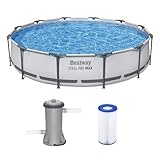
Bestway Steel Pro MAX 12' x 30" Above Ground Swimming Pool Set with Pump | Durable Round Metal Frame Outdoor Backyard Pool, Puncture-Resistant Liner - Type III A/C Filter Cartridge Included, Gray | Check Price On Amazon |
|
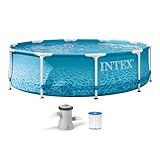
INTEX 28207EH 10ft X 30in Beachside Metal Frame Above Ground Swimming Pool Set, Includes 330 GPH Cartridge Filter Pump, Puncture-Resistant Material, Rust Resistant, 1185 Gallon Capacity | Check Price On Amazon |

|
H2OGO! Kids Splash-in-Shade 8-Foot Round Steel Frame Above Ground Pool with Water Mister and Canopy Sunshade, Green Tropical Leaf Print | Check Price On Amazon |
By the Numbers
Pool Leak Detection — What the Research Shows
Sources: Pool & Hot Tub Alliance, EPA WaterSense, industry service data
How Much Water Loss Is Normal for a Swimming Pool?
A properly sealed pool loses roughly 1/8 to 1/4 inch of water per day to evaporation. This adds up to about 1 to 2 inches per week depending on humidity, wind, and sun exposure. Anything more than 1/4 inch per day signals a potential leak.
Evaporation rates spike in dry, windy climates. A pool in Phoenix loses twice as much water to evaporation as the same pool in Atlanta during summer. The National Weather Service publishes evaporation data by region. Use those numbers, not a guess, before assuming you have a leak. For a more precise estimate tailored to your specific conditions, you can use a swimming pool evaporation rate calculator to determine exactly how much water loss is normal for your location and weather.

- Intelligent Navigation with Full Coverage: Equipped with 11 high-precision sensors and enhanced dual-path algorithms. The optimized WavePath cleaning pattern ensures systematic coverage with minimal overlap, while adaptive navigation analyzes pool layout in real time to eliminate missed spots
- Dual Filtration for Crystal-Clear Water: Advanced dual-layer filtration system features a replaceable 3-micron ultra-fine filter paired with a 180-micron standard filter. Effectively captures fine dust, sand, leaves, and debris for visibly cleaner and healthier pool water
- Comprehensive Pool Cleaning: Engineered to clean the pool floor, walls, waterline, and shallow areas (above 12 inches). The Caterpillar Treads system enhances mobility and climbing ability, ensuring thorough coverage across all pool zones
- Reliable Performance with 2-Year Warranty: Trusted by over 500,000 pool owners worldwide, this robotic pool cleaner delivers consistent, high-performance results. Built for durability and backed by a 2-year warranty and responsive customer support for worry-free ownership
This matters because many pool owners add hundreds of dollars of chemicals to fix water chemistry problems caused by a slow leak they never confirmed. Each gallon of water lost takes chemicals with it and lets untreated fill water dilute what remains. The cycle repeats until the leak is found and sealed.
How to Confirm a Pool Leak with the Bucket Test
The bucket test is the gold standard for confirming a leak before spending money on detection equipment or professional services. It isolates evaporation from actual water loss by comparing the water level inside a bucket to the water level in the pool.
This test costs nothing and takes 24 hours. It works on every pool type: inground gunite, vinyl liner, fiberglass, and above-ground pools. The physics are simple. Both the bucket water and the pool water experience the same evaporation rate. If the pool level drops more than the bucket level, you have a leak.
Step-by-Step Guide
How to Perform a Bucket Test — Step by Step
6 steps · Takes 24 hours · Zero cost
Fill a 5-gallon bucket about 2/3 full with pool water
Use pool water, not tap water, so both start at the same temperature. Temperature differences between the two water sources skew the results because warmer water evaporates faster.
Place the bucket on the pool step or in the shallow end
Set it so the bucket rim sits a few inches above the pool water line. Add a heavy rock or weight inside the bucket to keep it from tipping over or floating.
Mark the water level inside the bucket and the pool water level outside
Use a waterproof marker or a piece of electrical tape on the bucket interior. For the pool water, place a piece of tape on the tile or skimmer face at the exact current water line.
Turn off the pump and any auto-fill devices for 24 hours
A running pump can mask small leaks because moving water changes the surface level reading. Auto-fill devices must be disabled or they will add water during the test and make the leak invisible.
Wait 24 hours, then measure both water levels
Use a ruler or measuring tape. Measure from the mark to the new water surface in both the bucket and the pool. Record both measurements in inches or millimeters.
Compare the results: pool loss minus bucket loss equals leak rate
If both levels dropped the same amount, evaporation caused the loss. If the pool dropped significantly more than the bucket, you have a leak. A difference of 1/8 inch or more in 24 hours confirms a leak worth finding.
A standard 5-gallon bucket works perfectly for this test. Avoid using buckets that previously held chemicals or oils. Residual contaminants skew surface tension and evaporation rate.
How to Find the Leak Location Once the Bucket Test Confirms It
Once you know a leak exists, the next step is finding where it lives. Most pool leaks fall into three categories: shell or liner damage, plumbing leaks, and equipment pad leaks. Each category requires different detection methods.
Start with the easiest spots first. Equipment pad leaks are the most common and the simplest to fix. Then move to the shell or liner. Underground plumbing leaks are the most expensive to find and repair, so rule out everything else first.
Check the Equipment Pad First for Visible Leaks
Walk around your pump, filter, heater, and chlorinator while the system is running. Look for water drips, wet spots on the concrete pad, or visible spray from any connection. A slow drip from a pump seal loses 200 to 400 gallons per week.
Check the pump shaft seal by looking under the pump housing where the motor meets the wet end. A failing shaft seal drips continuously when the pump runs but stops when the pump is off. This is the single most common equipment leak point.
If your pump runs but no water flows or the impeller is clogged, the resulting pressure spike can blow out seals and gaskets. Our guide on cleaning a clogged impeller without damaging seals walks through the correct disassembly order to prevent creating new leaks during maintenance.
Use Dye Testing to Pinpoint Shell and Liner Leaks
Leak detection dye is a concentrated colored liquid, usually red or blue, that is denser than pool water. When you squirt it near a crack or hole, the escaping water pulls the dye toward the opening. The dye stream points directly at the leak.
A leak detection dye kit costs $10 to $25 and includes a syringe for precise application near suspected cracks, seams, and fittings. Turn off the pump so the water is completely still before you start. Any water movement scatters the dye and masks the leak direction.
This happens because the pressure differential between the pool water and the surrounding ground creates a current at the leak point. Dye particles, being neutrally buoyant but slightly denser than water, follow that current directly into the opening when applied within 1 to 2 inches of the leak.
This only occurs when the water is completely still and the dye is applied gently without stirring the water. If the pump is running or wind creates surface ripples, the dye disperses before reaching the leak and the test fails.
If the water is turbulent, the dye scatters in random directions and no clear stream forms. The result is a false negative that leaves the leak undetected. Fix it by turning off all pumps and waiting 10 minutes for the water to settle completely before applying any dye.
Test Skimmers, Returns, Lights, and Main Drains with Dye
These four fittings penetrate the pool shell and each one has a gasket or seal that can fail over time. Apply dye around the perimeter of each fitting while the pump is off and the water is still. Watch for the dye to be pulled into any gap.
Skimmer mouth cracks are especially common in concrete pools. The skimmer is a rigid plastic box cast into the concrete. When the concrete expands and contracts with temperature, it pulls away from the skimmer body and creates a hairline crack along the seam. Dye testing finds these cracks in seconds.
Return jet fittings have a threaded connection behind the wall that can loosen over years of pressure cycling. The gasket between the fitting and the pool wall compresses and eventually fails. A dye test at the return fitting face while the pump is off often reveals a slow seep that accounts for 1/4 to 1/2 inch of water loss per day.
Pool light niches are another common leak point. The conduit that carries the light cord runs from the niche to a junction box above ground. If the conduit seal at the niche fails, water drains through the conduit like a pipe. A pool light conduit seal repair kit fixes this without draining the pool.
How to Locate Underground Plumbing Leaks
Plumbing leaks account for roughly 70% of pool leaks that are not visible on the equipment pad or in the pool shell. These leaks hide underground in the suction lines that pull water from the skimmer and main drain to the pump, or in the return lines that push filtered water back to the pool.
Finding an underground leak without professional equipment is difficult but not impossible. The method depends on whether the leak is on the suction side or the pressure side of the pump. Each side gives different symptoms.
Suction Side Leak Symptoms and Detection
A suction side leak pulls air into the plumbing instead of pushing water out. You will see air bubbles coming from the return jets when the pump runs. The pump basket may not fill completely with water, or the pump may lose prime overnight when turned off.
Check the pump lid o-ring first. A dried or cracked pump lid o-ring mimics a suction leak perfectly. Lubricate it with silicone lubricant and retest before digging. If bubbles persist after the o-ring is ruled out, the leak is underground in the suction line.
A pump that trips the breaker or trips a GFCI outlet may be pulling air through a suction leak and running dry. Our guide on diagnosing why a pool pump trips a GFCI breaker covers the electrical symptoms that often accompany suction side air leaks.
Pressure Side Leak Symptoms and Detection
A pressure side leak pushes water out of the plumbing underground. It does not show air bubbles. Instead, you lose water only when the pump runs. The bucket test with the pump off shows no leak. The same test with the pump running shows significant loss.
Run the pump for 24 hours and measure the water loss. Then turn the pump off for 24 hours and measure again. If water loss only occurs with the pump running, the leak is on the pressure side of the system. This narrows the search to the pipes between the pump discharge and the return jets.
Wet spots in the yard between the equipment pad and the pool confirm a pressure side leak. The soil stays damp in a specific line even when surrounding areas are dry. Dig carefully in that area. The pipe crack is directly below the wet spot.
Pressure Testing Plumbing Lines
Professional leak detectors use pressure testing to isolate which underground line is leaking. Each line (skimmer suction, main drain, each return) is plugged at both ends and pressurized with air or water to 25 to 30 PSI. A line that cannot hold pressure has a leak.
A pool plumbing pressure test kit costs $50 to $150 and includes expandable plugs that seal each pipe end. This is an intermediate DIY task. If you are comfortable with basic plumbing tools, you can pressure test your own lines.
This works because a sealed plumbing system at 25 PSI should hold that pressure indefinitely if there are no leaks. A pressure drop of more than 1 PSI in 10 minutes indicates a leak somewhere in that line. The faster the pressure drops, the larger the leak.
This only works when every opening on the line being tested is completely sealed with a plug that fits tight. A single loose plug creates a false leak reading and leads to unnecessary digging.
If a plug is loose or the wrong size, pressure drops rapidly and the test shows a leak that does not exist. The result is wasted time digging in the wrong location. Fix it by using the correct expandable plug size for each pipe diameter and tightening each plug until it cannot be turned by hand.
How to Fix Common Pool Leaks by Location
Once you find the leak, the repair method depends on the material and location. Most shell and liner leaks are DIY-fixable. Underground plumbing repairs usually require cutting concrete or digging, which may call for a professional.
Fixing Vinyl Liner Tears and Holes
A vinyl liner patch kit costs $10 to $20 and repairs tears up to 3 inches long underwater without draining the pool. The patch adheres to wet vinyl and cures underwater. Clean the area with the included scrub pad, cut the patch 1 inch larger than the hole on all sides, and press it firmly for 60 seconds.
For holes larger than 3 inches or tears on a seam, drain the pool below the tear and use a vinyl liner adhesive with a larger patch. Seam tears require a patch that extends at least 2 inches beyond the tear in every direction. Let the adhesive cure for 24 hours before refilling.
Repairing Concrete and Gunite Pool Cracks
Hairline cracks in concrete pools that leak water can be sealed with underwater epoxy putty applied directly into the crack. The epoxy cures underwater and bonds to wet concrete. For cracks wider than 1/8 inch, use a two-part crack injection epoxy kit that fills the full depth of the crack.
Structural cracks wider than 1/4 inch that continue to grow need professional evaluation. These cracks indicate a shifting pool shell that epoxy alone cannot fix. A pool structural engineer or experienced gunite repair contractor must assess whether the crack is cosmetic or structural.
Sealing Leaking Skimmers and Return Fittings
A leaking skimmer mouth gasket requires draining the pool below the skimmer, removing the faceplate, replacing the gasket, and resealing with silicone sealant. This is a 2 to 3 hour repair that costs $30 to $60 in parts.
Return fitting leaks are fixed by removing the fitting, replacing the gasket or o-ring behind the flange, and reinstalling with fresh pool-safe thread sealant. Never use standard plumbing tape on pool return fittings. It degrades in chlorinated water and causes the leak to return within one season.
Should You Call a Professional Leak Detection Service?
Professional leak detection costs $300 to $500 for the diagnostic visit. The technician brings electronic listening devices, helium tracer gas systems, and pressure testing equipment that finds underground leaks within hours. If your leak is underground and you have already ruled out the equipment pad and shell, the diagnostic fee pays for itself by preventing unnecessary digging.
For leaks that defy DIY detection, professional services use hydrophone acoustic sensors that hear water escaping from pipes buried under concrete or soil. They also use helium tracer gas injected into the plumbing lines. A sniffer wand detects where the helium escapes through the ground, pinpointing the leak location within inches.
If the decision comes down to repair versus replace for older equipment that is leaking, our guide on deciding whether to repair or replace aging pool equipment breaks down the cost thresholds where replacement becomes cheaper than repeated repairs.
What Does Pool Leak Repair Cost?
Repair costs vary from $10 for a DIY vinyl patch to $2,500 for cutting concrete, digging, and replacing an underground return line. The cost depends entirely on the leak location, the material being repaired, and whether the repair requires excavation or concrete cutting. To get a broader picture of ongoing ownership expenses beyond just repairs, a pool ownership cost calculator covering maintenance and utility expenses can help you budget for the full annual cost of keeping your pool running.
Use the table below to match your leak type to the typical repair cost range and decide whether to DIY or hire a professional.
Cost Reference
Pool Leak Repair Costs by Type and Location
Typical cost range including parts and labor where applicable. Prices current at time of publication.
| Leak Type | DIY Cost | Professional Cost | Difficulty |
|---|---|---|---|
| Vinyl liner hole (under 3″) | $10-25 | $150-300 | Easy DIY |
| Skimmer gasket replacement | $30-60 | $250-500 | Moderate DIY |
| Pump shaft seal replacement | $15-40 | $200-400 | Moderate DIY |
| Concrete crack (hairline) | $20-80 | $400-800 | Moderate DIY |
| Return fitting gasket | $15-35 | $200-450 | Easy DIY |
| Light conduit seal | $30-70 | $350-700 | Moderate DIY |
| Underground plumbing (per line) | $100-300 | $800-2,500 | Professional |
| Professional leak detection | N/A | $300-500 | Professional |
Costs are estimates based on national averages. Regional labor rates and local market conditions affect final pricing. Underground plumbing repair costs assume concrete cutting and replacement at one access point.
How to Prevent Pool Leaks Before They Start
Prevention is cheaper than repair by a factor of 10 or more. A $15 tube of silicone lubricant applied to gaskets and o-rings twice per season prevents the pump seal and skimmer gasket failures that cause most equipment pad leaks. Winterizing correctly prevents the freeze-thaw cracks that destroy underground plumbing.
Maintain proper water chemistry at all times. pH below 7.0 is corrosive and attacks gaskets, o-rings, and even concrete. pH consistently above 8.0 causes scale buildup that forces the pump to work harder, increasing pressure stress on every plumbing connection. Keep pH between 7.4 and 7.6 and alkalinity between 80 and 120 ppm.
A liquid drop test kit like the Taylor K-2006 gives free chlorine and pH readings accurate to within 0.1 ppm. Test strips are accurate only to within 0.5 pH units. That difference is the gap between water that protects your pool and water that slowly destroys gaskets and seals.
If your multiport valve is leaking at the waste line due to a worn spider gasket, our complete guide on multiport valve settings and common failure points shows how to diagnose and replace the gasket before the leak wastes hundreds of gallons.
Can a Pool Leak Cause Structural Damage?
Yes. Water leaking from a pool saturates the surrounding soil. Over time, the soil loses its load-bearing capacity and the pool shell or deck can shift. In areas with expansive clay soil, a leaking pool can cause enough ground movement to crack the pool shell, the surrounding deck, and even the home foundation within 50 feet.
This happens because saturated soil expands when wet and contracts when it dries. Repeated expansion and contraction cycles from an intermittent leak create differential settlement. The pool shell moves unevenly. Cracks form and widen. The leak gets worse. The cycle accelerates.
This only becomes a structural threat when a leak continues for months or years without repair. Soil saturation takes time to reach the depth where foundation-bearing strata exist. A leak found and fixed within weeks of discovery rarely causes structural damage. A leak ignored for an entire season creates a genuine foundation risk.
If the soil near the pool is visibly sinking or a depression forms in the ground between the pool and the house, the leak has been active long enough to erode soil. Call a structural engineer and a leak detection professional immediately. Do not wait for the next season.
Quick Reference
Pool Leak Detection — Key Terms Explained
Quick reference for the terms used throughout this guide
A 24-hour evaporation isolation test that compares water loss inside a bucket to water loss in the pool to confirm a leak exists.
A concentrated colored liquid, typically red or blue, that is denser than water and follows current toward a leak point when applied near cracks or fittings.
A diagnostic method that seals a plumbing line at both ends, pressurizes it to 25-30 PSI, and monitors for pressure drop to identify leaks.
The plumbing between the skimmer/main drain and the pump inlet. Leaks here pull air into the system rather than pushing water out.
The plumbing between the pump discharge and the return jets. Leaks here push water out and cause water loss only when the pump runs.
An acoustic listening device used by professional leak detectors to hear the sound of water escaping from underground pipes.
Helium injected into sealed plumbing lines. A sniffer wand detects helium escaping through soil, pinpointing underground leak locations within inches.
A soil type that swells when saturated with water and shrinks when dry. Pool leaks in expansive clay areas can cause structural damage to the pool and surrounding structures.
The mechanical seal where the motor shaft enters the pump wet end. The most common equipment pad leak point when worn or dried out.
The gasket inside a multiport valve that seals between ports. A worn spider gasket causes water to leak out the backwash line continuously.
How Long Does It Take to Find and Fix a Pool Leak?
Finding a visible leak using dye testing takes 30 minutes to 2 hours depending on pool size and the number of fittings to check. An underground plumbing leak that requires professional pressure testing and acoustic detection takes 1 to 3 days to locate. Simple repairs like vinyl patches or gasket replacements take under an hour once the leak is found.
A full leak detection and repair timeline for a typical underground plumbing leak runs 3 to 7 days from the first bucket test to the final backfill and concrete patch. Day 1 confirms the leak exists. Day 2 or 3 schedules the professional detection if needed. Repair and concrete curing take 2 to 3 more days.
Do Pool Leak Sealers Actually Work?
Liquid pool leak sealers that you pour into the water and circulate through the system rarely fix anything permanently. These products work by depositing particles at leak points where water exits. In theory, the particles accumulate at the opening and form a plug. In practice, they plug small pinhole leaks in plumbing at best and do nothing for gasket failures, structural cracks, or liner tears.
A liquid pool leak sealer product costs $30 to $60 per bottle. It may temporarily reduce a pinhole leak enough to buy you a few weeks before a proper repair. It will not fix any leak visible to the naked eye. Use it as a temporary patch, not a permanent solution.
Myth vs Fact: Common Pool Leak Beliefs Debunked
Myth vs Fact
Pool Leak Detection — Common Myths Debunked
Separating fact from fiction on the most common pool leak misconceptions
✗ Myth
Water loss under 2 inches per week is just evaporation and nothing to worry about.
✓ Fact
Maximum normal evaporation is 1/4 inch per day or about 1.5 to 2 inches per week in hot, dry, windy conditions. The bucket test is the only way to confirm whether loss is evaporation or a leak. Guessing leads to undetected leaks that grow over time.
✗ Myth
A leak that only loses water when the pump runs must be in the pool shell.
✓ Fact
Water loss that only happens with the pump running points to the pressure side plumbing, not the shell. The pump pressurizes the return lines and forces water out through any crack. Turn the pump off, the pressure drops, and the leak stops. This is the defining characteristic of a pressure side plumbing leak.
✗ Myth
Air bubbles coming from the return jets mean the pool has a suction leak that needs immediate digging.
✓ Fact
Air bubbles from return jets are caused by a suction side air leak. But the most common cause is a $10 dried-out pump lid o-ring, not an underground pipe crack. Replace and lubricate the o-ring before assuming the worst. Nine times out of ten, the bubbles disappear and the digging is unnecessary.
✗ Myth
Pool leak sealers are a permanent fix for small leaks.
✓ Fact
Liquid sealers deposit particles at leak exits and may temporarily slow a pinhole leak for weeks. They do not bond to the pipe material, cannot expand or contract, and wash away as soon as pressure or temperature changes reopen the hole. They are a temporary patch at best and useless against gasket failures or structural cracks.
✗ Myth
A concrete pool crack is always a structural emergency.
✓ Fact
Most concrete pool cracks are cosmetic surface checking in the plaster layer, not structural cracks through the gunite shell. Hairline cracks under 1/16 inch that do not leak and do not grow are normal. Structural cracks exceed 1/8 inch, leak water, and widen over time. A structural engineer can tell you which type you have in one inspection.
Why Does My Pool Lose Water Faster in the Summer?
Summer water loss accelerates for two reasons. Higher air temperatures and lower humidity increase evaporation rate. Thermal expansion also opens microscopic cracks in plumbing and fittings that seal themselves when temperatures drop in the fall. A leak that loses 1/4 inch per day in July may drop to 1/8 inch per day in October with no repair.
This temperature-dependent cycling explains why some pool owners report a leak that “comes and goes.” The leak is always there. The opening simply changes size with the temperature. PVC plumbing expands roughly 0.03 inches per 10 feet per 10°F temperature change. A glued joint that is tight at 60°F can open a tiny gap at 100°F and leak for the entire summer.
What Went Wrong When My New Pool Is Losing Water?
A new pool losing water usually traces to one of three causes. The plumbing pressure test during construction passed but a glue joint failed after backfill settlement shifted a pipe. A gasket was pinched during installation and did not seat correctly. Or the pool shell developed a crack during the curing process, especially in gunite pools where the plaster coat can check if it dried too fast.
New pool leaks are warranty issues. Contact the builder immediately and document the water loss rate with a bucket test before they arrive. Most pool builders cover plumbing and shell leaks for 1 to 5 years depending on the contract. Do not attempt DIY repairs on a new pool. Doing so voids the warranty on the entire structure. To understand the full investment you are protecting, an inground swimming pool cost calculator can give you a clear picture of what a new pool costs and why preserving your warranty coverage is essential.
Can I Use Food Coloring Instead of Leak Detection Dye?
Food coloring does not work as a substitute for leak detection dye. Food coloring is water-soluble and disperses rapidly in pool water. It does not maintain the concentrated stream needed to visually track toward a leak point. Leak detection dye is formulated to be denser than water and to resist dispersion for the few seconds needed to see the current direction.
Professional leak detection dye costs $10 to $15 for a bottle that lasts through dozens of tests. A proper leak detection dye kit with a syringe applicator is one of the cheapest and most effective diagnostic tools in pool maintenance. Do not substitute it with kitchen supplies.
How Do I Know If My Pool Has Multiple Leaks?
Multiple leaks are uncommon but possible, especially in older pools. The telltale sign is that water loss continues at the same rate after you fix one confirmed leak. If you repair a skimmer gasket and the bucket test still shows 1/4 inch of loss per day, a second leak exists somewhere else in the system.
To identify multiple leaks, fix each confirmed leak one at a time and repeat the bucket test after each repair. This isolates each leak’s contribution to the total water loss. When the bucket test finally shows less than 1/8 inch difference between the bucket and the pool, you have found and sealed every significant leak.
Buying Guide
Before You Buy — Pool Leak Detection Kit Checklist
Check off each point before assembling your leak detection toolkit.
If your pump runs but water flow is weak or nonexistent, a plumbing leak on the suction side may be pulling air instead of water into the system. Our guide on what to check when your pool pump runs but produces no water flow covers the diagnostic sequence that rules out a clogged impeller, closed valves, and suction leaks in the correct order.
Is a Leaking Pool Dangerous to Swim In?
Swimming in a pool with a known leak is generally safe provided the water chemistry is properly maintained and the leak is not near electrical components. The main danger is not the leak itself but the secondary effects: a dropping water level that exposes the skimmer and causes the pump to run dry, which can overheat and create an electrical hazard.
A leak near a pool light, junction box, or any electrical conduit is a different situation entirely. Water contacting live electrical components creates a serious shock hazard. If you suspect a leak near a pool light niche or anywhere electrical conduit enters the pool, stop using the pool and call both an electrician and a leak detection professional immediately.
A pump that trips breakers repeatedly may be experiencing a leak that is causing electrical shorts. Our guide on pool pump breaker tripping causes and solutions connects the dots between water leaks and electrical failures before they become dangerous.
What Is the Difference Between a Suction Leak and a Pressure Leak?
A suction leak pulls air into the system before the pump. A pressure leak pushes water out of the system after the pump. Suction leaks produce air bubbles from return jets and cause the pump to lose prime. Pressure leaks cause water loss that only happens when the pump runs and may create wet spots in the yard along the pipe path.
The bucket test with the pump off versus pump on distinguishes between the two. Run the test for 24 hours with the pump off. Then repeat for 24 hours with the pump running. If water loss is the same in both tests, the leak is in the shell or liner. If water loss occurs only with the pump running, the leak is on the pressure side. If air bubbles appear during the pump-on test, the leak is on the suction side.
Can a Pool Pump Running at the Wrong Speed Cause Leaks?
Excessive pump speed does not cause leaks directly, but it accelerates the failure of weak points. A single-speed pump running at 3,450 RPM creates roughly 50 PSI in the return plumbing. A variable-speed pump running at 1,500 RPM creates roughly 12 PSI. Aging glue joints and gaskets that hold at 12 PSI all season may blow out immediately when a single-speed pump cycles on at full 3,450 RPM.
If you are replacing a single-speed pump with a variable-speed model, our comparison of dual-speed versus variable-speed pool pump benefits and payback periods covers the pressure reduction benefits that can extend the life of older plumbing systems. Additionally, using a swimming pool pump sizing calculator ensures you select a pump properly matched to your pool’s plumbing diameter and total dynamic head, preventing the excessive pressure that stresses aging joints and gaskets.
Why Does My Pool Leak After Heavy Rain?
Heavy rain does not cause leaks. It reveals them. When the ground becomes saturated with rainwater, the hydrostatic pressure around the pool increases. Water that normally seeps out slowly through a small crack now flows more freely because the soil outside the pool is wet and no longer absorbing the leaked water as fast as it escapes.
Additionally, saturated soil shifts and settles. A glued plumbing joint that was partially supported by dry, compacted soil may shift when that soil turns to mud. The shift opens a gap at the joint. The leak that “started after the storm” actually started when the ground moved, not when the rain fell.
For most pool owners, finding and fixing a leak follows a predictable path. Confirm the leak with a bucket test. Check the equipment pad. Dye test every fitting. Pressure test if the leak remains hidden. Repair whatever you find. Then run one more bucket test to confirm the fix worked.
Start tonight with the bucket test. It costs nothing and gives you a definitive answer in 24 hours. Everything else flows from that first data point.
| Photo | Best Above-Ground Pools | Price |
|---|---|---|
|
|
Bestway Steel Pro MAX 12' x 30" Above Ground Swimming Pool Set with Pump | Durable Round Metal Frame Outdoor Backyard Pool, Puncture-Resistant Liner - Type III A/C Filter Cartridge Included, Gray | Check Price On Amazon |
|
|
INTEX 28207EH 10ft X 30in Beachside Metal Frame Above Ground Swimming Pool Set, Includes 330 GPH Cartridge Filter Pump, Puncture-Resistant Material, Rust Resistant, 1185 Gallon Capacity | Check Price On Amazon |
|
|
H2OGO! Kids Splash-in-Shade 8-Foot Round Steel Frame Above Ground Pool with Water Mister and Canopy Sunshade, Green Tropical Leaf Print | Check Price On Amazon |