Murky pool water is cleared by properly diagnosing the cause, balancing water chemistry, shocking the pool, cleaning the filter system, using a clarifier or flocculant, optimizing filtration, and verifying final clarity. This systematic approach addresses all potential causes of cloudiness. Depending on severity, this process typically takes 1-5 days to restore crystal-clear water.
Pool cloudiness frustrates even experienced pool owners. Cloudy water not only looks unappealing but can indicate potential health hazards and filtration problems. The good news is that with the right diagnostic approach and treatment protocol, you can restore your pool’s clarity quickly and effectively.
| Photo | Best Above-Ground Pools | Price |
|---|---|---|
|
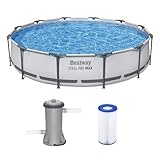
Bestway Steel Pro MAX 12' x 30" Above Ground Swimming Pool Set with Pump | Check Price On Amazon |
|
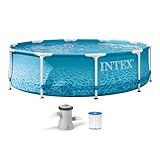
INTEX Beachside Metal Frame 10ft x 30in Round Pool Set w/Pump | Check Price On Amazon |

|
H2OGO! Kids Splash-in-Shade 8-Foot Round Steel Frame Above Ground Pool with Water Mister and Canopy Sunshade, Green Tropical Leaf Print | Check Price On Amazon |
This comprehensive guide provides a proven 7-step process that works for all pool types and cloudiness causes. By following these steps in sequence, you’ll transform murky water into sparkling clarity while addressing the underlying issues that caused the problem.
Understanding Why Your Pool Water is Murky (Causes and Diagnosis)
Before treating murky pool water, you need to accurately identify what’s causing the cloudiness. Different types of cloudiness indicate different problems, each requiring specific treatment approaches. Proper diagnosis saves time, chemicals, and frustration.
Pool water becomes cloudy due to three primary factors: chemical imbalances, filtration issues, and environmental contaminants. Often, multiple factors combine to create persistent cloudiness.
According to the Association of Pool & Spa Professionals (APSP), over 80% of water clarity issues stem from improper chemical balance or inadequate filtration. Identifying the specific cause determines the most effective treatment path.
The Visual Diagnostic Guide: Identifying Your Specific Type of Cloudiness
Different types of cloudiness have distinct appearances. Use this visual guide to narrow down the potential causes of your murky pool water.
- Milky White Cloudiness (Severity 2-3): Typically indicates pH imbalance, high calcium hardness, or tiny suspended particles. Often appears after adding chemicals.
- Hazy Blue-Gray Water (Severity 1-2): Usually indicates early-stage filtration issues or developing chemical imbalance. Water lacks sparkle but objects remain visible.
- Green-Tinted Cloudiness (Severity 3-5): Indicates algae growth. Severity depends on intensity of green color and visibility depth.
- Cloudy Yellow or Brown Water (Severity 3-4): Indicates metals (iron, copper, manganese) or organic matter contamination. Often appears after heavy rain or adding untreated well water.
- Oily Film with Rainbow Sheen (Severity 2): Indicates presence of body oils, sunscreen, or other organic compounds that reduce clarity.
The cloudiness severity scale ranges from 1 (slightly hazy) to 5 (completely opaque). Higher severity levels require more aggressive treatment and longer clearing times.
Essential Water Tests to Diagnose Cloudiness Causes
Accurate testing is the foundation of effective treatment. These specific tests will confirm the exact cause of your murky water.
Start with these essential measurements:
- Free Chlorine: 1-3 ppm ideal. Below 1 ppm indicates insufficient sanitizer, allowing contaminants to flourish.
- pH: 7.4-7.6 ideal. Outside this range causes cloudiness through improper sanitizer function and mineral precipitation.
- Total Alkalinity: 80-120 ppm ideal. Controls pH stability. Imbalance causes pH fluctuations and cloudiness.
- Calcium Hardness: 200-400 ppm ideal. High levels (over 400 ppm) can cause cloudiness through calcium scaling.
- Cyanuric Acid (CYA): 30-50 ppm ideal. Levels over 80 ppm reduce chlorine effectiveness, leading to cloudiness.
- Total Dissolved Solids (TDS): Should be less than 1500 ppm above starting level. High TDS indicates potential for cloudiness.
For accurate results, use a high-quality test kit like the Taylor K-2006 Complete Test Kit rather than test strips, which provide less precise readings.
Record your test results to track changes during the treatment process. With accurate diagnosis complete, you’re ready to begin the systematic clearing process.

- Intelligent Navigation with Full Coverage: Equipped with 11 high-precision sensors and enhanced dual-path algorithms. The optimized WavePath cleaning pattern ensures systematic coverage with minimal overlap, while adaptive navigation analyzes pool layout in real time to eliminate missed spots
- Dual Filtration for Crystal-Clear Water: Advanced dual-layer filtration system features a replaceable 3-micron ultra-fine filter paired with a 180-micron standard filter. Effectively captures fine dust, sand, leaves, and debris for visibly cleaner and healthier pool water
- Comprehensive Pool Cleaning: Engineered to clean the pool floor, walls, waterline, and shallow areas (above 12 inches). The Caterpillar Treads system enhances mobility and climbing ability, ensuring thorough coverage across all pool zones
- Reliable Performance with 2-Year Warranty: Trusted by over 500,000 pool owners worldwide, this robotic pool cleaner delivers consistent, high-performance results. Built for durability and backed by a 2-year warranty and responsive customer support for worry-free ownership
The 7-Step Process to Clear Murky Pool Water
With the cause identified, follow this systematic 7-step process to restore crystal clear water. This process works for all pool types and adapts based on your specific diagnosis.
The complete treatment protocol addresses all potential causes of cloudiness in sequence, from most fundamental to most specialized. Following these steps in order maximizes efficiency and prevents wasted effort.
Depending on your diagnosis, some steps may require more attention than others. For severe cloudiness (levels 4-5), expect 3-5 days for complete clearing. For mild cloudiness (levels 1-2), results may be visible within 24-48 hours.
Step 1: Balance Essential Water Chemistry Parameters
Water chemistry imbalance is the most common cause of cloudiness. Start by correcting these fundamental parameters in the right sequence.
Before adding chemicals, it’s essential to know your pool’s exact volume. Use a pool volume calculator to calculate gallons, then follow the dosing guidelines for your specific pool size.
Always balance chemicals in this specific order:
- Total Alkalinity First: Add sodium bicarbonate (baking soda) to raise or sodium bisulfate (pH decreaser) to lower. For a 10,000-gallon pool, add 1.5 pounds of sodium bicarbonate to raise alkalinity by 10 ppm.
- pH Second: Once alkalinity is stable, adjust pH using sodium carbonate (soda ash) to raise or sodium bisulfate to lower. Add chemicals in small amounts (no more than 1 pound at a time for a 10,000-gallon pool).
- Calcium Hardness Third: If below 200 ppm, add calcium chloride. If above 400 ppm and causing cloudiness, partial water replacement may be necessary.
- Stabilizer (CYA) Last: If below 30 ppm, add cyanuric acid according to manufacturer directions.
Allow 4-6 hours of circulation between chemical adjustments. Test and rebalance as needed until all parameters reach ideal ranges.
According to the CDC, balanced water chemistry not only improves clarity but creates a safer swimming environment by optimizing sanitizer effectiveness.
Step 2: Shock Your Pool with the Right Chlorine Dosage
Pool shocking is essential for destroying organic contaminants that cause cloudiness. However, the right product, dosage, and application method are critical for success.
For cloudy water treatment, use calcium hypochlorite shock (65-75% available chlorine) for fastest results. For regular maintenance, lithium hypochlorite or sodium dichlor are excellent alternatives with less impact on pH and calcium levels.
Calculate shock dosage based on cloudiness severity (use a pool shock calculator to determine the exact amount for your pool):
- Mild Cloudiness (Level 1-2): Single shock treatment (1 pound per 10,000 gallons)
- Moderate Cloudiness (Level 3): Double shock treatment (2 pounds per 10,000 gallons)
- Severe Cloudiness (Level 4-5): Triple shock treatment (3 pounds per 10,000 gallons)
Follow these application steps:
- Shock at dusk or evening to prevent UV degradation of chlorine
- Pre-dissolve granular shock in a bucket of water
- Walk around pool while adding, distributing evenly
- Run pump continuously for at least 8 hours after shocking
Safety Warning: Never mix different types of shock or add water to dry chlorine (always add chlorine to water). Wait until free chlorine levels drop below 5 ppm before swimming.
Shocking works by providing a high concentration of free chlorine that oxidizes contaminants, breaking them down into particles small enough for filtration or removal through oxidation.
Step 3: Clean or Backwash Your Filter System
Your filter system is your pool’s kidney, removing particles that cause cloudiness. Proper cleaning or backwashing is essential for restoring optimal filtration performance.
Different filter types require specific cleaning methods:
Sand Filter Backwashing:
- Turn pump off and set multiport valve to “Backwash”
- Turn pump on and backwash until water in sight glass runs clear (usually 2-3 minutes)
- Turn pump off and set valve to “Rinse”
- Run on rinse for 30-60 seconds
- Return valve to “Filter” position
Cartridge Filter Cleaning:
- Turn pump off and release pressure from system
- Remove filter housing and extract cartridge elements
- Hose down with pressure nozzle, working from top to bottom
- For deep cleaning, soak overnight in filter cleaner solution
- Rinse thoroughly before reinstalling
D.E. Filter Cleaning:
- Backwash similar to sand filter
- For complete cleaning, open tank and hose down grids
- Recharge with proper amount of D.E. powder (1 pound per 10 square feet of filter area)
Most cloudy pools benefit from a deep filter cleaning rather than just backwashing. Sand filters should have sand replaced every 3-5 years. Cartridge filters typically need replacement every 2-3 years.
Watch for these signs of filtration problems: short filter cycles, rising pressure gauge readings, or water returning to pool with visible particles.
Step 4: Choose Between Clarifier or Flocculant (Decision Guide)
Clarifiers and flocculants work differently to clear murky water. This decision guide will help you choose the right treatment based on your specific situation.
Both products work by causing tiny particles to clump together, but their application and results differ significantly:
| Factor | Pool Clarifier | Pool Flocculant |
|---|---|---|
| How it works | Gradually clumps particles for filter removal | Rapidly clumps particles that sink to pool floor |
| Treatment time | 2-3 days | 8-24 hours |
| Removal method | Normal filtration | Manual vacuuming to waste |
| Equipment needed | Standard filtration system | Manual vacuum and ability to vacuum to waste |
| Water loss | Minimal | Significant (often 3-5 inches) |
| Best for | Mild to moderate cloudiness (Levels 1-3) | Severe cloudiness (Levels 4-5) |
Choose clarifier when:
- Cloudiness is mild to moderate
- You have time for gradual clearing
- You want to minimize water loss
- You have adequate filter capacity
Choose flocculant when:
- Cloudiness is severe
- You need rapid results (for an upcoming event)
- You have vacuum-to-waste capability
- You can replace lost water
At the microscopic level, both products work through coagulation, altering the electrical charge of suspended particles so they attract rather than repel each other. This allows for more effective removal.
Step 5A: Using Pool Clarifier Effectively
Clarifiers work by clumping microscopic particles together so your filter can remove them. Follow these precise steps for maximum effectiveness.
Standard dosage is 4 ounces of clarifier per 10,000 gallons of water for moderate cloudiness. For severe cloudiness, dosage can be doubled. Always follow the manufacturer’s specific instructions for your product.
- Balance water chemistry fully before adding clarifier
- Add clarifier directly to pool water while pump is running
- Distribute by adding around the perimeter of the pool
- Run filtration system continuously for at least 24 hours
- Clean or backwash filter after 24 hours of operation
- Apply a second dose after 48 hours if cloudiness persists
For optimal results, run your pump continuously during treatment. If this isn’t possible, run it at least 12 hours per day, with cycles of at least 4 hours.
Expect these results:
- 24 hours: Noticeable improvement, especially in milder cases
- 48 hours: Significant clearing in most pools
- 72 hours: Near-complete clarity for properly diagnosed issues
Swimming is generally safe during clarifier treatment, but additional bather load can slow the clearing process. Ideally, restrict swimming for the first 24 hours of treatment.
Step 5B: Using Pool Flocculant for Fastest Results
Flocculants provide the fastest clearing of severely cloudy water, but require specific equipment and techniques. Follow these steps for optimal results.
Standard dosage is 8 ounces of flocculant per 10,000 gallons, but always follow manufacturer’s instructions for your specific product.
- Balance water chemistry completely before adding flocculant
- Turn off pump and add flocculant evenly around pool perimeter
- Brush entire pool thoroughly to distribute flocculant
- Allow pool to sit undisturbed for 8-12 hours (overnight is ideal)
- Particles will form large clumps and sink to pool floor
- Set filter valve to “waste” or “drain” position
- Manually vacuum all settled material, moving slowly to avoid stirring up particles
- Add fresh water to replace what was removed during vacuuming
Important: Do not backwash or run pool through normal filtration after adding flocculant. The large clumps will clog your filter system.
Typical water loss during this process is 3-5 inches of pool depth. Ensure you have adequate water available for refilling before beginning treatment.
Common mistakes include rushing the settling process, vacuuming too quickly, or trying to use automatic pool cleaners, which stir up the settled material rather than removing it.
Step 6: Optimize Filtration for Final Clearing
Proper filtration is critical for the final clearing stage. These filtration settings and run times will ensure your water reaches maximum clarity.
To determine the ideal run time for complete water turnover, a pool turnover calculator can help you factor in your pump’s flow rate and pool volume.
Recommended filtration run times based on cloudiness severity:
- Mild Cloudiness (Level 1-2): 8-10 hours daily
- Moderate Cloudiness (Level 3): 12-16 hours daily
- Severe Cloudiness (Level 4-5): 24 hours daily until clear
These times should be adjusted based on your filter size and pool volume. Smaller filters or larger pools require longer run times.
To optimize circulation patterns:
- Adjust return jet directions to create a gentle circular flow
- Position jets downward at a 45-degree angle for better mixing
- Ensure skimmer baskets and pump baskets are clean
- Monitor pressure gauge and clean filter when pressure rises 8-10 PSI above clean reading
You can verify proper circulation by adding a small amount of pool dye or test reagent and watching its movement through the water. Complete circulation should occur within 1-2 hours.
For energy efficiency, consider running the pump during off-peak hours or installing a variable-speed pump, which can reduce energy consumption by up to 80% while maintaining effective filtration.
Step 7: Verify Water Clarity and Final Adjustments
Before considering your pool fully cleared, perform these final checks and adjustments to ensure lasting clarity and prevent quick recurrence.
Use these methods to verify true water clarity:
- Black Dot Test: Place a black object (drain cover or dark coin) in the deepest part of the pool. It should be clearly visible with sharp edges.
- Depth Visibility Test: Standing at pool edge, you should be able to clearly see details on the pool floor at the deepest point.
- Sunlight Reflection Test: On a sunny day, water should sparkle with crisp reflections rather than appearing flat or dull.
Perform these final chemical adjustments:
- Retest and adjust pH to ideal range (7.4-7.6)
- Ensure free chlorine level is 1-3 ppm
- Verify total alkalinity remains in 80-120 ppm range
- Add maintenance dose of algaecide if appropriate for your pool
Watch for these warning signs that cloudiness might return:
- pH drift (changes of more than 0.2 within 48 hours)
- Decreasing chlorine levels faster than normal
- Slight haziness appearing in afternoon but clearing overnight
- Increasing filter pressure despite recent cleaning
Once verified clear, resume normal maintenance schedule, typically running filtration 8-10 hours daily during swim season.
Specialized Solutions for Different Pool Types and Situations
Different pool types and special situations require adapted approaches. Find your specific scenario below for customized clearing instructions.
Saltwater Pools
Saltwater pools require specific considerations when clearing cloudiness:
- Check salt cell for calcium buildup, which reduces chlorine production
- Optimal salt level (2700-3400 ppm) is critical for proper chlorine generation
- Use non-copper algaecides, as copper can damage salt cells
- For shock treatment, use standard calcium hypochlorite rather than running chlorinator on boost mode
- Test stabilizer (CYA) levels more frequently, as salt pools tend to accumulate CYA over time
Above-Ground Pools
Above-ground pools have unique challenges:
- Smaller filter systems require longer run times (add 2-4 hours to recommended times)
- Water heats more quickly, accelerating chemical reactions and potentially clouding water
- Add chemicals in smaller, more frequent doses to prevent chemistry fluctuations
- Consider adding a separate circulation pump if filter pump is undersized
- More frequent vacuuming is necessary due to less efficient circulation patterns
Vinyl-Lined Pools
Vinyl liners require gentler treatment approaches:
- Avoid direct contact between undissolved chemicals and liner
- Pre-dissolve all chemicals thoroughly before adding
- Maintain pH on higher end of acceptable range (7.6) to protect liner
- Use liquid shock instead of granular when possible to prevent bleaching
- Avoid using flocculant with manual vacuums that may scratch liner; prefer clarifier
Post-Storm Cloudiness
After heavy rain or storms, follow this modified approach:
- Remove large debris with net before treating water
- Test for phosphates, which often spike after rainwater enters pool
- Use phosphate remover if levels exceed 300 ppb
- Double filter cleaning frequency during treatment
- Use flocculant for fastest recovery if significant contamination occurred
Troubleshooting Persistent Cloudiness Problems
Sometimes cloudiness persists despite following standard treatments. These advanced troubleshooting solutions address the most stubborn clarity problems.
Pool Cleared Then Cloudy Again Within Days
Problem: Water achieves clarity but quickly returns to cloudy state.
Causes & Solutions:
- Inadequate Sanitizer: Increase chlorine level to 3 ppm and add weekly maintenance dose of algaecide
- pH Instability: Test alkalinity and adjust to 80-120 ppm to stabilize pH
- Contamination Source: Check for landscape runoff, failing pool seals, or contaminated fill water
- High Bather Load: Implement pre-swim showers and increase chlorine for periods of heavy use
Cloudiness Remains After Multiple Shock Treatments
Problem: Shock treatments produce temporary improvement but cloudiness persists.
Causes & Solutions:
- Chlorine Lock: Test for high cyanuric acid (over 80 ppm). Partially drain and refill pool if levels excessive
- Filter Media Channeling: Replace sand, D.E., or cartridge elements that may have developed channels
- Microbial Resistance: Use non-chlorine shock (potassium monopersulfate) alternating with chlorine shock
- Chemical Precipitation: Test for high TDS (over 1500 ppm above baseline) and consider partial water replacement
Filter Runs Continuously But Water Stays Cloudy
Problem: Extended filtration periods produce minimal improvement.
Causes & Solutions:
- Undersized Filter: Current filter may be inadequate for pool volume. Consider upsizing filter
- Improper Flow Rate: Check pump and filter compatibility. Flow rate should be appropriate for filter type
- Filter Media Problems: Deep clean or replace filter media completely
- Circulation Dead Spots: Add circulation pump or adjust return jets to eliminate dead zones
Advanced Equipment Solutions for Chronic Cloudiness
Sometimes equipment upgrades provide the most effective long-term solution for chronic cloudiness problems. These options can dramatically improve your water clarity.
Consider these equipment improvements for persistent clarity issues:
Filtration Upgrades
- Sand to Cartridge Upgrade: Improves filtration from 20-40 microns to 10-15 microns. Cost: $300-700
- Standard to D.E. Upgrade: Provides finest filtration (3-5 microns). Cost: $700-1,200
- Filter Sizing Increase: Moving up one size category improves capacity. Cost: $200-500 additional
Circulation Improvements
- Variable Speed Pump: Allows extended run times with lower energy costs. Cost: $800-1,500
- Additional Return Jets: Improves circulation in larger pools. Cost: $200-300 per jet installed
- In-Floor Cleaning System: Provides continuous debris removal. Cost: $3,000-5,000 for existing pools
Supplemental Sanitization
- UV Sanitizer: Kills 99.9% of microorganisms that cause cloudiness. Cost: $500-1,200
- Ozone System: Reduces chemical dependency and improves water clarity. Cost: $800-2,000
- Mineral System: Supplements chlorine with silver/copper ions for better clarity. Cost: $200-500
For most residential pools, upgrading to a properly sized cartridge filter and variable speed pump provides the best balance of improved clarity and reasonable cost. This combination typically costs $1,100-2,000 but reduces ongoing chemical and energy expenses.
Preventing Murky Pool Water: The Weekly Maintenance Plan
Preventing cloudiness is easier and less expensive than treating it. This comprehensive maintenance schedule will keep your pool crystal clear year-round.
Implement this weekly maintenance routine to maintain clarity:
Daily Tasks (5 minutes)
- Visual inspection of water clarity
- Remove any floating debris with skimmer net
- Check skimmer and pump baskets for debris
- Verify pump and equipment operation
Weekly Tasks (30-45 minutes)
- Test and adjust free chlorine (1-3 ppm)
- Test and adjust pH (7.4-7.6)
- Check total alkalinity (80-120 ppm)
- Brush pool walls and floor
- Vacuum pool or run automatic cleaner
- Clean skimmer and pump baskets
- Add maintenance dose of clarifier (1 oz per 5,000 gallons)
Monthly Tasks (1-2 hours)
- Test calcium hardness (200-400 ppm)
- Test cyanuric acid (30-50 ppm)
- Deep clean or backwash filter
- Check filter pressure gauge and operation
- Shock treat water (1 lb per 10,000 gallons)
- Clean waterline with appropriate cleaner
Quarterly Tasks (2-3 hours)
- Deep clean filter system (disassemble if necessary)
- Test total dissolved solids
- Check all equipment for leaks or wear
- Clean deck and surrounding areas
For specific scenarios that may trigger cloudiness, implement these preventative measures:
- Before Heavy Rain: Super-chlorinate 24 hours before expected rain (2 ppm above normal)
- Before Pool Parties: Shock 48 hours before event and set up preventative chlorine dispenser
- During Heat Waves: Increase filtration time by 2 hours and test chlorine daily
- During Vacation: Arrange for maintenance or install automated chemical feeder
Chemical Management for Consistent Water Clarity
Proper chemical management is the foundation of consistently clear water. This balanced approach prevents the chemistry fluctuations that lead to cloudiness.
Follow these chemical management guidelines:
Essential Chemical Storage Guidelines
- Store all chemicals in cool, dry location away from direct sunlight
- Keep containers tightly sealed
- Never stack chemicals on top of each other
- Store oxidizers (chlorine) separate from acids
- Follow manufacturer’s shelf life recommendations (typically 1-2 years)
Chemical Interaction Awareness
- Add each chemical separately with 1-2 hours circulation between additions
- Never mix different types of chlorine products
- Maintain proper pH to prevent chlorine inefficiency (low pH) or scaling (high pH)
- Avoid adding chemicals during peak sun hours when UV degradation is highest
For environmentally conscious pool owners, consider these alternatives:
- Enzyme-based clarifiers reduce chemical dependency
- Borate additives stabilize pH and reduce chemical fluctuations
- Mineral sanitizers reduce chlorine requirements by up to 50%
- Solar covers reduce evaporation and chemical loss
According to the EPA, proper chemical management not only improves water clarity but reduces the environmental impact of pool ownership through reduced water and chemical usage.
Equipment Maintenance for Optimal Filtration
Your pool’s filtration system requires regular maintenance to effectively prevent cloudiness. These maintenance procedures will extend equipment life while ensuring optimal water clarity.
Filter Maintenance Schedule
Sand Filters:
- Backwash when pressure increases 8-10 PSI above clean reading
- Chemically clean sand every 6 months using filter cleaner
- Replace sand every 3-5 years (sooner if channeling occurs)
- Inspect multiport valve o-rings annually and lubricate as needed
Cartridge Filters:
- Rinse cartridges when pressure increases 8-10 PSI above clean reading
- Deep clean with chemical cleaner every 3 months during swim season
- Replace cartridges every 2-3 years (sooner if cleaning doesn’t restore pressure)
- Inspect end caps and manifolds for cracks annually
D.E. Filters:
- Backwash when pressure increases 8-10 PSI above clean reading
- Break down and clean grids/fingers every 6 months
- Check for tears in fabric and replace damaged grids
- Replace grids every 5-7 years
Pump and Motor Care
- Listen for unusual noises indicating bearing wear
- Check pump lid o-ring monthly for cracks
- Lubricate o-rings with silicone lubricant (never petroleum-based)
- Clean pump basket weekly
- Ensure adequate ventilation around motor to prevent overheating
Equipment efficiency directly impacts water clarity. A properly maintained filter system operating at peak efficiency can maintain clarity with significantly less chemical usage.
For energy efficiency without sacrificing clarity, consider these strategies:
- Run pump during off-peak electricity hours
- Install timer with multiple daily cycles rather than single long run
- Size replacement equipment properly (right pump for filter size and pool volume)
- Upgrade to variable speed pump to match flow rate to filtration needs
Understanding the Science Behind Clear Pool Water
Understanding the science behind water clarity helps you make better maintenance decisions. This simplified explanation of pool water chemistry and physics will improve your pool management skills.
Clear water fundamentally depends on particle size and suspension. Particles causing cloudiness typically range from 0.5 to 50 microns in size. For perspective, human hair averages 70 microns in diameter.
According to Dr. Ellen Meyer, water chemist for the American Chemistry Council, “Water clarity is fundamentally about particle stability. When particles remain suspended rather than settling or being filtered, cloudiness occurs.”
The Physics of Cloudiness
Cloudiness occurs when light scatters off suspended particles. These particles remain suspended due to:
- Particle Size: Smaller particles (0.5-5 microns) remain suspended longer due to Brownian motion
- Electrostatic Charge: Similarly charged particles repel each other, preventing clumping
- Thermal Currents: Water movement keeps particles from settling
Clarifiers and flocculants work by neutralizing the negative charge of particles, allowing them to clump together. This increases their effective size, making them either:
- Large enough for filtration (clarifier approach)
- Heavy enough to sink (flocculant approach)
Chemical balance affects clarity through particle interaction. High pH (above 7.8) causes minerals to precipitate out of solution, forming cloudy calcium carbonate particles. Low pH (below 7.2) reduces sanitizer effectiveness, allowing organic matter to accumulate.
Understanding these principles helps explain why addressing water chemistry must precede other treatments—the chemical environment determines whether particles will remain suspended regardless of filtration efficiency.
FAQs About Clearing Murky Pool Water
What is the fastest way to clear up a cloudy pool?
The fastest method to clear a cloudy pool is using flocculant followed by vacuuming to waste. This process typically clears water within 8-24 hours but requires manual vacuuming and results in significant water loss. For immediate temporary clarity for a special event, aluminum sulfate (alum) can provide rapid clearing but requires professional application.
Why is my pool still cloudy after shocking it?
A pool remains cloudy after shocking when: 1) The filter system isn’t removing the particles created by the shock treatment, 2) The underlying cause wasn’t addressed (such as pH imbalance or filtration issues), 3) The shock dosage was insufficient for the level of contamination, or 4) High cyanuric acid levels are inhibiting chlorine effectiveness. Address filtration issues and complete chemical balancing for best results.
Will cloudy pool water clear on its own?
Very mild cloudiness might clear on its own with extended filtration, but most cloudy conditions require intervention. Natural clearing depends on functional filtration, properly balanced chemicals, and low contamination levels. Moderate to severe cloudiness will not self-resolve and typically worsens without treatment as the underlying cause continues to affect water quality.
How do I make my pool crystal clear?
To achieve crystal clear pool water: 1) Balance all water chemistry parameters (pH, alkalinity, calcium hardness, and cyanuric acid), 2) Ensure chlorine levels remain 1-3 ppm consistently, 3) Run your filter 8-10 hours daily, 4) Use weekly maintenance doses of clarifier, 5) Shock treat monthly, and 6) Vacuum and brush the pool weekly. This comprehensive approach prevents cloudiness rather than just treating it.
How long does it take for cloudy pool water to clear?
Clearing time depends on cloudiness severity and treatment method. Using the 7-step process: Mild cloudiness (level 1-2) typically clears in 24-48 hours. Moderate cloudiness (level 3) requires 2-3 days. Severe cloudiness (level 4-5) takes 3-5 days for complete clearing. Using flocculant for severe cases can reduce this to 24 hours but requires more labor and water replacement.
Will baking soda clear a cloudy pool?
Baking soda (sodium bicarbonate) won’t directly clear cloudy water. It raises alkalinity and slightly raises pH, which can help if cloudiness is caused by acidic water damaging the pool surface or reducing sanitizer effectiveness. However, baking soda alone isn’t a clarifying agent. For cloudiness, proper sanitization, filtration, and specific clarifying treatments are necessary after using baking soda to balance water chemistry.
Pool clarity management combines science, routine maintenance, and prompt problem-solving. By following the systematic 7-step process outlined in this guide, you’ll not only resolve current cloudiness issues but develop the knowledge to prevent future problems. Remember that prevention through regular maintenance is always easier and more cost-effective than treatment after cloudiness develops.
With consistent application of these principles, you’ll enjoy crystal clear water throughout the swimming season, providing a safer, more appealing environment for everyone who uses your pool.
| Photo | Best Above-Ground Pools | Price |
|---|---|---|
|
|
Bestway Steel Pro MAX 12' x 30" Above Ground Swimming Pool Set with Pump | Check Price On Amazon |
|
|
INTEX Beachside Metal Frame 10ft x 30in Round Pool Set w/Pump | Check Price On Amazon |
|
|
H2OGO! Kids Splash-in-Shade 8-Foot Round Steel Frame Above Ground Pool with Water Mister and Canopy Sunshade, Green Tropical Leaf Print | Check Price On Amazon |