
Normal pool water loss through evaporation typically ranges from ¼ to ½ inch per day, depending on your climate, season, and pool conditions. This translates to about 1-3 inches weekly for most residential pools. Understanding this baseline helps distinguish between natural evaporation and concerning leaks that require immediate attention.
Pool owners often panic when they notice their water level dropping, but some water loss is completely natural. Environmental factors like temperature, humidity, wind exposure, and pool features all influence your evaporation rate. Knowing what’s normal for your specific situation can save you unnecessary worry and expense.
| Photo | Best Above-Ground Pools | Price |
|---|---|---|
|
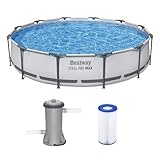
Bestway Steel Pro MAX 12' x 30" Above Ground Swimming Pool Set with Pump | Check Price On Amazon |
|
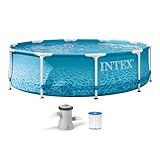
INTEX Beachside Metal Frame 10ft x 30in Round Pool Set w/Pump | Check Price On Amazon |

|
H2OGO! Kids Splash-in-Shade 8-Foot Round Steel Frame Above Ground Pool with Water Mister and Canopy Sunshade, Green Tropical Leaf Print | Check Price On Amazon |
In this comprehensive guide, we’ll explore normal evaporation rates across different regions, how to identify actual leaks, and effective strategies to minimize water loss while protecting your investment.
Understanding Normal Pool Water Evaporation Rates
Before assuming your pool has a leak, it’s essential to understand that all pools naturally lose water through evaporation. Here’s what’s considered normal across different conditions.
The industry standard for pool evaporation falls between ¼ to ½ inch daily, according to the Association of Pool & Spa Professionals (APSP). This means most pool owners can expect to lose approximately 1-3 inches of water weekly through evaporation alone.
However, these rates vary significantly based on your location:
| Climate Region | Average Daily Evaporation | Weekly Water Loss |
|---|---|---|
| Hot & Dry (Southwest US) | ½ to ¾ inch | 3.5-5 inches |
| Hot & Humid (Southeast US) | ¼ to ½ inch | 1.5-3 inches |
| Temperate (Midwest/Northeast) | ⅛ to ¼ inch | 1-2 inches |
| Cool & Wet (Pacific Northwest) | ⅛ inch or less | 0.5-1 inch |
Evaporation occurs when water molecules at the surface gain enough energy to break free and enter the air. This process accelerates with higher temperatures, lower humidity, and increased air movement. Pool water essentially transforms from liquid to gas, resulting in gradual level reduction that’s completely natural.
Factors That Accelerate Pool Water Evaporation
Several environmental and pool-specific factors can significantly increase evaporation rates beyond the baseline averages.
- Air Temperature: Higher temperatures increase water molecule energy, accelerating evaporation. For every 10°F increase above 80°F, evaporation rates can increase by 20-30%.
- Water Temperature: Heated pools evaporate faster than unheated ones. Pools maintained above 82°F can experience up to 50% more evaporation than pools at 78°F.
- Humidity Levels: Low humidity dramatically increases evaporation. In areas with 30% humidity or less, evaporation occurs about twice as fast as in regions with 60%+ humidity.
- Wind Exposure: Wind removes saturated air above the pool surface, replacing it with drier air that accepts more moisture. A consistent 5 mph breeze can double evaporation rates compared to still conditions.
- Sun Exposure: Direct sunlight increases both water and air temperature, accelerating evaporation. Pools without shade can lose 30% more water than partially shaded pools.
- Surface Area: Larger surface areas allow more water molecules to escape simultaneously. You can accurately determine your pool’s square footage with our Pool Surface Area Calculator. A lap pool with the same water volume as a standard pool will evaporate faster due to greater surface exposure.
- Water Features: Fountains, waterfalls, and splash pads increase water surface exposure to air. A pool with active water features can experience 30-50% higher evaporation rates.
These factors combine to create your pool’s unique evaporation profile. A heated pool in Arizona with water features and no cover might lose over an inch daily, while a covered, unheated pool in Seattle might lose less than an inch weekly.
The Science of Pool Evaporation: Calculations and Formulas
Understanding the physics behind pool evaporation allows for precise predictions of normal water loss based on your specific conditions.
The standard formula used by pool professionals comes from the Department of Energy research on evaporation physics:
Evaporation Rate = 0.1 × A × (Pw – Pa) × V

- Intelligent Navigation with Full Coverage: Equipped with 11 high-precision sensors and enhanced dual-path algorithms. The optimized WavePath cleaning pattern ensures systematic coverage with minimal overlap, while adaptive navigation analyzes pool layout in real time to eliminate missed spots
- Dual Filtration for Crystal-Clear Water: Advanced dual-layer filtration system features a replaceable 3-micron ultra-fine filter paired with a 180-micron standard filter. Effectively captures fine dust, sand, leaves, and debris for visibly cleaner and healthier pool water
- Comprehensive Pool Cleaning: Engineered to clean the pool floor, walls, waterline, and shallow areas (above 12 inches). The Caterpillar Treads system enhances mobility and climbing ability, ensuring thorough coverage across all pool zones
- Reliable Performance with 2-Year Warranty: Trusted by over 500,000 pool owners worldwide, this robotic pool cleaner delivers consistent, high-performance results. Built for durability and backed by a 2-year warranty and responsive customer support for worry-free ownership
Where:
- A = Pool surface area in square feet
- Pw = Saturation vapor pressure at water temperature
- Pa = Vapor pressure at air dew point
- V = Air velocity over water surface (mph)
For practical application without complex calculations, here’s a simplified formula:
For a standard 400 sq ft residential pool in average conditions:
- Low evaporation conditions: 0.125″ daily (50 gallons)
- Moderate evaporation conditions: 0.25″ daily (100 gallons)
- High evaporation conditions: 0.5″ daily (200 gallons)
If you’re unsure of your pool’s volume, use our Pool Volume Calculator to get accurate measurements.
These formulas explain why identical pools in different locations experience vastly different evaporation rates. They also help set realistic expectations based on your specific environmental conditions. For a quick estimate tailored to your pool, you can use our Swimming Pool Evaporation Rate Calculator to get a quick estimate.
How to Determine If Your Pool Is Leaking: Beyond the Bucket Test
While evaporation is normal, excessive water loss often indicates a leak. Here’s a systematic approach to determine whether your pool is losing water due to natural causes or an actual leak.
The standard bucket test remains the most reliable DIY method for distinguishing between evaporation and leaks, but proper execution is crucial:
- Prepare the test: Fill a 5-gallon bucket with pool water to about 1-2 inches from the top.
- Position the bucket: Place it on the second step of your pool so it’s partially immersed. The water level inside the bucket should match the pool water level exactly.
- Mark the levels: Use waterproof marker or tape to mark both the water level inside the bucket and the pool water level on the outside of the bucket.
- Wait 24-48 hours: Ensure normal pool operation but avoid backwashing or adding water.
- Compare the levels: If both levels drop equally, you’re experiencing normal evaporation. If the pool level drops more than the bucket level, you likely have a leak.
- Quantify the difference: Each ¼ inch difference between bucket and pool levels represents approximately 2-3 gallons per 100 square feet of pool surface area lost to leakage.
Beyond the bucket test, these advanced diagnostic techniques can provide further confirmation:
- Equipment-off test: If water loss slows when pumps and filters are off, leaks likely exist in your circulation system.
- Dye testing: Using food coloring near suspected crack areas while the pool is still can reveal suction points where water escapes.
- Pressure testing: Professional pressure tests can identify underground plumbing leaks not visible to the naked eye.
- Sonic detection: Advanced equipment can “hear” water escaping through leaks in the pool structure.
Use this diagnostic flowchart to guide your investigation: If daily water loss exceeds ½ inch → Perform bucket test → If pool drops more than bucket → Check for visible leaks → If none found → Test with equipment on/off → If still uncertain → Call professional.
Common Pool Leak Locations and How to Find Them
If your diagnostics suggest a leak rather than normal evaporation, these are the most common areas to investigate based on pool type and construction.
Structural Leak Locations:
- Concrete/Gunite Pools: Check for cracks in the floor and walls, especially around steps, lights, and fittings. Look for wet spots around the pool exterior or settling in the deck.
- Vinyl Liner Pools: Inspect for tears, punctures, or separation at seams, particularly around steps, corners, and fittings. Wrinkles in the liner often indicate water behind it.
- Fiberglass Pools: Examine for cracks at stress points or around fittings. Check for bulging walls which may indicate water between the shell and ground.
Equipment-Related Leak Sources:
- Pump and Filter: Look for wet areas around seals, connections, and bases. The pump lid O-ring is a frequent culprit.
- Heater: Check for calcium deposits or corrosion around connections and the heat exchanger.
- Valves: Inspect diverter and check valves for drips or dampness, particularly around stems and handles.
Plumbing System Vulnerabilities:
- Return Lines: Underground leaks often create soft, wet spots in your yard.
- Skimmer Connections: The joint between skimmer and pool wall frequently cracks or separates.
- Main Drain: Cracks around the drain or in connected plumbing can cause significant leaks.
When investigating, remember that even small leaks matter. A pencil-sized hole can leak hundreds of gallons daily, dramatically increasing water and heating costs while potentially causing structural damage.
When to Call a Professional vs. DIY Leak Repair
Some pool leaks can be addressed by homeowners, while others require professional expertise. Here’s how to make that determination.
| Issue | DIY Potential | Professional Recommended | Average Cost Range |
|---|---|---|---|
| Above-water cracks/tears | High – Patch kits available | For larger issues | $20-75 DIY, $200-400 professional |
| Underwater structural cracks | Low – Requires expertise | Highly recommended | $500-1,500+ |
| Skimmer leaks | Medium – Sealant may work | For severe separation | $50 DIY, $300-600 professional |
| Underground plumbing leaks | Very low – Specialized equipment needed | Always recommended | $700-2,500+ |
| Equipment leaks | Medium – O-rings, gaskets replaceable | For internal component issues | $20-100 DIY, $200-500 professional |
When interviewing potential leak detection professionals, ask these key questions:
- What detection methods do you use? (Multiple methods indicate thoroughness)
- Do you provide a detailed report of findings?
- Is repair work separate from detection? (Helps avoid conflicts of interest)
- What guarantees do you offer on your work?
- Are you licensed and insured specifically for pool work?
Professional leak detection typically costs $400-800, with specialized equipment detecting even minor leaks invisible to homeowners. While expensive, this investment prevents costly water loss and potential structural damage.
Regional Pool Water Loss Guide: Climate-Specific Expectations
Your location plays a crucial role in determining what’s considered normal water loss. Here’s how evaporation rates vary across different climate zones in the United States.
Arid Southwest (AZ, NV, NM, parts of CA, TX)
- Summer: ½-¾ inch daily (3.5-5 inches weekly)
- Winter: ⅛-¼ inch daily (1-2 inches weekly)
- Key factors: Extremely low humidity (often below 20%), high temperatures, frequent winds
- Regional note: Local water authorities often provide specific evaporation tables due to conservation concerns
Humid Southeast (FL, GA, AL, LA, parts of TX)
- Summer: ¼-½ inch daily (2-3.5 inches weekly)
- Winter: ⅛ inch or less daily (0.5-1 inch weekly)
- Key factors: High humidity reduces evaporation despite high temperatures
- Regional note: Afternoon thunderstorms may actually add water to pools during rainy seasons
Temperate Midwest/Northeast (IL, OH, PA, NY, MA)
- Summer: ⅛-¼ inch daily (1-2 inches weekly)
- Winter: Minimal when closed; ⅛ inch when heated and open
- Key factors: Moderate humidity and temperatures create modest evaporation
- Regional note: Seasonal operation means most pools only face evaporation 3-5 months yearly
Pacific Coast (CA coast, OR, WA)
- Summer: ⅛-¼ inch daily (1-2 inches weekly)
- Winter: Minimal to ⅛ inch daily (0-1 inch weekly)
- Key factors: Coastal fog and higher humidity significantly reduce evaporation
- Regional note: Microclimates create dramatic differences even within short distances
Understanding these regional patterns helps establish reasonable expectations. A Phoenix pool losing ½ inch daily in July is completely normal, while the same loss in Seattle would strongly suggest a leak.
Seasonal Adjustments to Water Loss Expectations
As seasons change, so should your expectations for normal water loss. Here’s how to adjust your monitoring throughout the year.
Summer (Peak Season)
- Expect maximum evaporation rates: 2-5 times winter rates depending on region
- Diagnostic adjustment: Bucket tests need shorter durations (24 hours)
- Monitoring frequency: Check water levels twice weekly
- Critical factor: Extreme heat waves can cause 25-50% higher evaporation than seasonal averages
Fall (Transition Period)
- Decreasing evaporation: Typically 30-50% reduction from summer peak
- Diagnostic adjustment: Bucket tests need longer durations (48-72 hours)
- Monitoring frequency: Weekly checks sufficient
- Critical factor: Falling leaves can clog skimmers, affecting water level readings
Winter (Minimum Evaporation)
- Lowest evaporation rates: Often 75-90% less than summer rates
- Diagnostic adjustment: Any significant water loss more likely indicates leaks
- Monitoring frequency: For open pools, check every 1-2 weeks
- Critical factor: Heated pools will still experience moderate evaporation even in cold weather
Spring (Transition Period)
- Increasing evaporation: Gradually rising to 40-60% of summer rates
- Diagnostic adjustment: Watch for unusual losses during pool opening
- Monitoring frequency: Bi-weekly checks as temperatures rise
- Critical factor: Spring winds can significantly accelerate evaporation
Weather pattern shifts can dramatically affect these seasonal averages. A unusually hot, dry fall might maintain summer-like evaporation rates, while a cool, rainy summer could reduce evaporation to spring-like levels.
Pool Water Conservation Strategies: Minimizing Normal Evaporation
While some evaporation is inevitable, these proven strategies can significantly reduce water loss, saving both water and money.
| Conservation Strategy | Effectiveness Rating | Water Savings Potential | Implementation Cost |
|---|---|---|---|
| Solid Pool Cover | Excellent (95%+ reduction) | 30,000-50,000 gallons annually | $75-500 |
| Liquid Solar Cover | Good (40-60% reduction) | 15,000-25,000 gallons annually | $20-30 monthly |
| Windbreaks (landscaping/fencing) | Moderate (20-30% reduction) | 8,000-15,000 gallons annually | $500-2,000+ |
| Lowering Water Temperature | Moderate (10-30% reduction) | 5,000-15,000 gallons annually | Free |
| Reducing Water Feature Runtime | Moderate (15-25% reduction) | 6,000-12,000 gallons annually | Free |
| Rain Harvesting Systems | Variable (offset rather than reduce) | 5,000-20,000 gallons annually | $200-2,000 |
Pool covers remain the single most effective conservation strategy, with solid covers preventing up to 95% of evaporation. For a typical 16′ x 32′ pool in a moderate climate, this translates to approximately 30,000-50,000 gallons of water saved annually.
Additional effective strategies include:
- Optimizing chemical balance: Proper pH and alkalinity reduce the need for frequent water replacement
- Water-saving backwash techniques: Backwashing only when necessary and directing water to landscaping
- Maintaining proper water level: Keeping water below skimmer level reduces splash-out
- Fixing equipment leaks promptly: Even minor drips can waste thousands of gallons annually
- Installing auto-fill devices with leak detection: These prevent both overflow and unnoticed leaks
The return on investment for water conservation measures varies by region. In areas with high water costs like California or Arizona, a quality pool cover typically pays for itself within a single season through water savings alone.
Pool Cover Analysis: Types, Effectiveness, and ROI
Pool covers are the most effective evaporation reduction tool, but not all covers are created equal. Here’s a detailed analysis of your options.
- Solar Blanket Covers
- Evaporation reduction: 95%
- Cost range: $75-300
- Lifespan: 3-5 years
- Additional benefits: Raises water temperature 10-15°F, reduces chemical usage by 35-60%
- Considerations: Requires manual handling, bulky to store, deteriorates in intense sun
- ROI timeframe: 3-6 months in most regions
- Automatic Covers
- Evaporation reduction: 95%
- Cost range: $1,500-$25,000
- Lifespan: 7-10 years
- Additional benefits: Enhanced safety, convenience, reduced debris, improved heat retention
- Considerations: Significant investment, requires professional installation
- ROI timeframe: 3-5 years for water savings alone, faster when including energy savings
- Mesh Safety Covers
- Evaporation reduction: 50-70%
- Cost range: $600-2,500
- Lifespan: 7-15 years
- Additional benefits: Safety protection, debris blocking, winter protection
- Considerations: Allows some water through, primarily for seasonal/safety use
- ROI timeframe: 2-3 years when considering reduced opening/closing costs
- Liquid Solar Covers
- Evaporation reduction: 40-60%
- Cost range: $20-30 monthly
- Lifespan: Requires regular reapplication (weekly)
- Additional benefits: Invisible, compatible with pool use, some heat retention
- Considerations: Less effective in windy conditions, requires consistent application
- ROI timeframe: Immediate but requires ongoing investment
Solar blanket covers offer the best balance of effectiveness and affordability for most homeowners. While automatic covers provide maximum convenience, their high cost makes them most suitable for premium installations or regions with extreme water restrictions.
For year-round pools, using a combination approach often works best: solar covers during active seasons and safety covers during closures. Liquid covers can supplement during high-use periods when solid covers are impractical. For personalized cost estimates based on your pool size and preferred cover type, try our Pool Cover Cost Calculator to get personalized estimates.
Water Loss Monitoring Technologies and Smart Pool Systems
Modern technology offers unprecedented ability to monitor water levels and detect abnormal loss patterns before they become costly problems.
These innovations help pool owners track water consumption, identify potential issues early, and maintain optimal water levels:
- Automatic Water Levelers
- Function: Maintains consistent water level by adding water when needed
- Features: Adjustable level settings, flow control, freeze protection
- Cost range: $50-250 depending on features
- Installation complexity: Moderate, requires water supply connection
- Recommended models: Jandy Levolor, Fill-O-Matic, HornerXpress Leveler
- Smart Water Monitors
- Function: Tracks water usage patterns and alerts to abnormal consumption
- Features: Leak detection algorithms, consumption history, alert notifications
- Cost range: $150-600 for pool-specific systems
- Installation complexity: Moderate to complex, may require professional setup
- Recommended systems: Flume Smart Water Monitor, Phyn Plus, Moen Flo
- Ultrasonic Level Sensors
- Function: Precisely measures water level changes with sound waves
- Features: Accuracy to 1/8 inch, data logging, alert thresholds
- Cost range: $200-800 depending on capabilities
- Installation complexity: Moderate, requires power source and mounting
- Recommended models: WaterWatcher, Pentair IntelliFill, Blue Connect Plus
- Integrated Pool Automation Systems
- Function: Comprehensive monitoring of water level, chemistry, temperature
- Features: Smartphone control, historical data, predictive maintenance
- Cost range: $500-3,000+ depending on capabilities
- Installation complexity: High, typically requires professional installation
- Recommended systems: Hayward OmniLogic, Pentair IntelliCenter, Jandy iAquaLink
User experiences suggest that even basic water level monitoring technology can identify leaks weeks before they would become visually apparent, potentially saving thousands of gallons and preventing structural damage.
For maximum effectiveness, these systems should integrate with your overall pool management approach, with automated alerts sent directly to both homeowners and service professionals when abnormal patterns emerge.
Creating a Water Loss Management Plan for Your Pool
A systematic approach to water management ensures you’ll quickly notice abnormal losses while minimizing routine evaporation.
Follow this structured plan to establish effective ongoing monitoring:
- Establish your baseline: Document normal weekly water loss during different seasons using the bucket test method.
- Create a monitoring schedule:
- Peak season (summer): Check levels twice weekly
- Moderate seasons (spring/fall): Check weekly
- Off-season (winter): Check bi-weekly for open pools
- After weather events: Check following heavy rain, winds, or extreme temperatures
- Implement a record-keeping system:
- Track water additions (volume and dates)
- Note weather conditions (temperature, humidity, precipitation, wind)
- Document equipment maintenance and backwashing
- Photograph water levels at consistent intervals
- Set action thresholds:
- Define what constitutes abnormal loss (typically 25%+ above baseline)
- Establish response protocols for different severity levels
- Create contact list for professional assistance
- Conduct regular system checks:
- Monthly equipment inspections for leaks
- Quarterly pressure testing of plumbing system
- Seasonal structural examination
- Annual professional inspection
This systematic approach transforms water management from reactive to proactive. By establishing normal baseline patterns, you’ll quickly recognize when something changes, allowing for early intervention before small issues become major problems.
The Economics of Pool Water Loss: Costs, Conservation, and Environmental Impact
Pool water loss impacts both your wallet and the environment. Understanding these costs provides powerful motivation for proper management.
The financial impact of water loss extends far beyond the water bill itself:
- Direct Water Costs: Average residential water rates range from $2-10 per 1,000 gallons depending on location. A pool losing 1,000 gallons weekly to evaporation or leaks costs $104-520 annually in water alone.
- Heating Expenses: Replacing lost water requires reheating. Each 1,000 gallons of 60°F replacement water requires approximately 8,340 BTUs to reach 80°F, costing $2-5 in natural gas or $5-12 in electricity depending on rates. You can estimate your exact heating costs with our Pool Heating Cost Calculator.
- Chemical Costs: New water requires full chemical treatment. Balancing 1,000 gallons typically costs $5-15 in chemicals, plus testing supplies.
- Structural Damage Risk: Leaks can undermine pool structures and surrounding landscaping, with repairs often starting at $2,000 and potentially reaching $10,000+ for severe cases.
The environmental impact is equally significant:
- Water Footprint: A typical uncovered pool in a hot climate loses 10,000-20,000 gallons annually to evaporation – equivalent to 250-500 average shower sessions.
- Energy Consumption: Heating replacement water for a pool with high water loss can release an additional 1-2 tons of CO2 annually.
- Water Resource Strain: In drought-prone regions, unnecessary pool water loss strains already limited resources and may subject owners to restrictions or fines.
Conservation measures deliver compelling ROI:
For a standard 16′ x 32′ pool in a moderate climate, implementing a basic solar cover ($150) can save approximately 30,000 gallons annually. At average water rates, this represents $300-600 saved in water costs alone, plus an additional $150-400 in heating and chemical savings – delivering full investment return within months.
Special Considerations by Pool Type: Above-Ground, Inground, and Specialty Pools
Different pool types experience water loss differently. Here’s what owners of various pool constructions should know.
Above-Ground Pools
- Evaporation characteristics: Typically experience 15-25% higher evaporation rates than inground pools due to increased wind exposure and higher sidewall heating.
- Common leak points: Liner punctures, skimmer connections, return fittings, and bottom drain assemblies. Wall seams are particularly vulnerable in older pools.
- Detection challenges: Wet soil around the base may indicate leaks, but can also result from splashing or condensation.
- Special monitoring: Check for bulging walls, which often indicate water escaping behind the liner and undermining structural integrity.
Concrete/Gunite Inground Pools
- Evaporation characteristics: Standard rates apply, though darker plaster finishes may increase water temperature and evaporation.
- Common leak points: Structural cracks, light housings, pipe penetrations, and cold joints (where different concrete pours meet).
- Detection challenges: Hairline cracks may leak significantly despite being nearly invisible. Look for calcium deposits or algae growth in crack lines.
- Special monitoring: Watch for wet spots in surrounding soil or unexplained settling in the deck.
Vinyl Liner Inground Pools
- Evaporation characteristics: Similar to standard rates, though light-colored liners may slightly reduce evaporation by reflecting sunlight.
- Common leak points: Liner tears, fitting connections, behind faceplates, and liner seams. Wrinkles often develop at leak points.
- Detection challenges: Leaks can occur beneath the liner, causing water to exit elsewhere and complicating location.
- Special monitoring: Watch for liner shifting, wrinkling, or softness underfoot which indicates water beneath.
Fiberglass Pools
- Evaporation characteristics: Typically experience 5-10% lower evaporation than concrete pools due to smoother, less heat-conductive surfaces.
- Common leak points: Stress cracks (particularly at steps), around fittings, and at the coping connection. Plumbing connections are the most frequent culprits.
- Detection challenges: The impermeable nature of fiberglass means water typically exits through discrete points rather than general seepage.
- Special monitoring: Check for shell movement or shifting, which may indicate water undermining the backfill.
Saltwater Pools
- Evaporation characteristics: Contrary to popular belief, saltwater pools evaporate at the same rate as freshwater pools. Only the water evaporates, leaving salt behind.
- Equipment considerations: Salt cells and associated plumbing introduce additional potential leak points. Check connections regularly.
- Detection challenges: Salt residue can mask wet spots that would otherwise indicate leaks.
- Special monitoring: Track salt levels – if they rise significantly without adding salt, excessive evaporation may be occurring.
Frequently Asked Questions About Pool Water Loss
These are the most common questions pool owners ask about water loss, with comprehensive answers based on scientific evidence and industry expertise.
Why does my new pool seem to lose more water than my old one?
New pools often experience higher initial water loss due to several factors. Concrete pools undergo a curing process called “plaster dust,” which can increase water absorption by up to 25% in the first month. Additionally, new pools typically have fresh, more permeable plaster that absorbs some water until fully cured. This apparent water loss should normalize within 4-8 weeks.
Do pool chemicals increase water evaporation?
Standard pool chemicals have minimal impact on evaporation rates. However, improper chemical balance, particularly high chlorine levels (above 10ppm) combined with high pH (above 7.8), can increase evaporation by 5-10%. Additionally, certain chlorine stabilizers can slightly reduce evaporation by creating a microscopic surface film.
How do I know if I’m losing water to evaporation or splash-out?
Splash-out typically occurs in concentrated periods during pool use, causing sudden level drops, while evaporation is gradual and consistent. To differentiate, monitor water levels during periods of non-use. Additionally, splash-out creates visible wet areas around the pool, particularly on the side nearest water features or diving areas.
Does backwashing my filter cause significant water loss?
A typical sand filter backwash uses 200-300 gallons of water, while DE filters use 100-200 gallons. For most residential pools, standard weekly backwashing accounts for approximately 1-2 inches of water loss monthly. Excessive backwashing frequency or duration can significantly increase water consumption without improving filtration.
Are automatic pool fillers a good solution for water loss?
Automatic fillers maintain consistent water levels but can mask leaks by continuously replacing lost water. Modern systems with flow monitoring can alert owners to unusual consumption patterns that might indicate leaks. For optimal use, calibrate auto-fillers to maintain water at the minimum required level (mid-skimmer) and regularly check their actual water usage.
How do water restrictions during drought affect pool maintenance?
During water restrictions, many municipalities exempt pool evaporation replacement while prohibiting initial filling or refilling. Specific regulations vary widely, but most require covers when pools aren’t in use. Some regions implement tiered pricing that dramatically increases costs for usage above baseline levels. Check local water authority regulations, as violation fines often exceed $500.
Will trees and landscaping near my pool affect water loss?
Landscaping creates a complex relationship with water loss. Trees and tall shrubs can reduce evaporation by providing shade and wind protection, potentially decreasing water loss by 20-30%. However, overhanging branches increase debris, which may increase water loss during cleaning processes. The ideal placement provides afternoon shade without directly overhanging the pool.
| Photo | Best Above-Ground Pools | Price |
|---|---|---|
|
|
Bestway Steel Pro MAX 12' x 30" Above Ground Swimming Pool Set with Pump | Check Price On Amazon |
|
|
INTEX Beachside Metal Frame 10ft x 30in Round Pool Set w/Pump | Check Price On Amazon |
|
|
H2OGO! Kids Splash-in-Shade 8-Foot Round Steel Frame Above Ground Pool with Water Mister and Canopy Sunshade, Green Tropical Leaf Print | Check Price On Amazon |